malvernmugadzikwa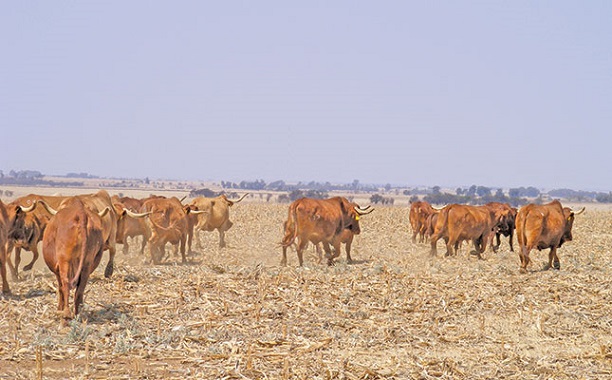
Word from the Market
with Adalph Chidaka
ZIMBABWE is currently facing one of its most formidable challenges: a prolonged and severe drought that threatens the very foundation of livestock farming.
Recent tragic events, including the loss of cattle due to improper feeding practices, have underscored the urgent need for comprehensive education and strategic management in animal husbandry.
This article seeks to provide crucial insights and scientifically backed strategies for livestock farmers, extension officers and other stakeholders to help navigate these trying times.
The importance of proper livestock management during drought cannot be overstated.
Beyond immediate economic implications, the health and sustainability of Zimbabwe’s livestock industry play a pivotal role in the nation’s food security, rural livelihoods and overall economic stability.
The recent incident of cattle deaths due to urea poisoning serves as a stark reminder of the devastating consequences that can result from a lack of knowledge or improper practices. At the heart of drought management for livestock is the critical issue of nutrition.
During periods of water scarcity, natural pastures rapidly deteriorate in both quantity and quality, leading to a significant nutritional deficit for grazing animals. This deficit not only affects the immediate health and productivity of the animals but can also have long-lasting impacts on herd genetics and future productivity. Therefore, implementing a well-planned feeding strategy is not just advisable; it is essential for the survival of livestock and sustainability of farming operations.
The foundation of any cattle diet, even in drought conditions, must be roughage.
However, the challenge lies in sourcing sufficient quantities of quality roughage when natural pastures are depleted.
Farmers must explore alternative sources such as hay, silage or even crop residues.
The scientific rationale behind this is rooted in ruminant physiology. The rumen, a complex fermentation chamber, requires a certain level of fibre to maintain proper function. This also prevents digestive disorders.
Protein supplementation is crucial during drought. Supplements like cottonseed meal, soya bean meal or sunflower meal play a vital role in maintaining rumen function, supporting the microbial population that breaks down feed and providing essential amino acids for animal maintenance and production. The science behind this lies in the nitrogen balance within the rumen. Adequate protein ensures efficient utilisation of whatever feed is available, improving overall digestibility and nutrient absorption.
Energy supplementation, typically in the form of grains like maize or sorghum, is another critical component.
The biochemical basis for this lies in the energy requirements for basic metabolic functions, which increase during times of stress.
However, it is crucial to introduce these high-energy feeds gradually.
Sudden introduction can lead to ruminal acidosis, a potentially fatal condition caused by rapid fermentation and acid production in the rumen. Mineral supplementation, often overlooked, plays a crucial role in numerous physiological processes. During drought, animals may suffer from mineral imbalances due to poor forage quality and altered feeding patterns. Providing mineral blocks or licks ensures that essential elements like calcium, phosphorus and various trace minerals are available for critical bodily functions, including bone metabolism, enzyme systems and reproductive processes. The use of urea-based supplements presents both an opportunity and a significant risk. Urea, a non-protein nitrogen source, can be effectively converted to microbial protein in the rumen, serving as a cost-effective protein supplement. However, its use requires careful management due to its potential toxicity.
The recent tragedy underscores the importance of proper education and consultation with agricultural experts before implementing such feeding strategies. Timing of feed provision is another crucial factor often underappreciated by farmers. Feeding during cooler times of the day — early morning and late afternoon — aligns with the natural grazing patterns of cattle and can encourage increased feed intake. Moreover, maintaining a consistent feeding schedule helps reduce stress on the animals, as ruminants thrive on routine.
This practice is grounded in the understanding of bovine behaviour and physiology, where predictability in feed availability contributes to optimal rumen function and overall well-being. Perhaps one of the most challenging yet essential strategies during severe drought is destocking. The scientific basis for this lies in carrying capacity — the number of animals that can be sustainably supported by available resources. During drought, this capacity drastically drops. Destocking is not merely about reducing numbers; it is a calculated approach to resource management.
By selling some animals, farmers can reduce the overall demand for feed and water, thereby ensuring better nutrition and care for the remaining livestock. This strategy also provides a financial buffer, allowing farmers to invest in quality feed and other necessary resources for their core breeding stock. The role of the Agricultural Marketing Authority (AMA) in this scenario cannot be overstated. By providing up-to-date market information, facilitating sales and offering extension services, AMA serves as a crucial link between farmers and the broader agricultural ecosystem. Our involvement ensures that farmers can make informed decisions based on current market trends and scientific advice, rather than reacting blindly to immediate pressures.
Overall, the challenges faced by Zimbabwe’s livestock farmers during this drought period are significant, but not insurmountable.
By embracing a scientific approach to feeding, implementing strategic destocking and utilising the support services available, farmers can navigate these difficult times.
The key lies in understanding that these practices are not just short-term solutions but investments in the long-term sustainability and resilience of their farming operations.
As a community, we must recognise that the health of our livestock industry is intrinsically linked to our national food security and economic stability. Every farmer who adopts these practices, every extension officer who spreads this knowledge and every stakeholder who supports these efforts is contributing to a more resilient and sustainable future for Zimbabwe’s agriculture.
Mr Adalph Chikaka is AMA’s business development manager. He can be contacted on email: [email protected] . Word From The Market is a column prepared by AMA to promote market-driven production.



 Online Reporter