Chronicle Editor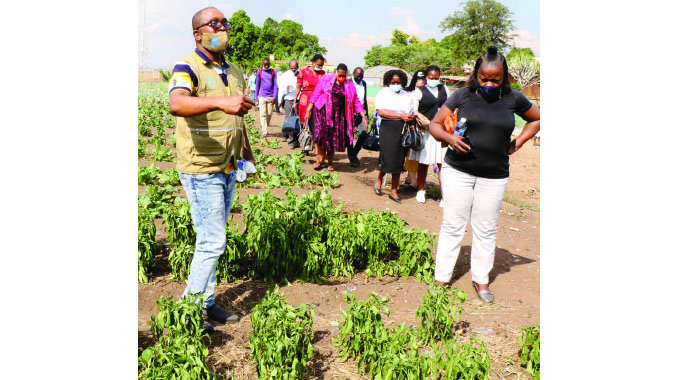
Nqobile Tshili, Chronicle Reporter
GAMPU Primary School’s agriculture project has enabled the school to address the challenge of dropouts as its feeding programme is helping to keep vulnerable pupils in class.
The school which is located in Matshobana is involved in a farming partnership with a private voluntary organisation, Hope for a Child in Christ (HOCIC).
HOCIC trains and capacitates vulnerable community members to work in the school’s garden.
The project benefits 45 pupils from 45 families and the school is involved in horticulture, poultry and fish farming.
The produce supplements the school’s feeding scheme while some is sold to the community.
The school has a single borehole for irrigation but the water supply is not adequate.
Due to water challenges, the school has since discontinued its banana production project it started in 2017.
Briefing a Parliamentary Portfolio Committee on Public Service, Labour and Social Welfare that visited the school on Sunday, Gampu Primary School headmistress Ms Letwin Khumalo said the school’s feeding programme has transformed the lives of learners.
“In selecting the beneficiaries of the school’s agriculture project, we selected the most vulnerable in school. And I’m happy to say that has come handy for the learners.
We are no longer affected by school drop outs anymore as pupils now know that they will have something to eat when they come to school. So, they are driven to school by the fact that they will be provided with meals,” said Ms Khumalo.
She said through the involvement of the vulnerable children’s parents, they have been able to clear their fees arrears.
Ms Khumalo said shortage of water was affecting their agriculture programmes.
“We brought some bananas from Honde Valley, hoping to break the chain that nothing is happening in Bulawayo schools. We planted the bananas for two to three seasons then later we developed a water problem. Because of that water problem we could not sustain the project. But HOCIC has promised to drill another borehole and we hope to resuscitate the project again,” said Ms Khumalo.
The parliamentary committee chairperson Zanu-PF senator for Masvingo Cde Emma Ncube said the projects were benefitting both the school and the community.
“We visited this school to see whether the Private Voluntary Organisations (PVOs) that are operating in this area are actually doing projects which benefit the community as well as the school that they are operating from.
“We are happy to see that these projects are actually producing results which are benefitting both the school and community while being funded by PVOs,” said Cde Ncube.
She said what was pleasing is that the projects are also in line with the skills-based education curriculum.
“The new curriculum is encouraging the teaching of practical subjects. This is what we expect to see in schools. Pupils need to have skills that they can exit the school with and we are impressed by how the school is partnering with PVO,” she said.
HOCIC official Mr Khumbulani Longwe said the skills that they were imparting to the school were also benefiting parents.
“This means that the projects that they are implementing here can also be taken home. They can use the knowledge they get from school to start their projects that can improve their livelihoods at home. We have started a poultry project which failed to kickstart after a former Member of Parliament had built a fowl run for the school.
“By the end of December, they should be able to sell about 400 chickens that are in the fowl run,” said Mr Longwe.
He said his organisation has plans to start a similar project at secondary schools and Entumbane High School, would be their first secondary institution to implement similar projects.–@nqotshili



 Online Reporter