Chronicle Editor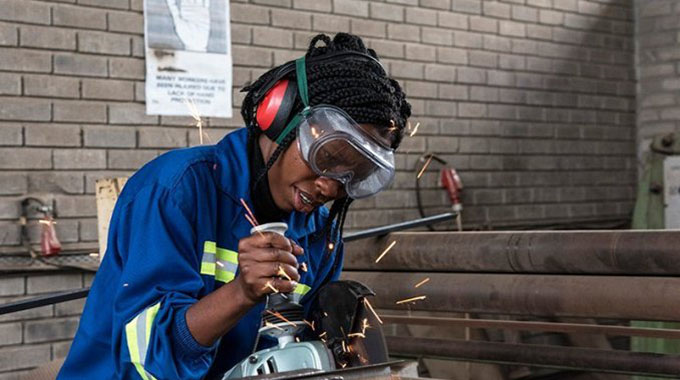
Davies Ndumiso Sibanda
MANY female artisans have found getting jobs in male dominated workplaces very hard as employers shun them because they are women and do not believe they will do the work properly.
We have a number of female artisans in trades like tool-making, fitting and turning, electrical engineering and auto-electrical and others. In our books, each time we send their CVs to potential employers, our success rate in placing them is very low. While there is no clear evidence that they did not get the job because they are women, reading between the lines one can tell that most probably it is because they are women.
Following a number of social discussions with senior managers from various organisations, it is clear that there is a measure of discomfort in employing women. Many raise excuses such as that their workshops have no toilets for women or that the environment is male. They see the women’s jobs being in the offices as clerks, secretaries, accountants and sales representatives.
I have at times heard of crazy reasons for not employing female artisans such as “women can be disruptive as guys will not work while admiring the women”. Some argue that culturally, “it is wrong to give women jobs that are for men and one manager argued that it would be cruel to send a woman up a ladder while men remain on the ground. Socialisation seems to be playing a role in decision making given that in most Zimbabwean families and social activities, there are roles for men and those for women.
With these arguments and many others that find their roots in African culture and roles separation, the road to breaking the glass ceiling and acceptance of women as equal at work remains a problem particularly in jobs like those of artisans, which have no discrimination against females.
There is however no difference with work done by a man and a woman. One only needs to look at our top mining houses and the number of women occupying technical positions in workshops and mining underground.
The unfortunate thing is that nobody has cared to bring to the public domain that female artisans are just as good workers as their male counterparts. Even female journalists in my opinion shun writing about women working in what has been predominantly male jobs and as such female artisans are fighting their recognition battle on their own with the support of few organisations that look at male and female employees as equals.
Arguments have been raised as to whether there is need to legislate for a woman quota in every job. There are pros and cons for such an approach. My experience has been that successful organisations have achieved equal employee status through voluntary policy decisions, which have been threaded into the strategic plan.
I believe to gain full recognition that female artisans are equal to their male counterparts, there is a lot of education required not only for employers but society in general. I recall a friend complaining that he sent his car for service and it was given to a female motor mechanic. He said he was uncomfortable with that as he did not trust that the lady could do a good job..
In another case, a lady objected to having a female electrician wire her house that was under construction. She said she preferred men doing the job.
Such attitudes are part of our society. In conclusion, we still have a lot of work as a nation to get the workplace to fully embrace female artisans as they are just as good as their male counterparts.
Davies Ndumiso Sibanda can be contacted on:
email: [email protected] <mailto:[email protected]>


 Online Reporter