Online Reporter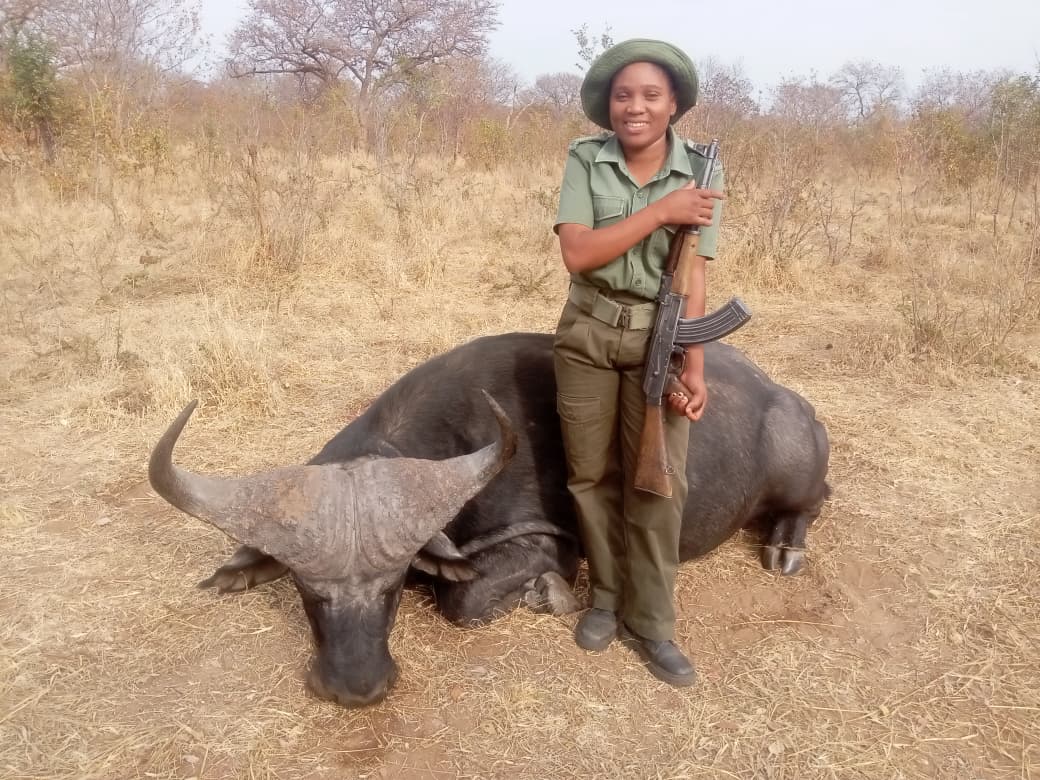
Raymond Jaravaza [email protected]
EVERY morning before sunrise, 30-year-old Zimbabwe Parks and Wildlife Management Authority (ZimParks) ranger Ms Sindisiwe Sithole prepares for another day on the frontline of wildlife conservation.
Armed with determination, years of training and a rifle slung across her shoulder, she heads into the rugged granite hills and dense thickets of Matopos National Park, where every patrol could mean the difference between life and death for one of Africa’s most endangered animals — the black and white rhinoceros.
For Ms Sithole, the rhinos are more than just wildlife under her protection.
“Every animal lost to poachers feels like losing a member of my own family. These animals have become part of my extended family and protecting them is a responsibility I carry with pride,” she says.
She is among a growing number of female rangers breaking barriers in Zimbabwe’s wildlife conservation sector, proving that courage, discipline and dedication know no gender.
Their work comes at a critical time as Zimbabwe continues strengthening conservation efforts under the Second Republic’s biodiversity protection agenda, which places greater emphasis on safeguarding endangered species, combating wildlife crime and promoting sustainable tourism as part of Vision 2030.
The women are stationed at the iconic Matopos National Park, a UNESCO World Heritage Site renowned for its balancing rock formations, ancient rock art, rich cultural heritage and diverse wildlife.
In recent years, Matopos has become one of Zimbabwe’s most important rhino sanctuaries.
The park’s conservation significance increased in 2024 when endangered black rhinos were reintroduced under a partnership between ZimParks and the Frankfurt Zoological Society, complementing a similar reintroduction programme undertaken at Gonarezhou National Park a year earlier.
Zimbabwe now boasts the fourth-largest rhino population in Africa after South Africa, Kenya and Namibia, making the country one of the continent’s leading success stories in rhino conservation.
The achievement marks a remarkable turnaround for a species that was pushed to the brink of extinction by decades of relentless poaching.
Rhino populations suffered catastrophic declines during the 20th century due to illegal hunting driven by demand for rhino horn on international black markets.
Although conservation programmes helped rebuild populations during the 1980s, another surge in organised wildlife crime across Africa threatened to wipe out the gains.
Today, black rhinos remain listed as Critically Endangered by the International union for Conservation of Nature (IUCN), while both black and white rhinos receive maximum protection under Zimbabwe’s Parks and Wildlife Act.
Against this backdrop, the role of rangers such as Ms Sithole has become increasingly important.
Having joined ZimParks in 2016, she first served in Matetsi before being deployed to Matopos.
“I always dreamed of working with wildlife and nature, so becoming a ranger was a natural choice for me,” she says.
“Working as a ranger has taught me to respect animals because we must allow them to live peacefully in their natural habitat. It has been an amazing journey because I have learnt to understand wildlife and appreciate their behaviour.”
Years in the field have taught her that every rhino has its own personality.
“White rhinos are generally calm, while black rhinos can easily become aggressive if they feel threatened,” she explains.
“We educate visitors not to get too close because black rhinos are highly protective and unpredictable.”
Despite the dangers associated with anti-poaching operations, Ms Sithole remains fearless.
“As long as I have my training and my equipment, I feel confident. In 2019, while stationed in Matetsi, we encountered armed poachers. We exchanged fire and managed to arrest them and such experiences prepare you mentally for the challenges of this job,” she recalls.
Ms Sithole encourages more young women to pursue careers in wildlife conservation.
“I joined ZimParks as a young woman and I want other girls to know that this career is open to them. Women are capable of succeeding in conservation and protecting our natural heritage,” she says.
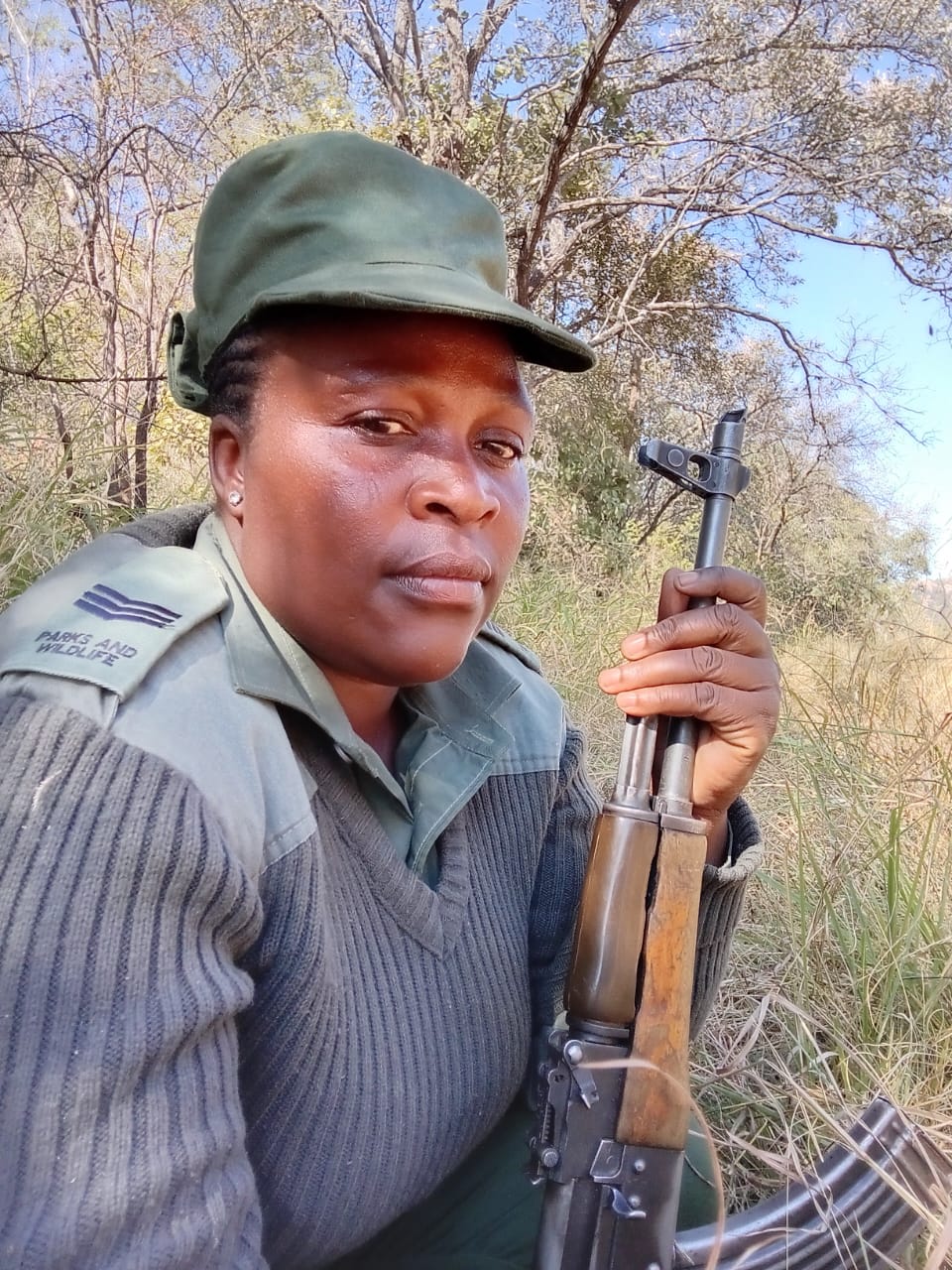
Her colleague, Ms Sifiso Sibanda (40), says conservation runs in her blood.
A mother of five, she joined ZimParks in 2009 after growing up in a ranger’s family.
Her father and grandfather both served as rangers, making the wilderness her childhood classroom.
“I grew up in Hwange where my father worked as a ranger. From a young age, I understood wildlife and bush life. Becoming a ranger felt natural because I had always admired the work they did,” she says.
After beginning as a contract ranger at Tuli Safari Lodge, she was recruited into ZimParks and served in Hwange, West Nicholson and Masvingo before joining Matopos.
“My best experience has been working with rhinos. Every morning I wake up around 5AM, prepare for patrol and report for deployment by 6AM. My supervisor assigns me an area where I monitor rhinos and ensure they remain safe from poachers,” said Ms Sibanda.
“It gives me great satisfaction knowing that every day I contribute to protecting one of Zimbabwe’s most valuable wildlife species.”
Ms Sibanda believes women have proved they can perform equally demanding conservation duties.
“This work requires commitment, discipline and passion. Women are showing that they are just as capable as men in protecting wildlife,” she says.
The growing presence of female rangers reflects broader efforts by ZimParks to promote gender inclusion in conservation, while strengthening anti-poaching operations across the country’s protected areas.
Beyond armed patrols, rangers conduct wildlife monitoring, collect ecological data, assist tourists, respond to human-wildlife conflict and work closely with surrounding communities to promote conservation awareness.
Their role has become even more important as Zimbabwe invests heavily in expanding wildlife-based tourism under the National Development Strategy 2 (NDS2), which identifies tourism as one of the country’s key economic growth sectors.
Matopos National Park, which recently celebrated 100 years as one of Zimbabwe’s oldest protected areas, remains central to those ambitions.
Government, ZimParks and conservation partners continue investing in advanced surveillance technology, ranger welfare, mobility and infrastructure to strengthen wildlife protection while reducing poaching and human-wildlife conflict.
For women like Ms Sithole and Ms Sibanda, however, conservation is about far more than policy or statistics; it is a calling.
Each successful patrol, every rhino calf born and every day without a poaching incident represents another victory in the long battle to protect one of Africa’s most iconic species.