admin
admin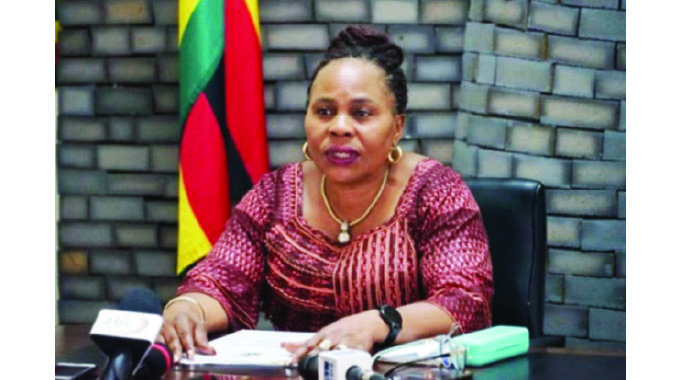
Leonard Ncube Victoria Falls Reporter
The Minister of Information, Publicity and Broadcasting Services, Monica Mutsvangwa, has called for the levelling of the media playing field to enhance female journalists participation in critical leadership roles, amid reports that nearly 40 percent of female journalists have suffered harassment at the workplace, but a majority of these have gone unreported.
Speaking in Victoria Falls yesterday minister Mutsvangwa referred to a report published by Women in News Africa, an initiative by the World Association of Newspapers and News Publishers (WAN-IFRA), to develop and promote women leadership in the media.
She was speaking on the sidelines of the Third Session of the Zimbabwe/Botswana Bi-National Commission in Victoria Falls, while virtually launching the WAN-IFRA Women in News Africa 2022 COHORT training programme of more than 100 female media practitioners.
Participants for the nine-month long programme are drawn from Kenya, Uganda, Malawi, Tanzania, Botswana, Rwanda, Somalia, South Sudan, Zambia and Zimbabwe.
Minister Mutsvangwa said media houses in Africa and indeed across the world, largely fall short in providing an enabling environment for women, where it is extremely discouraging that men hold more than 70 percent of newsroom management jobs in the majority of countries while female journalists hold 27 percent.
“It is an absolute honour and privilege to be part of launching the WAN-IFRA Women in News leadership accelerator 2022 programme where 181 women were selected from a pool for 500 applicants for the programme,” said the minister.
“It is unfortunate that challenges such as pay grades, slow and low progression to leadership positions, and sexual harassment remain hindrances we must keep working to eliminate. Ladies and gentlemen, on sexual harassment I am aware that a report from Women in News published in January highlighted unacceptable sexual harassment prevalence rates in the media.
“According to the report, 40 percent of women media professionals have in one way or another experienced verbal or physical sexual harassment in the workplace yet only one in five reported the incidents.”
Minister Mutsvangwa said although less prevalent, men have not been spared with an average of 12 percent experiencing verbal and physical harassment from women. She implored all organisations to have functional sexual harassment policies that clearly outline reporting mechanisms and resultant penalties for perpetrators.
The Ministry of Information is committed to do more to engage media regulatory authorities and heads of media houses to actively put in place measures to stop sexual harassment in the media space, said the minister.
She said it was, therefore, not surprising that women were noticeably scared from the decision-making positions within media houses in Africa and elsewhere.
As such, Minister Mutsvangwa said, Government was encouraging media organisations to actively provide the necessary support and training to retain and advance female workers to suit positions.
She revealed that Zimbabwe had introduced a raft of media reforms in the last three years, which has resulted in the appointment of female journalists to head the Zimbabwe Broadcasting Corporation as chief executive, Sunday Mail as editor and Manica Post as editor, as well as the editor of the privately owned Zimbabwe Independent.
The minister said the Second Republic under President Mnangagwa had also repealed the Access to Information and Protection of Privacy Act (AIPPA) and replaced it with the progressive pieces of legislation – the Freedom of Information Act and Zimbabwe Mass Media Act.
She said Government has also opened up media space by licensing of six private commercial television stations, 14 community radio stations, eight campus radio stations, six national radio stations and 10 local commercial radio stations.
“On behalf of Government and the people of Zimbabwe I urge Women in News leadership to continue with positive initiative. It is for this reason that we celebrate notable achievements with some amazing female editors and managers,” she said.
“The Women in News nine months intensive training is aimed at influencing change and giving prominence to coverage of women and children issues, which usually get relegated to insignificant pages.”



 Online Reporter