admin
admin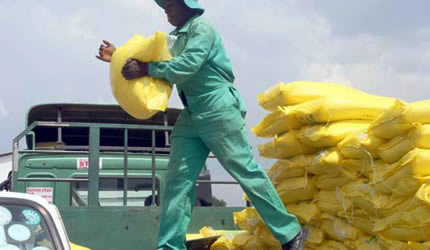
He said Sable Chemicals which is the major fertiliser producer in Zimbabwe, was at times switched off greatly reducing production.
“We have the capacity to produce 260 000 tonnes of fertiliser per year but due to financial constraints we are operating below capacity,” he said.
Zimbabwe requires 240 000 tonnes of fertiliser but at the moment the industry is operating below capacity.
Mr Kachere said Sable Chemicals lost two mass production lines as the company was switched off from power supply due to arrears last year.
“We produced only 60 000 tonnes. Our equipment was damaged in the process and this increases costs,” he said.
“We used to pay US6 cents per unit but the unsubsidised charge of US9 cents per unit is not viable,” he said.
Mr Kachere said Sables paid US$2 million per month in electricity charges.
“We have worked to pay the electricity bills,” he said.
Mr Kachere said the fertiliser industry had more than 20 000 tonnes of fertiliser for this year’s winter cropping season.
The industry also faces financial constraints due to unavailability of affordable loans.
Also see . . .
Government on the other hand owes the fertiliser industry US$4 million in unpaid debts.
Recently Vice President Joice Mujuru expressed the need for Government to assist the fertiliser industry wherever possible to ensure maximum production.
“The industry should be kept running not because of the need for employment only but because fertiliser is important in ensuring food security in the country,” she said.



 Online Reporter