


 Sundaymail Editor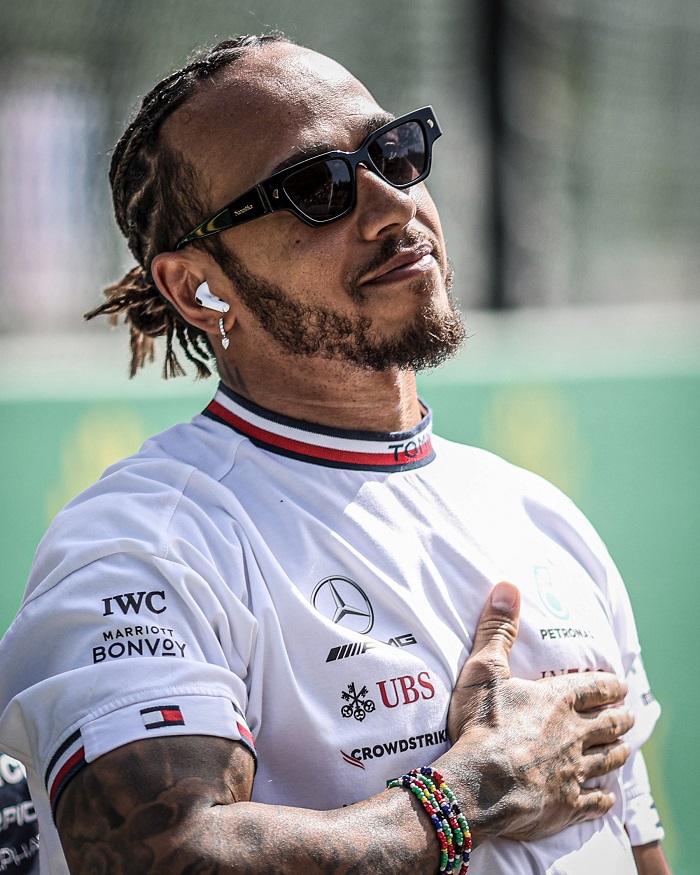
Formula 1’s governing body appears to have backtracked on a rule introduced this year banning freedom of speech for drivers on key issues.
The rule outlawed “political, religious and personal statements” without prior consent, and expressed no limitations on where that restriction applied.
But a “guidance” note issued on Friday puts strict limits on its application.
It means drivers are free to say what they want everywhere but during pre- and post-race events and on the track.
The guidance note says drivers “can express their views on any political, religious or personal matter before, during and after” the race “in their own space, and outside the scope of the international competition”.
It adds that it is explicitly permitted for them to do so “through their own social media, during interviews with accredited media and during the FIA press conference, only in response to direct questions from journalists”.
The note also says that in “exceptional” circumstances, the FIA “may authorise a participant to make a statement at an international competition that would otherwise be prohibited”, with a request submitted four weeks in advance of an event.
It adds that the driver must “provide reason (s) why such permission should be granted”, and that each request will be judged on a “case-by-case basis”.
A number of drivers — including Lewis Hamilton, Max Verstappen, George Russell and Lando Norris — had expressed their concerns about the rule since it emerged.
Russell, a director of the Grand Prix Drivers’ Association, described it as “silly” and “totally unnecessary” and seven-time champion Hamilton said: “Nothing will stop me from speaking on things I am passionate about.”
The drivers’ concerns were on two levels: first, that their right to express their opinions was being restricted; and, secondly, that the rule contained no explicit restrictions on where it applied. Legal experts told BBC Sport that could theoretically mean a driver could express his views on social media away from the track and still be in breach — unlike the situation for Olympic athletes, for example, where the charter limits resections to “any Olympic sites, venues or other areas”.
The controversy was one of a number that have embroiled FIA president Mohammed Ben Sulayem in recent months. The FIA guidance note is also explicit on what constitutes a political or religious statement. — BBC


 Bongani Ndlovu
 Online Reporter