Online Reporter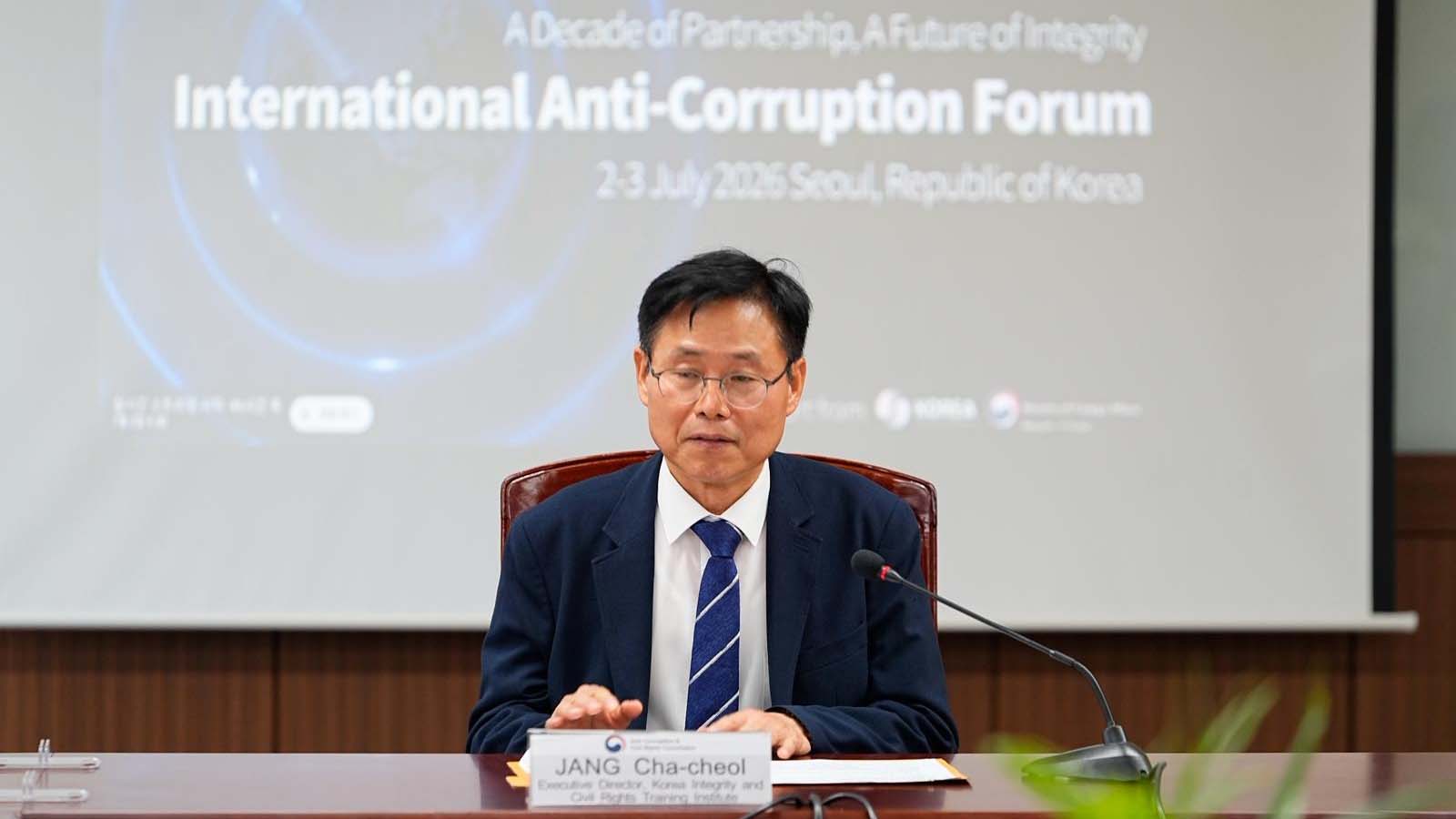
Gibson Nyikadzino in SEOUL, South Korea
Efforts to fight corruption are a global collective where countries share experiences and strategies to strengthen the efficiency of their institutions, the executive director of the Korea Integrity and Civil Rights Institute Mr Jang Chacheol, has said.
Mr Jang made the remarks while addressing visiting journalists ahead of the two-day Korea-United Nations Development Programme Anti-Corruption International Forum starting here on Thursday.
The anti-corruption forum is aimed at sharing best practices and lessons with participating countries on global governance reform and integrity-building initiatives in dynamic global contexts.
“Corruption is not a problem confined to any one country. It is a problem that requires sharing experiences in the field of anti-corruption. Over the past decade, South Korea has shared its anti-corruption mechanisms and strategies through the Comprehensive Integrity Assessment (CIA),” Mr Jang said.
Under the joint forum, South Korea provides policy initiatives while the UNDP Seoul Policy Centre provides development expertise within the framework of the 2030 Sustainable Development Goals (SDGs).
South Korea’s anti-corruption initiatives have drawn global attention and its model has also been adopted by 14 countries that have institutionalised it to suit their context. Last year, South Korea separately signed Memoranda of Understanding (MoUs) with Zimbabwe, Indonesia and Thailand’s anti-corruption bodies.
Ms Hwang Minah, the director of the Anti-Corruption and Civil Rights Commission (ACRC)’s international relations division, said as part of their expanded efforts in the global fight against corruption, they had recently hosted trainees from Zimbabwe.
“Since last year we have expanded our cooperation with Zimbabwe and Ethiopia. We recently hosted trainees from Zimbabwe,” Ms Hwang said.
The ACRC’s mandate includes anti-corruption, handling administrative appeals, institutional improvement and complaints handling. This year’s edition of the anti-corruption forum is expected to draw government representatives from participating countries, international organisations, academia, civil society and those from the private sector.