Judith Phiri [email protected]
THE Reserve Bank of Zimbabwe (RBZ) has said financial inclusion is critical for micro, small and medium enterprises (MSMEs) who are estimated to be 3.4 million in Zimbabwe and generating an estimated US$$8.6 billion towards the gross domestic product (GDP).
MSMEs act as the primary source of income for the working population and sustaining roughly 5.7 million jobs, while agents of rural development with approximately 71 percent of MSMEs being rural based.
Speaking at the World SME Day: Commemoration Seminar in Bulawayo on Tuesday, RBZ Microfinance Division Registrar, Mr Simbarashe Mashonganyika said facilitating access to financial services for MSMEs was important.
“Financial inclusion enables creation of wealth through various financial products. It is a gateway for risk mitigation, a tool for achievement of sustainable development goals (SDGs), a tool for monetary policy transmission and a key enabler of economic growth and development,” he said.
“The effective and informed use of a wide range of quality, affordable, and accessible financial services by all Zimbabweans, on a sustainable basis, provided in a fair and transparent manner through formal and regulated entities.”
He said the National Financial Inclusion Strategy II (2022 to 2026) o aims to increase access to formal financial services across the country to 95 percent by end of this year.
Mr Mashonganyika said financial inclusion was key to improving SMEs competitive advantage through overcoming funding constraints, encouraging SMEs to adopt technological advancements and enhancing risk management.
“It also helps in building credit history as SMEs have access to formal financial services, they create their transactional and behavioural history, which eliminates the challenge of information asymmetry. The created history may become a path to lower borrowing interest rate.
“On build productive capacity, financial inclusion creates opportunities for SMEs to acquire new technology and expand into new regions. While, there is store of value as the use of mobile money does not only enable SMEs to store value, but also gives assurance that their money is safe and secure, which gives time to plan ahead,” he added.
“There is also access to cheaper foreign currency as SMEs formalise and become banked, they have access to cheaper foreign currency for importation of raw materials and productive equipment and machinery.”
He said macroeconomic stability was a bedrock for firm competitiveness as it reduces operational uncertainty, eliminates speculative behaviour and facilitates predictable supply chains which allow business to confidently plan ahead.
Mr Mashonganyika said RBZ has adopted a collaborative approach to the implementation of the National Financial Inclusion Strategies, which enables every target segment to contribute in shaping policies that affect them.
While the central bank has also implemented complementary financial infrastructure reforms designed to reduce lending risk, improve credit accessibility and address structural credit constraints facing MSMEs.
“The financial infrastructure is in place include Credit Guarantee Scheme for de-risking MSME lending, Credit Registry for improve sharing credit information, Collateral Registry which enables movable asset financing and Warehouse Receipt System which supports agricultural MSMEs,” he said.
He said improving SMEs competitiveness heavily relies on transitioning from the informal to the formal sector and taking advantage of the modern financial pathways including artificial intelligence (AI) and digital financial technology.
Mr Mashonganyika said embracing fintech was critical for SMEs to survive competition, avoid informal lending risks, and maintain transparent business operations.
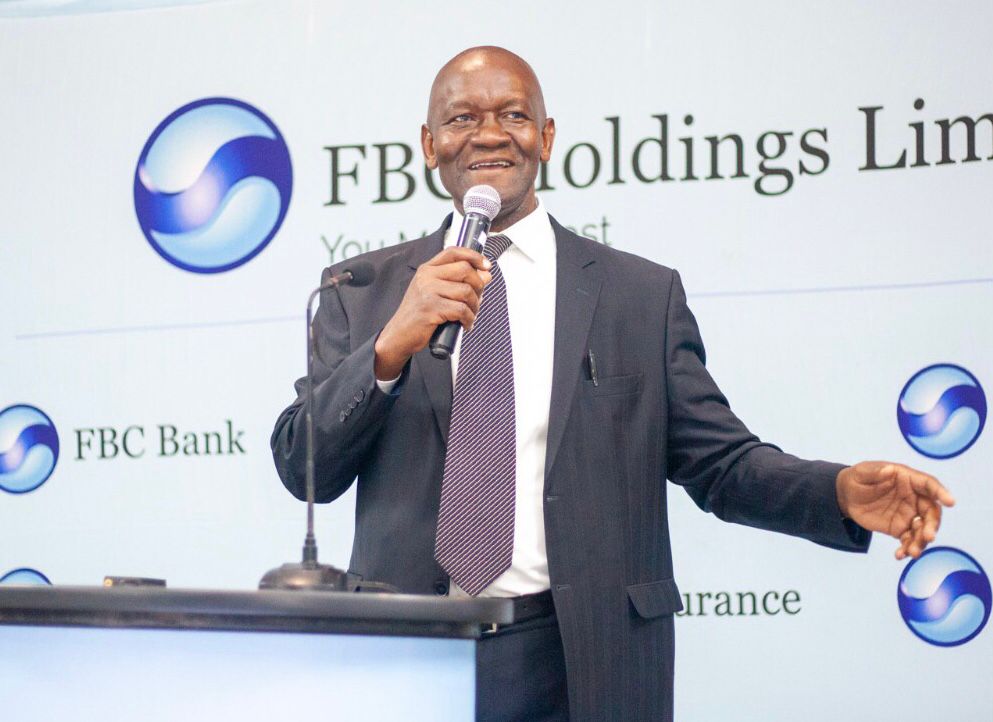
The event hosted by FBC Bank ran under the theme: “Future- Ready SMEs: Unlocking Growth Through AI and Inclusive Digital Finance.”