

 daniel chigunwe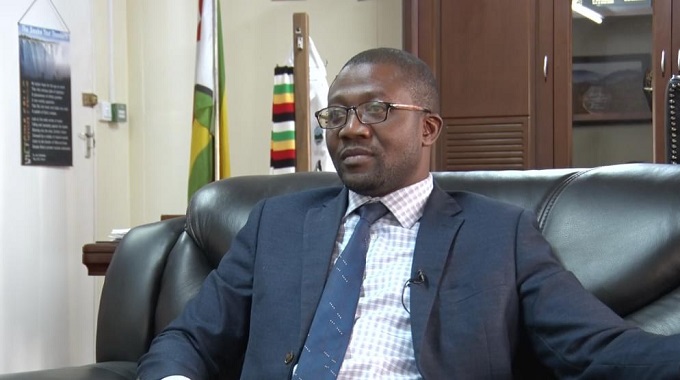
Nqobile Bhebhe
There is a limited willingness among local financial institutions to provide necessary funding for the country’s industrialisation efforts, which are essential for economic development, a Cabinet Minister has revealed.
During a recent pre-budget seminar for 2025 held in Bulawayo, the Minister of Industry and Commerce, Nqobizitha Mangaliso Ndlovu, made an earnest appeal to the treasury for financial support.
“My plea is for increased funding towards industrialisation. We could finance one value chain per year, if possible,” he said in his presentation.
According to his presentation to parliamentarians, Ndlovu said: “Our financial institutions have limited appetite to finance industrialisation needs. Our unique circumstances require that we come up with innovative financing mechanisms. We are in competition with products that are flooding our markets, smuggled from neighbouring countries.”
Ndlovu said over the past years from 2020-2022, the industry sector growth has been averaging 12.11 percent.
He noted that the economic structure is currently skewed towards wholesale and retail trade. Primary sectors such as mining and agriculture have been growing. However, the manufacturing sector has the potential to regain its position as the primary driver of economic growth and development, he said.
“The sector has strong connections with key sectors such as agriculture, mining and services. A sound industrialisation strategy is thus crucial for structural transformation towards economic growth, development and job creation.”
According to Ndlovu, the country is producing 7000 products with 94 subsectors.
Globally, every US$1.00 spent in manufacturing adds another US$2.74 to the economy. For every job created in the manufacturing sector, there are 4-6 downstream jobs created.
Therefore, championing industrialisation in all 10 provinces of the country, exploring opportunities for beneficiation and export diversification will be critical.
“It attracts investment and provides optimisation of value chains. Ensures that we import substitute (fertiliser, pharmaceuticals, cement, iron and steel, edible crude oil, leather, among others).”
The minister emphasised that the 2025 Budget must clearly demonstrate a commitment to addressing the economic challenges currently faced.
He asserted that the Budget should effectively stimulate the manufacturing sector, enabling it to fulfill its vital role within the economy.
Furthermore, he highlighted that the successful implementation of the Zimbabwe Industrial Reconstruction and Growth Plan (ZIRGP) for the years 2024 – 2025, along with bolstering the Local Content strategy, will be essential.
Cabinet recently adopted the proposed transitional ZIRGP that seeks to address immediate challenges faced by the manufacturing and commercial sectors while laying a solid foundation for accelerated industrial development under the Zimbabwe National Industrial Development Policy to achieve Vision 2030 aspirations.
ZIRGP serves as a transitional framework for aligning industrial policy with National Development Strategy 2 (2026-2030), following the lapse of the Zimbabwe National Industrial Development Policy: 2019-2023 in December 2023.
The broad plan encompasses improving ease of doing business, promoting formalisation of the economy, stock-taking of idle infrastructure, amplifying rural industrialisation among other measures and prioritise the export of value-added products, trade promotion, strengthening of regional integration and active participation in the African Continental Free Trade Area Guided Trade Initiatives.
Ndlovu said that the fiscal and monetary frameworks ought to promote business growth, highlighting the importance of the budgeting process in establishing the overall economic climate.
He noted that limited access to affordable long-term financing tailored for the manufacturing sector is a significant challenge, which has been further aggravated by the presence of illegal sanctions.
“Treasury is requested to ensure timeous disbursement of allocated funds for the ministry to effectively fulfil its mandate. The 36 percent budget utilisation shows there is room for improvement. The Ministry is facing challenges or erratic disbursements.”


 Online Reporter