Online Reporter
Blessings Chidakwa
Senior Reporter
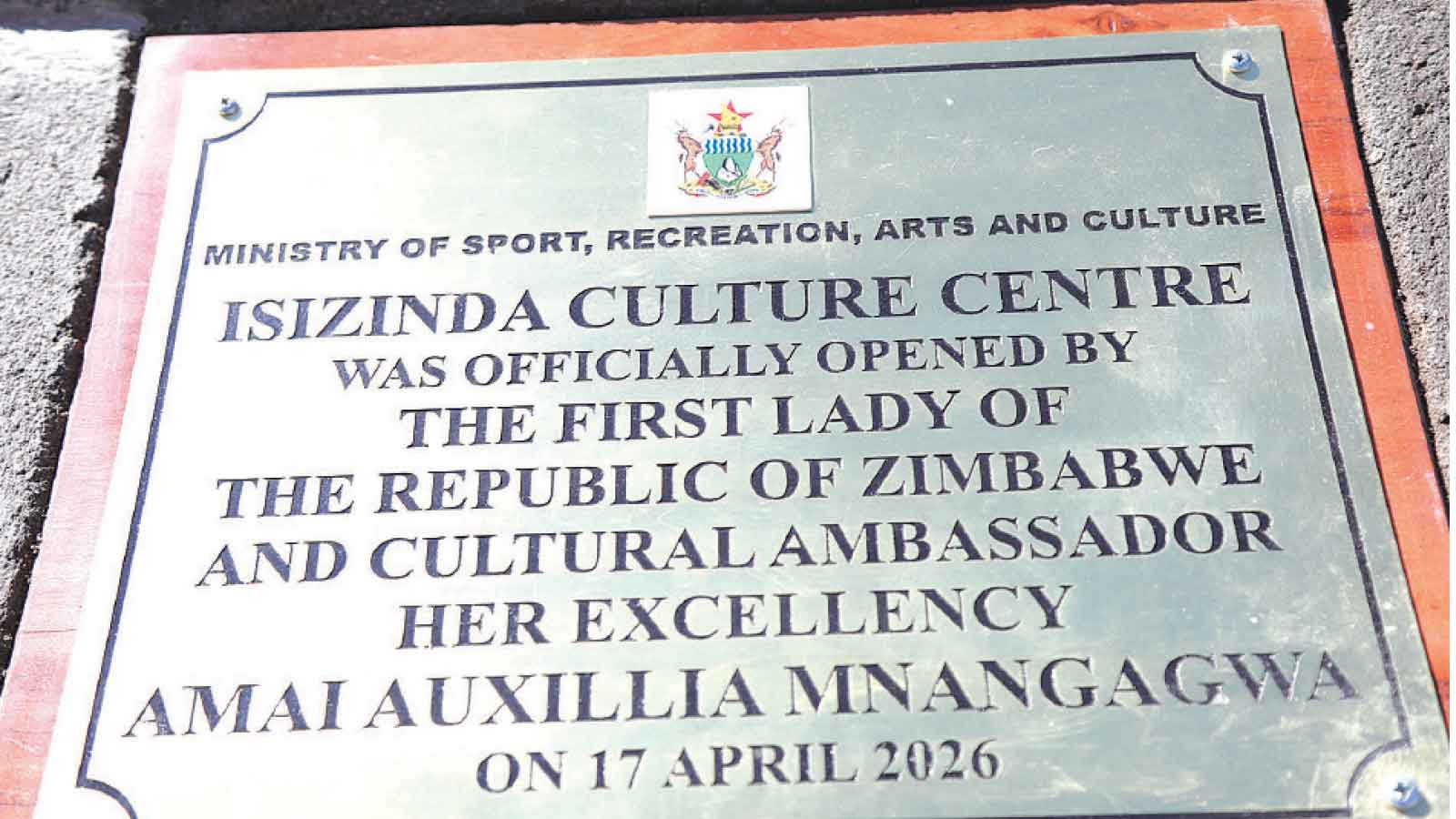
IN a major cultural milestone, Cultural and Heritage Ambassador and First Lady Dr Auxillia Mnangagwa yesterday officially commissioned the Isizinda Cultural Centre, describing it as a vital national investment in preserving the country’s identity, heritage, and values.
Dr Mnangagwa also urged the nation to derive economic benefits by transforming heritage sites into vibrant domestic tourism hubs that empower young people while safeguarding the country’s traditions.
The Isizinda Cultural Centre in Maphisa, Matebeleland South Province is a newly established facility expected to promote indigenous architecture, traditional leadership systems, local cuisine, language preservation, arts, and cultural performances.
It carries deep historical and symbolic significance, going beyond the opening of a physical structure to mark the emergence of a lively and evolving cultural hub where creativity is expected to thrive.
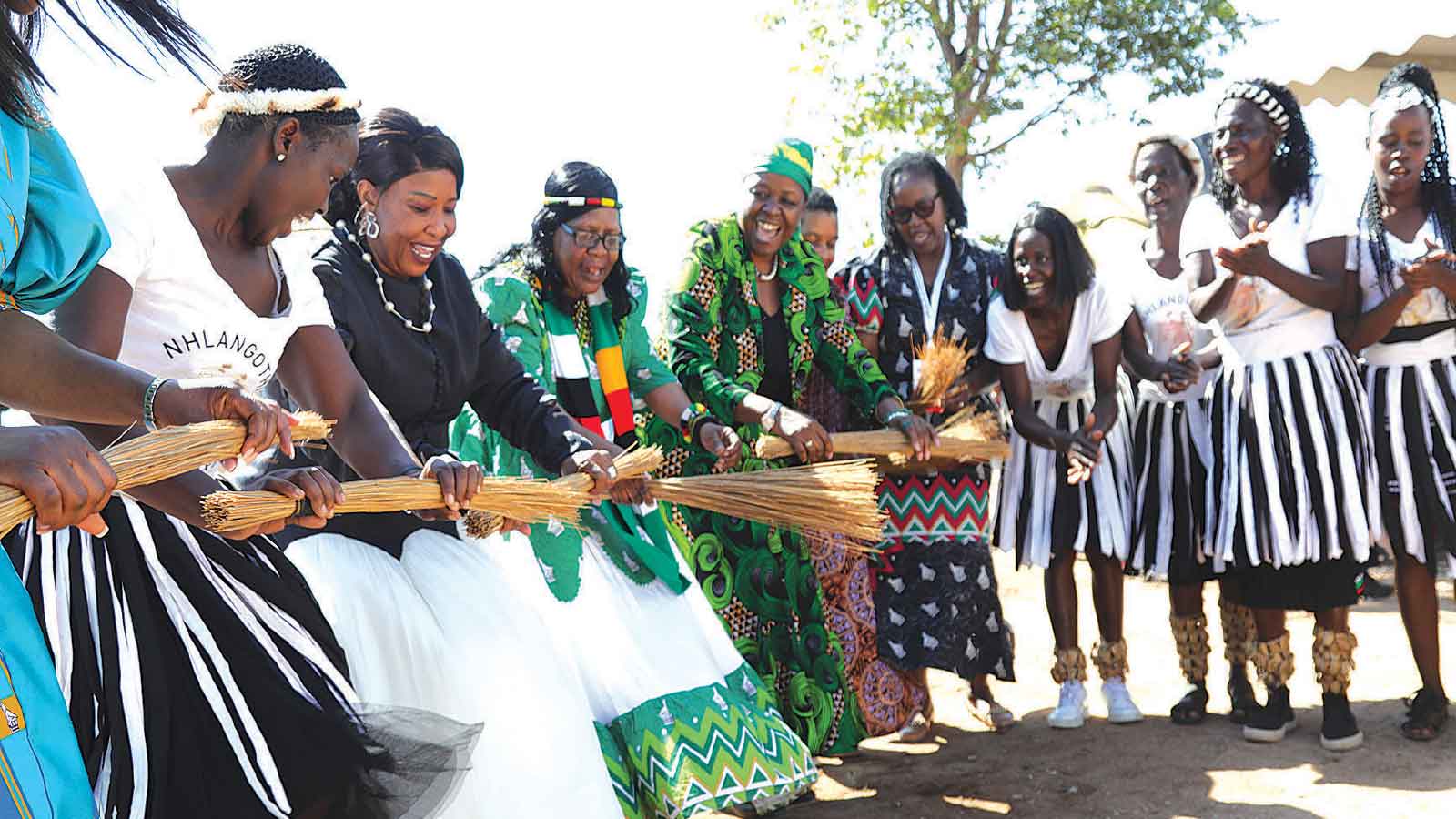
The event started with a well-coordinated Ndebele traditional procession, setting a powerful cultural tone for the main proceedings.
Children led the colourful march, joined by cultural performers in full regalia, as they made their way into the Isizinda Cultural Centre through song, dance, and traditional chants.
The procession symbolically reflected the heritage and unity of the people, drawing together the diverse cultural groups of Matabeleland South Province in a dignified celebration of identity and pride.
The atmosphere was filled with a strong spirit of cultural celebration, reflected in lively Ndebele traditional dances, which the First Lady also joined in, expressing her appreciation for cultural heritage.
The First Lady commissioned the centre before joining His Excellency President Dr Mnangagwa at the Children’s Party held at Mahetshe Primary School.
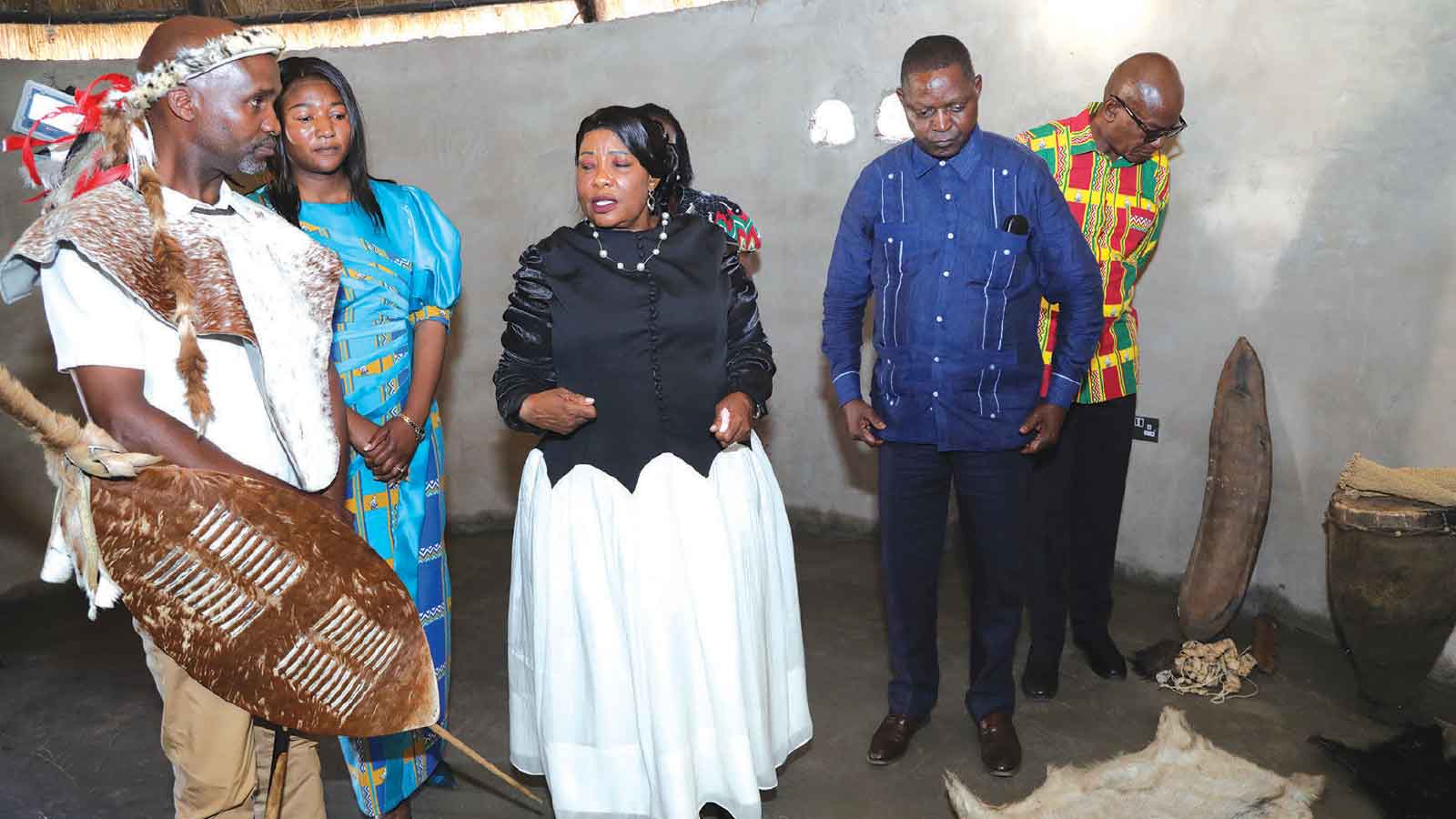
To commence the proceedings, the First Lady toured the facility located near Maphisa Stadium, which features huts crafted in the spirit of a classic Ndebele village, including the idale (dare), unique round or oval-shaped huts with conical thatched roofs, such as the igukwana (hut), and the isiphala (granary).
It also features an exhibition hall, a kiosk, changing rooms, a performance stage, and an administration block.
While officiating, Cultural and Heritage Ambassador Dr Mnangagwa described the moment as deeply meaningful and reflective of cultural identity and continuity.
The First Lady emphasised the importance of cultural preservation, warning that communities must not lose sight of their identity, while commending efforts by the Ministry to revitalise and safeguard African culture at a time when it is increasingly under pressure from globalisation and rapid technological change.
“It is actually critical that as a people, we do not lose sight of who we are as Africans. We are ethnic Bantu groups that are diverse, yet we are united in a unitary state that we call Zimbabwe.”
Dr Mnangagwa said cultural centres such as Isizinda represent important national efforts to document and showcase identity in its diversity, commending collaboration between Government and traditional leaders, saying it ensures authenticity and cultural integrity in such initiatives.
“In essence, these structures at Isizinda and other cultural centres that you are putting up across the nation as Government working with traditional leaders will stand out as useful pointers when we are talking about who we are as a people in our diversity.”

Dr Mnangagwa also highlighted the educational value of the centre, saying it will benefit both local communities and visitors through the showcasing of rich cultural heritage.
The Mother of the Nation expressed hope that traditional leadership would occasionally use the idale (dare) to demonstrate customary court processes, allowing young people to learn about restorative justice and community cohesion.
The Culture and Heritage Ambassador said she would welcome opportunities to see the centres functioning as living heritage spaces featuring cultural dialogue, music, dance, theatre, fashion, crafts, and indigenous cuisine.
The First Lady also highlighted key cultural pillars such as indigenous architecture, cuisine, and languages, saying these remain central expressions of identity anchored on ubuntu.
The Tourism and Hospitality patron also stressed the need to develop domestic tourism, ensure the sustainability of such centres, and keep young people engaged in positive cultural and creative activities to deter them from drug and substance abuse.
Dr Mnangagwa further stressed the responsibility of elders and parents in transmitting cultural knowledge, saying it is essential to interpret and teach cultural values so that young people understand and preserve them.
“It is therefore mandatory and important for us as parents and elders to interpret these signifiers and their symbolisms to enlighten our children so that they understand and become alive to them,” she said.
Dr Mnangagwa said continuous cultural education in everyday life ensures that traditions are sustained across generations, adding that cultural identity must be consciously nurtured through dialogue platforms such as iXhiba, Nhanga, and Gota.
The First Lady said such practices help safeguard heritage, ensuring that the values of ubuntu are passed on to future generations.
Minister of Sport, Arts, Recreation and Culture, Anselem Sanyatwe, said the cultural centres to be established in all districts will serve as spaces where children and youth can visit to reconnect with their cultural heritage, whether in rural areas or urban centres.
“We are doing this in a bid to fulfil Your Excellency’s vision as our Cultural Ambassador, that of ensuring that cultural renaissance in Zimbabwe takes root as we seek once more to raise a wholesome Zimbabwean child as it takes a village,” he said.
“We have taken into consideration the Gota/Nhanga programme that you have revived nationwide. It is a cultural dialogue platform for children and youth to interact inter-generationally with community elders and custodians of our culture.”
Minister Sanyatwe said they have also taken into account the First Lady’s revered national gastronomy programme, which promotes the preparation and consumption of healthy indigenous foods.
“Domestic tourism among different communities is also set to gain traction at these centres,” he said.
“Such cultural centres are inspired by your vision, Your Excellency, and the wisdom you have generously imparted to us as a mother of the nation since the inception of the Second Republic.”
Chief Fuyana said the Isizinda Cultural Centre represents a meeting point between modernity and tradition, saluting the role of the First Lady not only as a national figure but also as a Cultural and Heritage Ambassador committed to preserving heritage.
On gastronomy, Chief Fuyana commended the emphasis placed by Dr Mnangagwa on ensuring that culinary equipment at the centre is used practically rather than kept for display, particularly in the preparation and promotion of indigenous small grains.
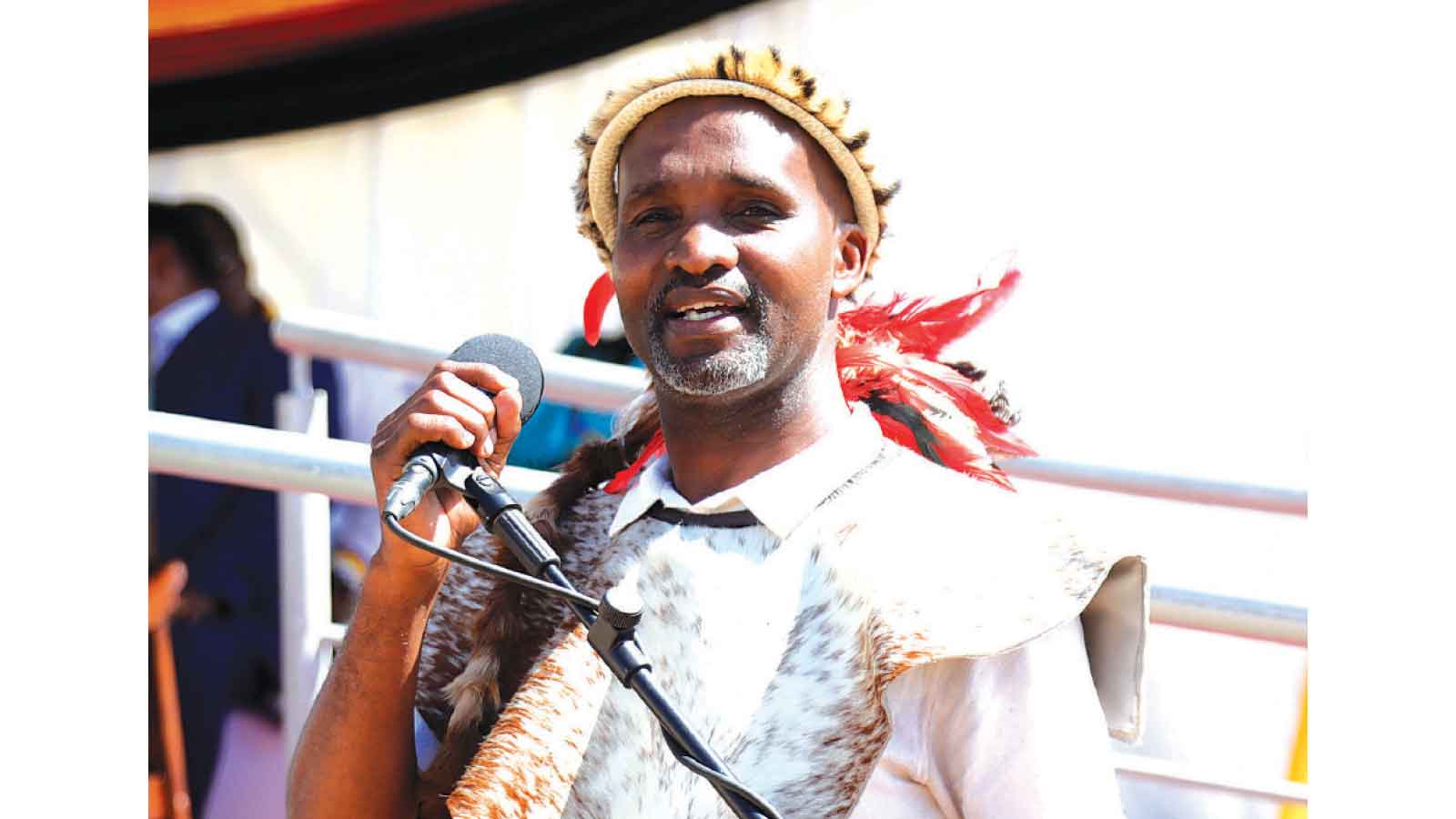
He further called for more vibrant programming at the cultural centre, saying events should be lively and should fully utilise the facility to promote culture and community engagement.
Chief Fuyana also reflected on the enduring importance of traditional leadership, noting that during the liberation struggle, freedom fighters often sought guidance on customary authority structures.
He acknowledged that while many liberation war veterans from that era have since passed on, a new generation continues to recognise and uphold the value of traditional leadership systems.
Matabeleland South Provincial Affairs and Devolution Minister, Albert Nguluvhe, said the commissioning was both historic and symbolic, as it represented not only the unveiling of a physical structure but also the birth of a vibrant and dynamic cultural institution, an environment where creativity will flourish.
“Our heritage will be safeguarded, and our collective identity as a people will be proudly expressed and passed on to future generations. Indeed, this is a proud occasion for Matabeleland South, our rainbow province, and for the entire nation of Zimbabwe,” he said.
Minister Nguluvhe said the centre carries rich and profound historical significance.
“The name Isizinda is deeply rooted in our heritage and speaks directly to the legacy of our forebears. It is derived from our revered great-grandfather of Chief Fuyana, who fought alongside Umdala Wethu, Father Zimbabwe, Dr Joshua Mqabuko Nyongolo Nkomo.
“This name embodies bravery, resilience, and distinguished leadership. By bestowing it upon the centre, we honour not only his memory but also the enduring spirit of our ancestors whose sacrifice laid the foundation for the cultural identity we celebrate today. This centre therefore stands as a living monument to that legacy, ensuring that our history remains alive, relevant, and accessible to generations to come.”
Minister Nguluvhe also expressed gratitude to the First Lady for her continued goodwill and unwavering support for traditional leadership and cultural programmes across the country.
“Through your initiatives, you have consistently empowered our chiefs, headmen, and community structures, strengthening their capacity to preserve our traditions, promote cultural values, and uplift communities.
“Your dedication to safeguarding our heritage and working closely with traditional leaders is a shining example of servant leadership and patriotism, and it resonates strongly with the aspirations of communities gathered here,” he said.
Minister Nguluvhe said as the nation celebrates this milestone during the 46th National Independence Celebrations, it is reminded of the inseparable link between cultural heritage and national identity.
“Culture is the bedrock of our society. It shapes our values, strengthens our unity, and provides a sense of belonging and continuity,” he said.
“Indeed, the establishment of the Isizinda Cultural Centre is fully aligned with the aspirations of our national development strategy. It speaks directly to our national vision of leveraging the creative and cultural sectors as drivers of economic growth, employment creation, and youth empowerment.”
Minister Nguluvhe said the centre will also catalyse community development, fostering social cohesion, promoting cultural exchange, and ensuring that no community is left behind.
“To the people of Matobo and surrounding communities, particularly our esteemed traditional leaders, the custodians of our culture, I urge you to take ownership of this centre.
“Let it be a hub of cultural excellence, a place of learning, storytelling, and innovation. Actively participate in its programmes and safeguard the rich cultural heritage it represents with pride and dedication.”
Minister Nguluvhe said the nation was celebrating more than infrastructure.
“We are celebrating identity, history, and vision. The centre stands as a beacon of cultural pride, a symbol of historical remembrance, and a testament to our collective commitment to nation-building through culture,” he said.
The Isizinda Cultural Village is not merely a collection of buildings; it is a permanent heartbeat of arts and culture designed to outlast the Independence festivities and anchor the district’s identity for generations to come.
The centre’s name, Isizinda, carries the heavy weight of history. It was the name of the ibutho (regiment) belonging to Chief Maphisa Fuyana, a respected regimental head and leader under King Mzilikazi.
In the same way the Isizinda regiment protected Chief Maphisa and the Ndebele State, the Isizinda Cultural Village is expected to safeguard the cultural identity, norms, and values of the people of Matobo.
The site, deliberately positioned beside the bustling activities of the emerging Maphisa stadium, mirrors a traditional Ndebele homestead. This ensemble blends nostalgia with a clear developmental purpose, ensuring that the Second Republic’s “Nyika inovakwa
nevene vayo/ Ilizwe lakhiwa ngabanikazi balo” mantra is reflected in the preservation of local history.
The centre will serve as a strategic resource hub to support the Ministry of Primary and Secondary Education’s (MOPSE) Heritage-based 5.0 Curriculum.
For too long, talented artisans in Matobo have lacked a centralised platform to showcase their pottery, weaving, and traditional carvings.
The inclusion of an exhibition hall and a workshop within the complex transforms Isizinda into a commercial hub for the creative and cultural industries.
This aligns with the national vision to elevate the “Orange Economy,” ensuring that ancestral knowledge is not only safeguarded but also monetised to nurture the livelihoods of local families.