admin
admin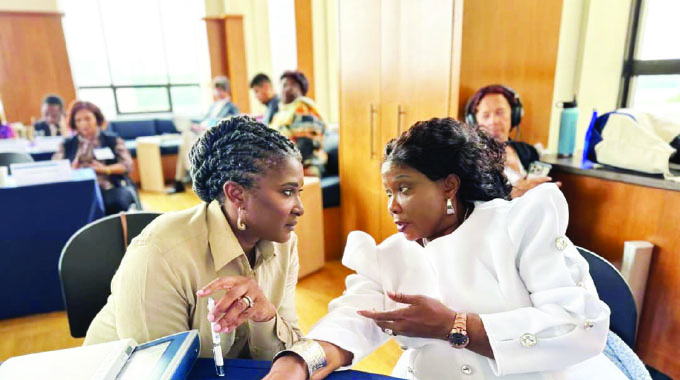
Tendai Rupapa in NEW YORK, United States
FIRST LADY Dr Auxillia Mnangagwa yesterday joined other African First Ladies at the Global First Ladies Alliance training programme tailored to sharpen their skills and deepen understanding of significant global developments in a constantly changing economic, environmental, social and technological context.
The academy is a partnership involving Columbia University’s Mailman School of Public Health, the Global First Ladies Alliance and the Organisation of African First Ladies for Development (OAFLAD).
It also aims to support sustainable and impactful development programmes by the First Ladies in health, education, gender equality, economic development and climate change.
The Global First Ladies Alliance helps First Ladies and first partners leverage their position to champion positive change by strengthening their offices and programmes.
Dr Mnangagwa stood tall when she was mentioned among First Ladies who have made an impact in transforming the lives of people especially through her programme of promoting indigenous food, including traditional grains which are locally available, have high nutritional value and medicinal properties.
Countries represented include Zimbabwe, Botswana, Burundi, Gambia, Kenya, Malawi, Mozambique, Namibia and Nigeria.
Among other things, the high-level training workshop seeks to enhance First Ladies’ role as catalysts for social transformation and also endeavours to create space where First Ladies can share personal experiences, challenges and lessons learned.

First Lady Dr Auxillia Mnangagwa joins other African First Ladies and programme coordinators for a group photo during their first session at the ongoing Global First Ladies’ Alliance training programme in New York
Aside from this, it also prepares First Ladies to continue making an impact post administration and fosters collaboration and increases coordination between First Ladies at regional and global levels.
Founder of the Global First Ladies Alliance, Dr Cora Neumann gave an incisive view of the work of First Ladies and the challenges they face in the execution of their duties.
She also touched on how the First Ladies can run their offices in an efficient manner and with budgets or as foundations.
There was training on how the First Ladies can set up a good foundation which is effective and how to fundraise for the foundation which won’t be on Government’s budget like Dr Mnangagwa’s Angel of Hope Foundation which has its own offices detached from Government properties and not State funded but relies on well wishers and partners.
The mothers of nations also gained knowledge on how to put up a good proposal when looking for resources from potential donors.
They were told to first identify what issues they would want to focus on for example responding to covid-19, rising infant and maternal mortality.
The coordinators took the First Ladies through scenarios on how things are handled in a strategic way that is identifying the problem, develop a strategy, how to implement it, monitor and track results.
It was said that countries differ though on how the First Ladies run their foundations depending on their challenges at hand.

First Lady Dr Auxillia Mnangagwa chats with the First lady of Kenya Mrs Rachel Ruto during the ongoing training workshop
Amai Mnangagwa shared insights on how she has been running AOH and how she has been mobilising resources before they were put in groups and shared regional experiences.
Dr Neumann said: “First Ladies are charged with the most difficult problems in their countries
“They are however, passionate and dedicated. Roundtables thus allow them to share best practices, set mutual standards and develop support network and alliances. They have a unique reach to the people,” she said.
She made a colourful presentation on what it takes for First Ladies to have impact on all levels of society like national, local and international including the public and private sector.
First Ladies, she said, are supposed to be benevolent and apolitical.
“A mother of the family does not choose favourites among her children and in the same vein a First Lady cares for all citizens without taking sides.”
This dovetails with the work done by Dr Mnangagwa who is fair, inclusive and competent judging by her programmes which accommodate everyone regardless of religious and political affiliation going with her mission of leaving no place and no one behind.
Dr Mnangagwa has rolled out massive economic empowerment programmes including farming, detergent-making, livestock production, sewing and chicken rearing for the girl child and women without being selective, including in her health programmes which cover people in both urban and rural areas.

First Lady Dr Auxillia Mnangagwa shares lighter moments with OAFLAD president, Mrs Monica Geingos, the First Lady of Namibia during the Global First Ladies Alliance training programme in New York, USA
A First Lady, Dr Neumann said, should lead through multiple roles of being an advocate, facilitator, convener, coordinator, catalyst, role model, recogniser and monitor before hammering on the importance of partners.
“The role of partners is to support the First Ladies in their roles. To be successful, they need structure, focus and support. They also need vision, a mission, agenda and to make a lasting impact. The work of a First Lady and partner must be integrated and collaborative with the broader national strategy of their administration,” she said.
“Some of the most successful programmes we have seen implemented by First Ladies since we began our alliance, are those that really reach down to the local level and engage traditional leaders, local leaders, shopkeepers, musicians – people who are on the ground who are able to translate the messages to inform the national strategy and touch the lives of the local people.
“First Ladies, especially in Africa have a unique reach to the local level and places and that is something we really admire,” she said.
Amai Mnangagwa has traversed the length and breadth of the country engaging people from grassroots level.
OAFLAD president, Mrs Monica Geingos, the First Lady of the Republic of Namibia highlighted a number of activities that First Ladies do to assist people in their nations, naming Dr Mnangagwa among those who were doing exceptionally well.
“The other First Lady who strikes me is from Zimbabwe. First Lady Dr Auxillia Mnangagwa has a programme on nutrition, which is particularly important for pregnant mothers.
“It is about educating people on the nutritional value of traditional food. What that means is rather than telling people that you need to get a balanced diet by eating some things that aren’t available in countries, She is reminding people of the nutritional value of food that is available, healthy and teach them how to prepare it. She is teaching people that they can have nutritious meals from what they have,” she said.
She added, “This programme i like it because it has regional implications and it is something i would like Namibia to do, something that we will also work in Malawi, Gambia Kenya and other African countries because we are the same.”

First Lady Dr Auxillia Mnangagwa and Mrs Isaura Nyusi, the First Lady of Mozambique exchanging pleasantries during the Global First Ladies Alliance training
She praised First Ladies for their work in influencing policies against child sexual abuse and influencing a policy position on the treatment of diseases like cancer.
Dr Mnangagwa is spearheading the production of traditional grains by providing seeds and all the needed inputs and chemicals, working with women in planting, weeding and reaping.
She also promotes the consumption of traditional grains which have high nutritional value.
She has organised traditional meal cookout competitions where women showcase a variety of dishes that can be prepared using traditional ingredients.
So popular have been the cookout competitions that they have gone regional with Namibia, Angola, Mozambique, the Democratic Republic of Congo, Botswana and Nigeria being among nations that had participants in support of Dr Mnangagwa’s efforts to promote indigenous dishes thus creating opportunities for gastronomy tourism.
Zimbabwe also had participants in the vibrant competition which saw Kenya and Uganda participating on a benchmarking basis.
The event attracted SADC Ambassadors to Zimbabwe led by their dean, Mozambican Ambassador Mr Francisco Elias Paulo Cigarro.
Uganda’s Permanent Secretary in the Ministry of Tourism, Wildlife and Antiquities Mrs D. Katsuiime and Namibia’s Deputy Minister of Environment, Forestry and Tourism Mrs Heather Sibungo Mwiza, UNWTO regional director for Africa Mrs Elcia Grandcourt were also among the dignitaries.


 Online Reporter