Chronicle Editor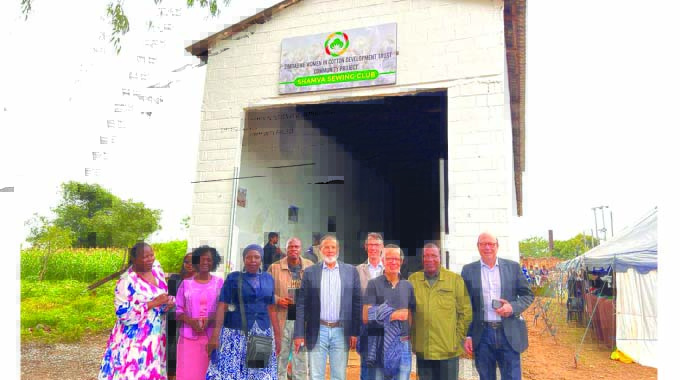
Tendai Rupapa, Harare Bureau
WOMEN cotton growers have paid glowing tribute to their patron First Lady Dr Auxillia Mnangagwa for her interventions which have increased their stake in oil production and contribution to rural industrialisation.
Since the appointment of the First Lady as their patron, the women said they had seen a marked improvement in their lives and looked forward to achieving more under her stewardship.
Previously, women farmers shunned cotton production because of low returns.
Sometimes they received soya chunks and soap as payment.
However, this changed drastically with the coming on board of Dr Mnangagwa.
The women now have sewing clubs courtesy of the First Lady who sourced sewing machines for them and is also sourcing oil pressing machines, thus contributing to rural industrialisation.
Zimbabwe Women in Cotton Development Trust chair Mrs Patience Zhakata said the First Lady’s arrival emancipated them from the yoke of slavery.
“I wish to thank the First Lady from the time we started working with her as our patron, our programmes are growing,” she said. “We were lagging behind in the rural areas where we were growing cotton. However, from the time we started working with Amai we have been freed from the “yoke of slavery” we were in.
“Amai has helped us in many aspects some of which we were not aware of because in cotton we get oil and stockfeed. I thank her for giving us dignity in our communities. Vision 2030 now has meaning because from where she took us and where we are, we are moving in the right direction.”
The First Lady, Mrs Zhakata said, helped source sewing machines for women farmers so that they remain occupied off-season and keep their children occupied to stay away from drugs which are affecting youths countrywide.
“Now she is sourcing for us oil processing machines from well-wishers and partners,” said Mrs Zhakata. “Now we have partners who are assisting us with oil processing as we await the arrival of the machines. We now know that edible oil is from us and we are part of the value chain.
“Her intervention made us get 75 percent foreign currency and we no longer get chunks and soap as payment for our cotton. Through her Agric4She programme, the First Lady has transformed women’s lives. She has raised us from the dust. She has been assisting us fully and we now have regular supply of food. Our lives have changed.”
Mr Maxwell Chad, the local representative of the international partners, a consortium of international cotton buyers, also saluted the First Lady for her hard work and pledged to continue backing her initiatives.
“The trust was formed after the women were facing challenges in the rural areas where they grow cotton,” he said “The challenges they mainly faced were lack of resources to develop clubs and projects which would enable them to raise money.
“We as the off-takers of the commodity found it necessary to support the women through our hardworking First Lady. She engaged us as our mother, asking us to find ways to assist the women farmers countrywide.
“As the international consortium, we took heed of the First Lady’s plea and donated sewing machines to her for onward distribution to the women farmers countrywide.
The First Lady is setting up sewing clubs for the women in the rural areas.
“We are currently in the process of negotiating with manufacturers in India to bring in small-scale oil pressing machines which again will enable the women to participate in the rural industrialisation programme.
The First Lady has been very instrumental in the sourcing of these resources through our partners. We thank Amai for having confidence in this consortium.”
The foreign partners, Mr Chad said, were now sourcing markets in Italy for the clothes, bags and table cloths being sewn by the women.
The women farmers also shared their success stories following the First Lady’s intervention.
Mrs Happiness Marambe said it was disheartening to grow cotton in the past as they would not be paid.
“We would not get money after selling our crop,” she said. “One year we were paid with chunks and soap, yet we had school fees commitments to contend with. We also needed cash to buy our children clothes and uniforms.
“We took our complaints to our patron and she pledged to find a solution. True to her word, she is helping us a lot and things have changed for the better. She mobilised sewing machines for us so that off-season we then concentrate on sewing projects to boost our finances.
“Our cotton payments are being disbursed regularly and we can only thank our patron. Amai is encouraging every woman countrywide to grow crops, including cotton which gives us many benefits through value addition.”
Mrs Nyebudzai Kahoko said this season she was expecting to harvest 10 bales of cotton.
“We were stressed by the lack of money and focused mainly on tobacco. My father passed on and I failed to meet his funeral expenses. Our spouses were discouraging us from growing cotton because of low returns.
“But things have changed now. Amai has boosted our confidence we are now standing tall as women farmers. We were used to eating vegetables cooked without cooking oil, but now this is a thing of the past because of cotton. She sourced partners for us who are helping us with pressing our jinned seed. We are also expecting our own machines from partners sourced by our patron,” Mrs Kahoko said with a smile.
Mrs Francisia Ziki shared a similar tale.
“The First Lady asked the challenges we were facing and we opened up,” she said. “Owing to non-payment for the crops we failed to send children to school until they dropped out. My daughter eloped at a tender age.
“Now I am happy we are getting money and sending our children to school with uniforms that we sew on our own. We also sew their clothes alone because Amai provided us with the material. She is a game changer.”
The First Lady is spearheading numerous agriculture initiatives for vulnerable groups, particularly women and girls for them to meaningfully contribute to the country’s economic development.


 Online Reporter