Online Reporter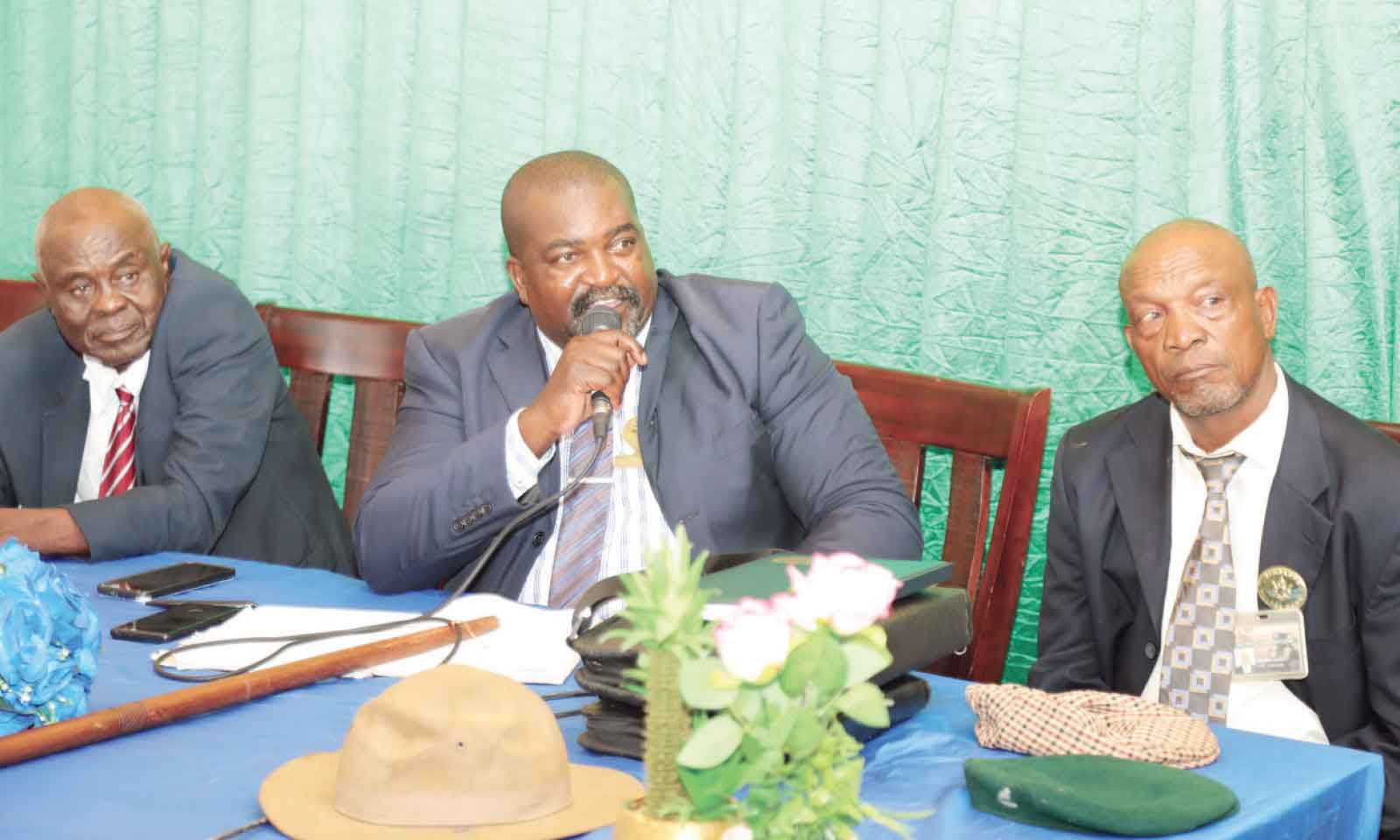
Blessings Chidakwa in ZHOMBE
CULTURE and Heritage Ambassador, First Lady Dr Auxillia Mnangagwa, took her vibrant and engaging Dare initiative to the Midlands Province, where a bumper crowd gathered at Chief Gwesela’s Traditional Court in Zhombe to witness how local cases are handled.
Under the open skies, families gathered shoulder to shoulder, united by hope and curiosity, eager to witness justice delivered the traditional way.
What unfolded was not just a court session, but a deeply moving journey of pain, forgiveness and healing.
The Chief Gwesela Ndebele court, which heard emotionally-charged cases that touched raw nerves within households and across the community, was attended by fellow traditional leaders, including Midlands Provincial Chiefs Council chairperson Chief Ngungumbane.
Among the cases brought before the court was the ngozi one, which was so heartbreaking that the people meant to appear in court were absent, not out of disregard, but because they were attending another funeral.
Grief had taken over where justice was supposed to begin.
Other cases included a son-in-law accusing his father-in-law of marrying off a daughter without his knowledge, allegations of witchcraft and wizardry, a woman found naked in a tree in the dead of night, broken families, strained marriages, long-standing grievances that had weighed heavily on loved ones for years and child marriages.
The cases heard mirrored stories echoed daily through the First Lady’s toll-free Gender-Based Violence hotline, 575, which continues to receive calls from every corner of the country.
The event was magnificently rolled out just like it has been in the provinces of Mashonaland Central, Mashonaland East, Manicaland, and Masvingo where the First Lady took the initiative.
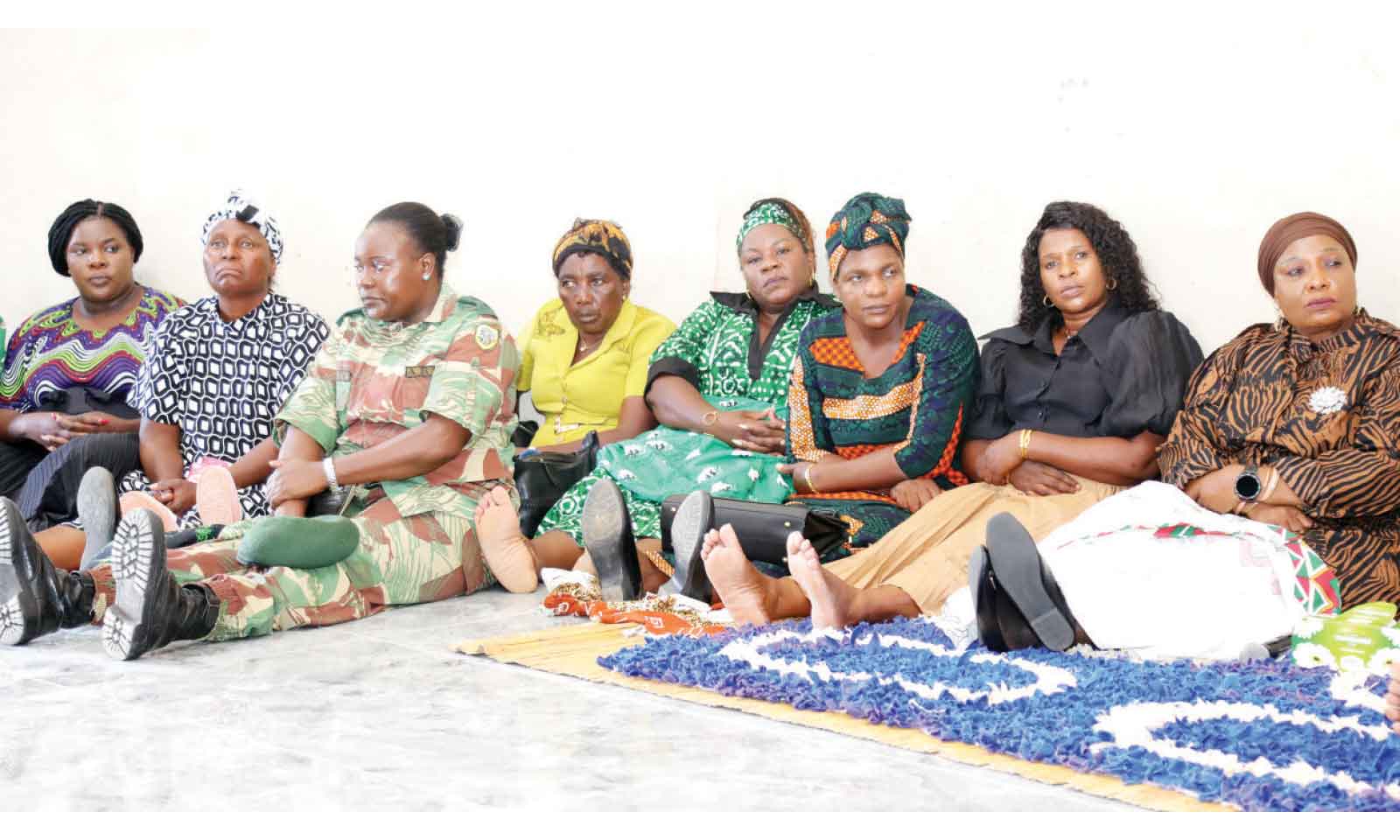
As tradition dictates, Chief Gwesela, accompanied by his council, sat at the front of the court, positioned in the middle and facing the attendees. Complainants stood to the left, the accused to the right.
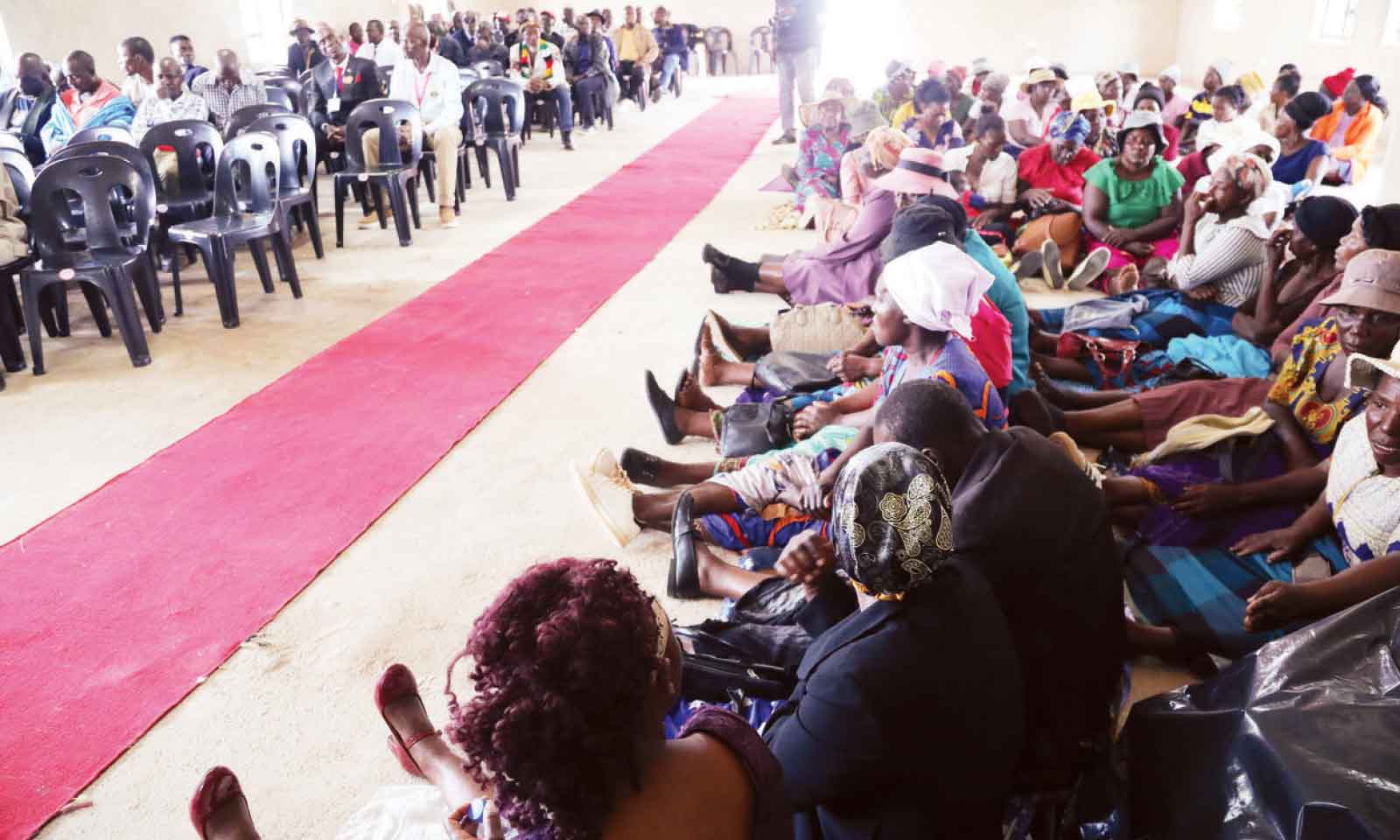
Women, including the First Lady, sat humbly on reed mats, while men occupied chairs a powerful symbol of respect and cultural values.
The turnout of the community eager to learn was so overwhelming, being served openly and freely, much to the delight of all.
When Chief Gwesela entered the courtroom, silence fell. There was anticipation in the air, but as the hours passed, it became clear this was more than a place of judgment.
It was a space for reconciliation, where broken bonds were repaired and cultural values restored.
One of the cases involved a son-in-law who accused his father-in-law of marrying off his daughter without his knowledge and pocketing the lobola money.
The father-in-law said he raised his granddaughter alone after the man allegedly neglected both mother and child, insisting he had the right to marry her off.
He also accused the son-in-law of impregnating his daughter and abandoning her without paying bride price or damages, claims the son-in-law denied.
The son-in-law maintained he had sent emissaries to pay lobola, but the court heard there was no evidence to support this. He raised eyebrows when he asked, “If he says I did not marry his daughter, then what was the US$10 he received for?”
He failed to produce a bride price list, saying one of the negotiators had since died.
Chief Gwesela adjourned the matter but condemned greed, saying it is taboo to marry off a daughter without involving her bloodline, warning of possible misfortune. He also ruled that damages must be paid.
Another case, heard, involved a woman who was reportedly found screaming naked in a tree at night.
The court was told the woman and her husband had recently moved into the area after he secured temporary work.
Her husband testified that he clothed her and helped her down. Chief Gwesela said people relocating must carry transfer letters from their traditional leaders.
The woman was absent, prompting the Chief to order her appearance before court.
In another matter, family members accused each other of witchcraft.
A complainant said his uncle was barring them from accessing their late father’s homestead, where their stepmother now lives.
The uncle said the accusations had forced him to restrict access until the memorial service is held. Children also accused their stepmother, a move Chief Gwesela rebuked.
“If your mother dies and your father remarries, that woman becomes your mother too,” he said, adding that children have no right to enter their father’s bedroom.
Traditional leaders and apostolic sects will be called to cleanse the family. A strained marriage was also heard, with a couple separated for nearly seven months following an alleged assault.
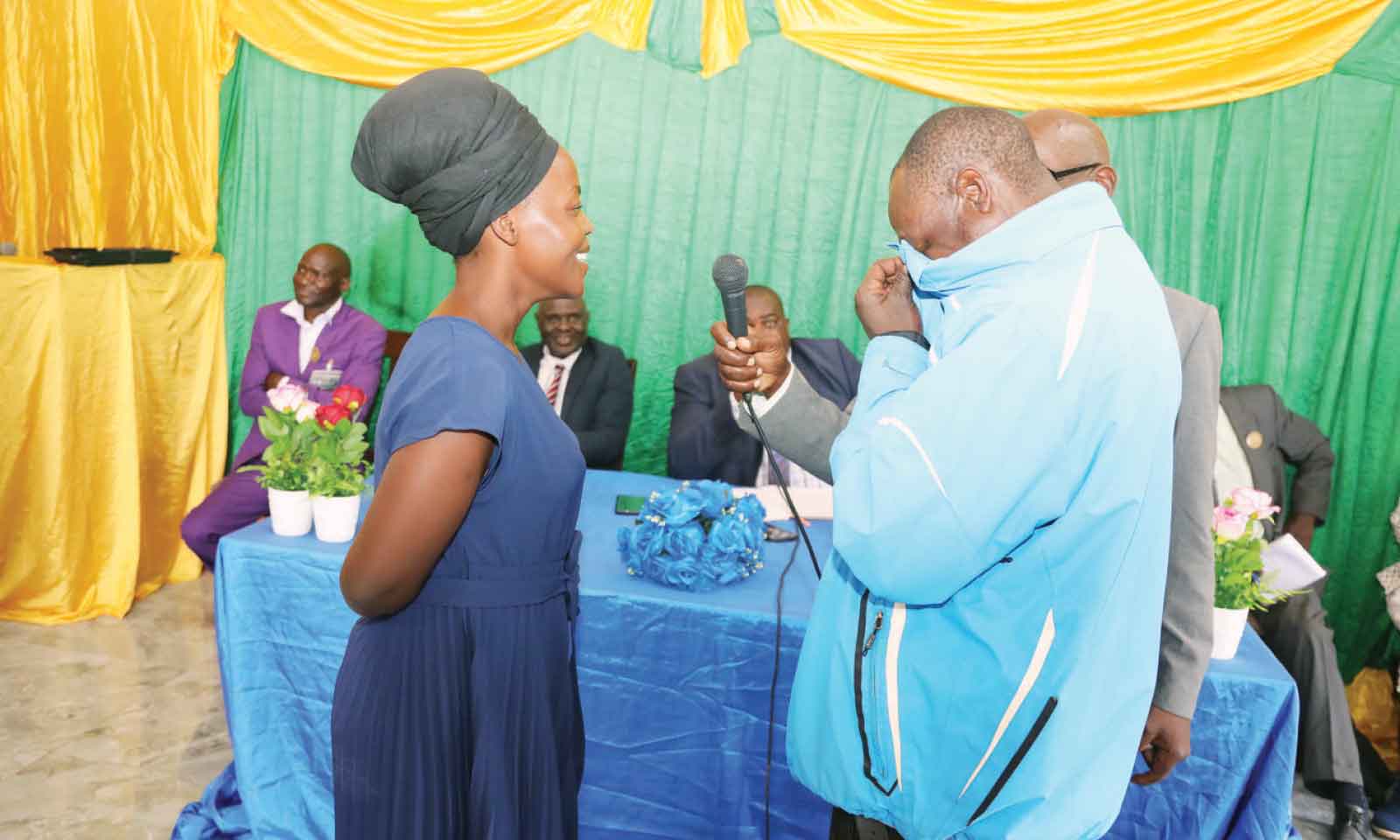
The husband was accused of failing to provide and neglecting to follow up after his wife returned to her parents. Asked why he did not, the man told the court he feared being beaten by his in-laws and later sent his father, drawing laughter from the gallery.
Both later admitted they still loved each other. The wife’s mother demanded four cows as compensation three to be paid by February 22, 2026, with the date for the forth yet to be announced.
The couple reunited in court, sealing their reconciliation with a kiss.
Forgiveness followed when Ngwenya knelt before his mother-in-law, who accepted his apology.
Chief Gwesela urged the husband’s father to continue disciplining his son, saying parental responsibility does not end with marriage.
“Even when married, a child remains a child and must still be corrected,” he said.
After the court proceedings, Chief Gwesela offered the Culture and Heritage Ambassador, who sat among the women and listened attentively throughout the court session, a chance to share some sentiments, a request she humbly accepted before sharing her words.
Dr Mnangagwa thanked Chief Gwesela for making strides in preserving their rich cultural heritage, which continues to serve as a guiding force for society, saying the erosion of heritage has contributed to moral decay, highlighting the importance of reclaiming and upholding the country’s cultural values.
“We want to continue honouring and preserving our traditional leadership. Let us value our culture, because if we do not value it ourselves, no one else will,” she said.
Dr Mnangagwa said her Dare engagements are meant to take people back to the roots, recognising traditional leadership and court set-ups, ensuring Zimbabwe’s cultural values remain central in addressing social challenges.
The First Lady also said the engagement was vital for society so that when one encounters such issues next time, they understand how these matters are handled traditionally and the correct procedure to take.
“I appeal to all of us to return to our values and our culture. It is important that people understand that we have our traditional leaders whom we respect, and when we handle our community matters, we must know the proper way to do so,” she said.
The Culture and Heritage Ambassador also said it is important that people know diverse indigenous cultures what people in that area eat, their traditional cuisines, languages, among others.
“Today we have come to the Chief so that children can learn our traditions. If we fail to do this, we forget where we came from and that is exactly what those who wish to destroy us want.
“We do not want our culture and values to be replaced. We have sacred ancestral places where our forefathers settled. If we do not understand these roots, we have no direction. I came today to say our traditional leaders are here let us learn from them,” she said.
Dr Mnangagwa also said some cases are handled in both statutory and traditional courts, saying while someone who commits murder may be sentenced in a modern court, the spirit of the deceased (ngozi) must still be appeased through traditional means.
“We thank the Chief for showing us how such cases are handled here in traditional courts. In our society, some cases are judged twice first in modern courts and again in traditional courts,” she said.
“Cases of witchcraft are not recognised in modern courts, but today we have seen that the Chief acknowledges them under traditional law. Our traditional leaders still hold the power to handle such matters. Let us continue respecting them and our culture to maintain our social fabric.”
As part of promoting cultural heritage, the Culture and Heritage Ambassador highlighted the epitome Baradzanwa Cultural Leisuire Village, a newly established cultural village in Mashonaland Central province, recognised for its deep cultural significance.
Nestled beneath a towering, history-steeped mountain, Baradzanwa combines breathtaking natural beauty with rich cultural heritage, offering a vibrant yet tranquil space for relaxation, entertainment, and the celebration of tradition.
Dr Mnangagwa said the village resonates with the spirit of Mbuya Nehanda, recalling that, according to history, she foresaw a future where people would return to places like Baradzanwa to honour tradition before her incarceration.
The champion of social justice, the First Lady, went on to address the bumper crowd, urging individuals of all ages to shun social vices, emphasising the need for collective responsibility in promoting a morally upright society.
Dr Mnangagwa also urged the community to tackle a rising trend in cases of promiscuity among married couples, child marriages, gender-based violence, divorce, prostitution, as well as drug and substance abuse, which has destroyed the lives of several people.
The First Lady also took a swipe at some women for alcohol abuse, which has become serious such that even married ones are now competing with male counterparts to drink whisky.
Dr Mnangagwa also urged women to live with dignity, touching on inappropriate dressing, urging them to dress modestly and be good role models to young girls.
To their male counterparts, Dr Mnangagwa also urged them to stop abusive behaviour, immoral conduct, and inappropriate desires toward little girls whom they should respect and protect; instead, she challenged them to be of good morals.
As for the children, while decrying school dropout cases, the First Lady said parents must also closely monitor and protect their loved ones.
The First Lady encouraged the children to focus on their education, working hard while at home doing household chores, and also choosing good friends.
Applauding the First Lady for bringing the initiative to their community, Chief Gwesela said he stands ready to continue pushing for cultural restoration while also acknowledging her several life-changing initiatives, including Agric4She, empowering women.
The Chief also welcomed the First Lady’s guidance given to women to dress modestly, saying they hope women will begin to dress appropriately.
Chief Gwesela encouraged women to engage in income-generating projects to improve their livelihoods.
He also took time to thank the many tangible initiatives being championed under the Second Republic, which have brought developments across different sectors, even locally, including the rehabilitation of the Zhombe Highway, which was formerly a nightmare but has now been properly repaired under the Second Republic.
Director of Provincial Coordination in the Midlands Province, Mr Kudakwashe Machako, who was representing the Provincial Affairs and Devolution Minister Owen Ncube, hailed the initiative and commended the chiefs for the important work they are doing in their communities.