Online Reporter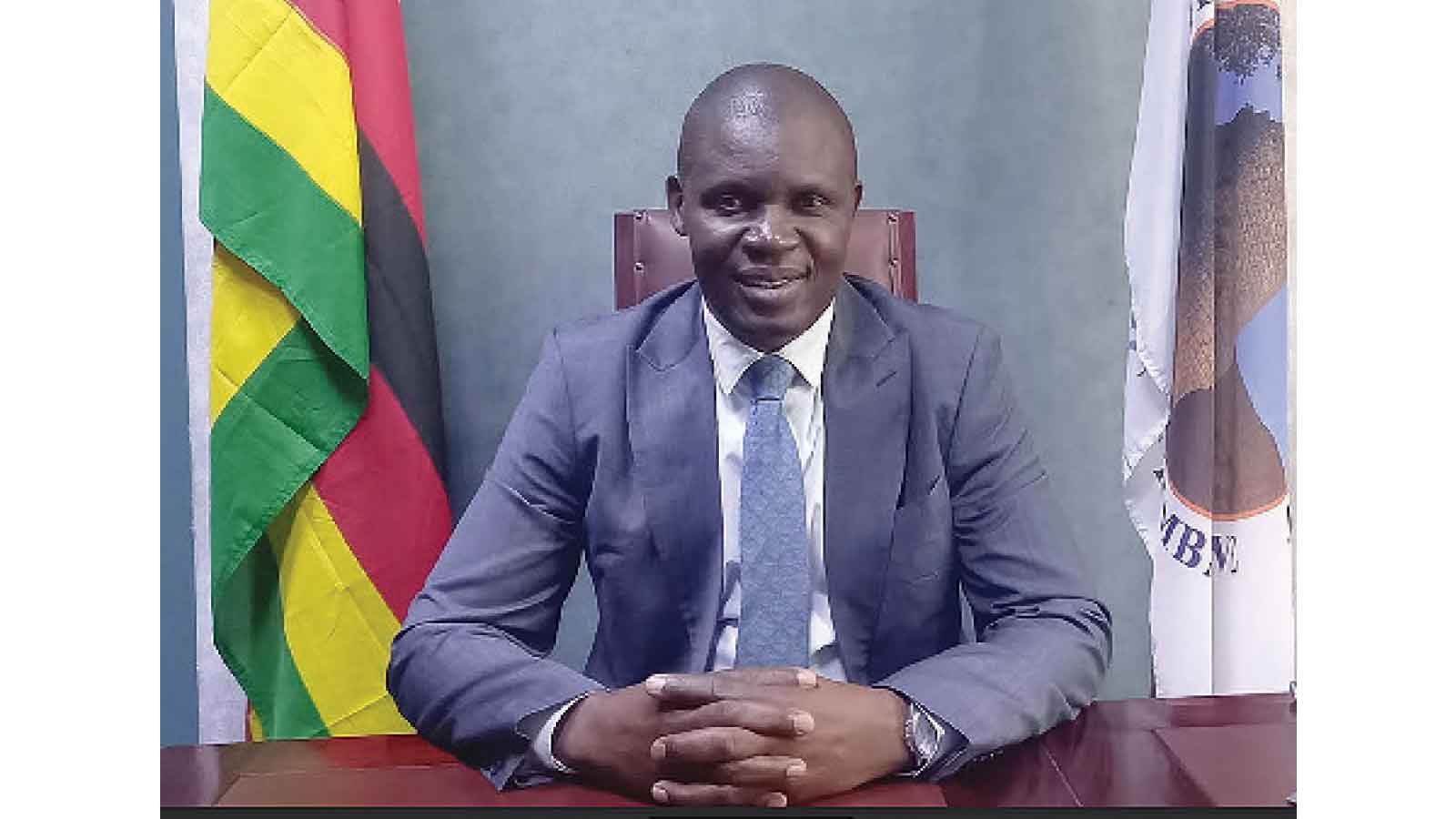
Tapiwanashe Mangwiro
Senior Business Reporter
As the world observes International Financial Intelligence Unit Day on June 9, Zimbabwe’s Financial Intelligence Unit is drawing attention to the silent but critical war being waged against financial crime, which, according to its director general, Mr Oliver Chiperesa, touches the life of every ordinary citizen, whether they know it or not.
This year’s global theme, “Following Financial Trails”, underscores how FIUs across the world expose corruption and dismantle the networks that drain national economies of their lifeblood. For Zimbabwe, the message is especially resonant.
“The day, June 9, is used by FIUs around the world to draw attention to the work that they do in combating financial crime,” Mr Chiperesa told Herald Finance and Business in an exclusive interview.
“In the context of Zimbabwe in particular, illicit financial flows have a negative impact on the economic development of countries. Zimbabwe is no exception. We lose a significant portion of our resources through financial crimes and illicit financial flows.”
Mr Chiperesa was unequivocal about the stakes involved, linking the fight against financial crime directly to the country’s development agenda.
“Even the implementation of National Development Strategy 2 would not succeed as much as we would want it to if we do not combat illicit financial flows,” he warned.
For citizens unfamiliar with the unit’s mandate, Mr Chiperesa explained its core function, one that extends well beyond the walls of the banking sector.
“The key function of a Financial Intelligence Unit is to scrutinise and analyse financial transactions to identify those transactions that could involve the proceeds of crime,” he said.
“Our main work is to receive financial data from financial institutions, but not just financial institutions; we have some designated businesses that intermediate certain transactions.
“Your estate agents, your lawyers, your accountants; they all facilitate different types of transactions that can easily be used by criminals to clean illicitly acquired wealth.”
The FIU, he explained, compiles intelligence reports from this data and shares them with law enforcement agencies for further investigation, but its role does not stop there.
“Our role is also to coordinate generally, nationally, with all stakeholders who are involved in the anti-money laundering value chain, including supervising or coordinating the supervision of financial institutions and those designated businesses to make sure they implement anti-money laundering measures to identify and report financial crime,” he said.
A lesser-known but pivotal structure in Zimbabwe’s anti-financial crime architecture is the National Anti-Money Laundering Advisory Committee (NAMLAC), for which the FIU serves as secretariat and policy coordinator.
“The National Anti-Money Laundering Advisory Committee is a high-powered, high-level committee that is appointed by the Minister of Finance, Economic Development and Investment Promotion to oversee the crafting and implementation of policies to combat money laundering,” Mr Chiperesa explained.
“Through NAMLAC, the FIU also conducts national risk assessments, identifying areas in the economy that are vulnerable to being misused for money laundering and then making appropriate policy recommendations, which then go through the committee and ultimately to the Government through the Minister of Finance.”
Zimbabwe has made measurable strides in aligning itself with the global anti-money laundering standards set by the Financial Action Task Force (FATF).
Mr Chiperesa noted that Zimbabwe is currently rated as compliant on 37 of the FATF’s 40 recommendations, a standing he described as not only one of the best in the region, but which compares very well with the rest of the world.
However, Mr Chiperesa was candid about the cost of complacency, recalling the pain of Zimbabwe’s 2015 FATF grey-listing.
“We ended up being put on the Financial Action Task Force list of non-compliant countries and we saw for ourselves the negative impact of such a grey listing, where a lot of our local banks ended up losing correspondent bank relationships with foreign account holders, which then made it difficult or more expensive in terms of conducting international transactions,” Mr Chiperesa added.
The consequences, he stressed, were felt at every level, from businesses to ordinary households.
“Whenever local companies wanted to pay for goods and services abroad or to conduct transactions abroad, it tended to get more and more difficult during that period.
“It is a place that we do not want to return to in the next assessments, because the consequences are severe in terms of hindering smooth financial transactions as well as hindering foreign investment coming into the country.”
As Zimbabwe joins the global community in marking FIU Day 2026, Mr Chiperesa’s message is clear: following financial trails is not merely the business of regulators and law enforcement; it is a national imperative with consequences that reach into every home, every business, and every aspiration for Zimbabwe’s future.