


 Chronicle Editor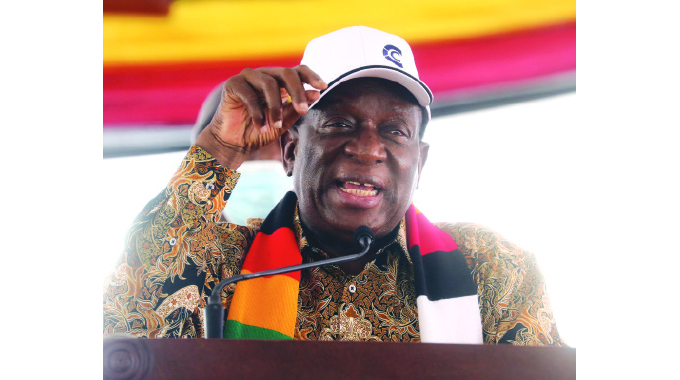
Vusumuzi Dube, Online News Editor
Highlights of major milestones
New Parliament Building completed in Mount Hampden
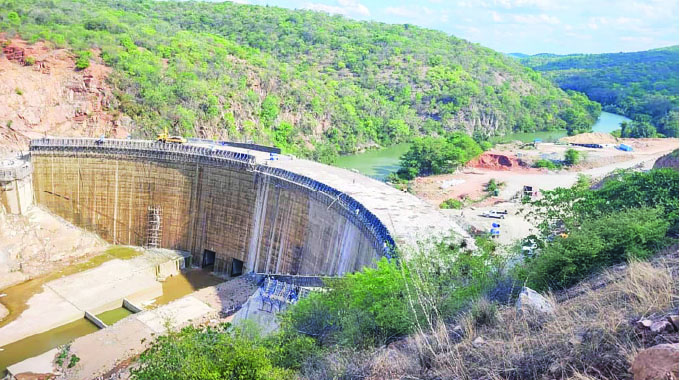
Lake Gwayi-Shangani close to completion
Construction of 250km pipeline water from Gwayi to Bulawayo with irrigation dams in between, a first in Africa in progress. Bulawayo gets 15 boreholes in Nyamandlovu funded by Government
Beitbridge Modern border post with 250 houses for workers, bus terminal and efficient truck route all automated completed.
Zimbabwe’s own satellite system launched
World-class Harare to Beitbridge road almost complete, and many roads constructed, repaired
Increase in sugar cane and citrus farming in the Lowveld
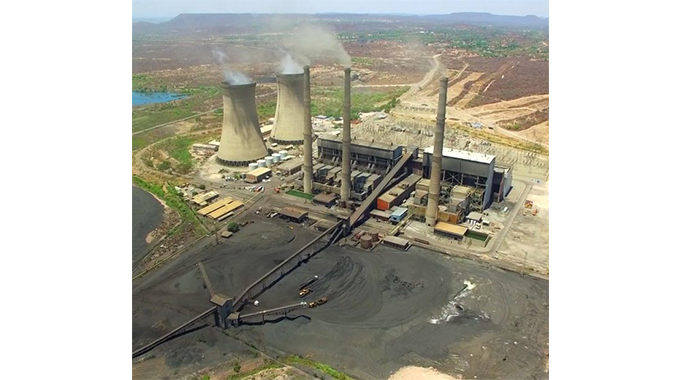
Hwange Power Company Unit 7 and 8 construction almost complete, with Unit 7 to be commissioned this year
World-class Victoria Falls Internaional Airport , Harare international Airport, Kariba, Prince Charles Buffalo range, Binga Airstrip rehabilitated and refurbished.

Mining boom, maize, wheat and tobacco boom, among other agricultural and initiatives
Runde Tunde Dam, Vungu Dam, Marovanyati, Gariya Dam, among others repaired or under construction, as Government seeks to build a major dam in each province
Mwenezi (Rutenga) Amarula wine plant completed and operational.
Mbudzi Roundabout Decongestion plans in Harare on course, as the road repairs programme covers all corners of the country
Devolution of funds benefit masses across board through infrastructural and social projects.

Improved hospital infrastructure and medical supplies in major hospitals.
Free education to be provided as per our election promise.
Improved remuneration for civil servants and USD bonuses.
Strengthening of our local currency
“I ADMIT that I hold no particularly unique qualifications that sets me apart from the deep pool of able citizens of our Party and Land, who otherwise could have been chosen to occupy this onerous office,” said President Mnangagwa in his inauguration speech on 24 November 2017.
Thursday marks exactly five years after the President was sworn in where he made a number of declarations to serve the people of Zimbabwe. Among what he said was the need for nation building through the philosophy — iLizwe lakhiwa ngabaninilo/Nyika inovakwa nevene vayo.

“My goal is to preside over a polity and run an administration that recognises strength in our diversity as a people, hoping that this position and well-meant stance will be reciprocated and radiated to cover all our groups, organisation and communities. We dare not squander the moment. At the end of the day, whatever we do or chose not to do must be intended to benefit all our people.
“Above all, we must always remember and realise that we hold and run this country in trust. It belongs to future generations whose possibilities must never be foreclosed or mortgaged as a result of decisions of expediency we might selfishly make today out of fear of difficult choice and decision that have to be made,” declared the President.
The President would further bring to fore the engagement and re-engagement policy, noting the importance of improving the nation’s relations with the world, underpinned by mutual respect, shared principles and common values
A few months after making this declarative speech, the President was to lead the ruling Zanu-PF to a resounding victory in the harmonised elections of 2018 where once again he emphasised his stance towards the development of the nation.
“Now is the time for us all to unite as a nation and grow our economy. Let us courageously and diligently embark on a shared journey towards the realisation of our national Vision to transform Zimbabwe into a middle-income economy, with increased investment, decent jobs, broad based empowerment, free from poverty and corruption by 2030. My Government will, in the next five years accelerate industrialisation, modernisation and mechanisation, with greater emphasis on market driven policies,” said the President.
Some desktop critics were quick to dismiss the President in both occasions, however, today President Mnangagwa surely should be having the last laugh as he continues to deliver on his promises, judging with the major milestones that have been attained as a nation. As the nation celebrates the Second Republic’s achievements, Sunday News takes a look at some of the achievements.
Bulawayo and the water revolution
Lake Gwayi-Shangani and pipeline has become a reality. For over 100 years it has been known that Bulawayo had inadequate water to sustain its ever-growing population. Year in year out various councils and the Government would grapple with the perennial water crisis in the country’s second largest city.
The massive Matabeleland Zambezi Water Project was viewed as a long-term solution to this crisis, with the construction of the Gwayi-Shangani Dam and pipeline being an immediate solution. However, despite the noted crisis, this project seemed not to take off, judging by the snail’s pace it was taking.

However, President Mnangagwa’s administration came with the resolve he had promised in his inauguration speeches. Not only is the project now moving but they are now clear timelines for the construction of the dam and pipeline. So far 39 metres of the dam wall has been constructed against a target of 72 metres. Government expects work to be completed by June next year. Government also awarded tenders to 11 contractors to construct the 245km Gwayi-Shangani-Bulawayo pipeline which will bring water from the dam to Bulawayo.
Government has said it is committed to ensuring timely project completion to guarantee reliable water supply to Bulawayo for the next 80 years while weaning off some of its supply dams in Matabeleland South to cater for developmental projects in the largely rural province. This therefore means that the pipeline will effectively benefit three provinces; Matabeleland North, South and Bulawayo.
A dawn of new era in Mt Hampden
In June this year, the country marked yet another milestone with the completion of the new Parliament Building at Mt Hampden. The construction of the building, whose concept was born in 1983 with the Kopje area in Harare as the proposed site, is being undertaken on a six-hectare stand in Mount Hampden, about 18km north-west of Harare along Old Mazowe Road, thus creating opportunities for a new capital city project.

The project was made possible by a grant from the Government of the People’s Republic of China through China-Aid. Feasibility studies were carried out by the Beijing Institute of Architectural Design Company Limited in 2015. The Government of Zimbabwe also expended US$2,4 million towards enabling works to kick-start the project. The designs for the New Parliament Building, which embody Zimbabwean culture and heritage enshrined in the Great Zimbabwe monument were completed and approved in October 2017. Works on the project commenced in November 2018 and were completed on May 27, 2022.
The modernisation of Beitbridge Border Post
The launch of the modernised Beitbridge Border Post in September marked a high point in the Second Republic’s vision of overcoming limitations of geography to make Zimbabwe a land-linked economy.
Writing in one of his weekly columns, President Mnangagwa rightfully summed up this milestone noting that; “A key component of that thrust involved addressing inefficiencies and bottlenecks at all our ports of entry, with the goal of facilitating movement of people, vehicles, goods and services between borders. The transformation of Beitbridge thus has to be seen in that broad, sub-regional context.”

The border modernisation project started in 2018 when President Mnangagwa presided over the ground-breaking ceremony. It is almost complete just a few years after taking off. The idea of modernising the border was conceived around 2014, but could not take off due to various challenges. But under the Second Republic led by President Mnangagwa, Government officials have been challenged to ensure no project goes for long without being completed, while high-impact projects including the construction of Lake Gwayi-Shangani, which was initiated by the colonisers in 1912, are being completed.
Binga and the no place shall be left behind mantra
A few years back Binga District in Matabeleland North Province was synonymous with the; “one of the most under-developed” districts tag. President Mnangagwa, however, applied the philosophy of “leaving no one and no place behind”, with the Second Republic rolling out a number infrastructure projects that are at different stages of completion and are transforming beneficiary community livelihoods in Binga.
To date, under the Second Republic, roads are being built, boreholes being drilled, two tertiary education institutions comprising a nursing school and a polytechnic being built, a border post has just been launched and 17 kapenta fishing rigs have started work. Kapenta handling facilities will be built as well while Binga-Siabuwa-Karoi Road and Binga Airstrip is being rehabilitated. A Civil Registry building is also under construction while the refurbishment and operationalisation of the hospital mortuary and construction of disaster recovery houses for victims of the 2020 floods that killed one person in Nsungwale are underway.
ILizwe lakhiwa ngabaninilo philosophy gives birth to Zimbabwe’s own satellite
One of the President’s persistent message to the nation was the mantra, iLizwe lakhiwa ngabaninilo/Nyika inovakwa nevene vayo. This mantra saw Zimbabwe, early this month, joining the league of nations that already own satellites when it sent its first satellite, ZimSat-1, into orbit. The satellite was orbited through a Japanese facility on an American launcher, as the Second Republic continues to upgrade its practical technology to achieve Vision 2030, in this case having a dedicated satellite for Zimbabwean mapping rather than having to rely on others.

The satellite was built by a team of four Zimbabweans. The satellite will enhance the country’s mineral exploration, land and water mapping, weather forecasting and monitoring of environmental hazards and droughts.
Other benefits will include aiding in mapping human settlements infrastructure and border security.
The game changing Kilimanjaro sugarcane project
Still on the iLizwe lakhiwa ngabaninilo/Nyika inovakwa nevene vayo drive, the Government set aside and allocated 700 hectares of land under the Kilimanjaro sugarcane project to new farmers in the Lowveld as part of the ongoing empowerment initiatives.

Dubbed “Kilimanjaro”, the project aims at developing virgin land into sugarcane plantations at Triangle and Hippo Valley estates in Chiredzi as part of Tongaat Huletts Zimbabwe’s drive to increase aggregate sugar output while also empowering indigenous out grower farmers who will be allocated plots on the nearly 3 300 hectares being developed on a cost recovery basis. Just last year, cane deliveries from private farmers were up by 30 percent to 768 804 tonnes compared to 592 722 tonnes in 2020, with these figures expected to further improve this year.
Zimbabwe to be a power exporter
Early this year the Government set in motion a multi-million-dollar plan to procure new turbines, generators and boilers for the units which frequently breakdown at Hwange Thermal power station. This saw the commencement of works to rehabilitate Hwange Power Station units. Once Unit seven is completed next month this will see the addition of 300MW into the grid. Unit eight which is expected to come through in the first quarter of next year will give an additional 300MW. When the expansion is complete, the thermal power plant’s installed capacity will increase from the current 920MW to 1520MW.
The country’s road revolution
Over the years the country’s road network had continued to deteriorate, this was further exacerbated by local authorities’ failing to maintain the roads over the years. Noting this continued rot in our road infrastructure President Mnangagwa in February 2021 declared the country’s road network a state of disaster as most of the roads had become untrafficable. And pursuant to that, Government set aside $33,6 billion for the Second Phase of the Emergency Roads Rehabilitation Programme (ERRP2), and US$400 million had been set aside for the first phase. This has seen a number of major roads in the country being rehabilitated. To even get an appreciation of the road network, the President broke from tradition, travelling by road from Bulawayo to Lupane and also returned by road in order to have a personal feel of the needs of communities and assess developmental work being carried out by Government. Further, the world-class Harare to Beitbridge motorway is now 90 percent complete with other major highways also up for rehabilitation.
Communities bask in devolution glory
For some time, communities in a number of rural districts had been struggling to realise significant progress in the area of infrastructure development. Basic infrastructure development had been elusive due to a number of factors that include but were not limited to the unavailability of adequate financial resources.

However, the introduction of devolution funds has seen the upliftment of a number of communities. The Government of President Mnangagwa started disbursing money to councils in the country under devolution a — concept of governance where decisions are community centred and people driven and where power is devolved from the centre to the periphery. With the funds, roads, bridges, clinics and schools have started been constructed or renovated and that has brought relief to the communities that now tell tales of the potential and promise of a transformed life.
The shaping of the multi-billion-dollar mining sector
Zimbabwe’s mining industry growth prospects remain strong in the short to medium term, despite the negative impact of Covid-19 induced setbacks on existing and planned investments. Zimbabwe is targeting to grow export revenue from minerals to US$12 billion by 2023 as it seeks to transform the country into an upper-middle-income economy by 2030. The US$12 billion mining industry represents a 344 percent increase from the US$2,7 billion registered in 2017. The growth to a multi-billion-dollar industry will be driven by gold, platinum, diamond, chrome, iron ore, coal, lithium, and other strategic minerals.
Gold exports are expected to reach US$4 billion while platinum exports are seen at US$3 billion. Diamonds are expected to generate US$1 billion while chrome, nickel, and steel will also realise US$1 billion. The mining industry, one of the key productive sectors, accounts for 73 percent of foreign direct investment into the country, 83 percent of exports, 19 percent of Government revenues, 2 percent of formal employment and 11 percent of individual incomes. In light of the industry’s significance to the economy, the Second Republic, under President Mnangagwa, in 2019, launched a US$12 billion mining economy target to be achieved by 2023.
The envisaged milestone is premised on increasing production through expansion projects, reopening of closed mines, as well as the launch of new projects. By the end of this year, the mining sector is expected to have grown to an US$8 billion economy from US$5,3 billion last year and US$2,7 billion in 2018.

These are just a few of the achievements that the President has made since his 24 November 2017 inauguration promises he made. As a conclusion it is imperative to once again lift a few sentences from his speech which effectively sum up the journey from 2017 to now;
“A new culture must now inform and animate our daily conduct. Our offices must speedily answer questions and generate solutions awaited by our customers, be they our citizens or well-meaning outsiders who want to join in the recovery of our economy. Flexibility must be built into our operations so the machine of Government does not become one huge, ponderous stumbling block to decisions that must be made and communicated expeditiously. The culture in Government just has to change, unseating those little “gods” idly sitting in public offices, for a busy, empathetic civil service that Zimbabwe surely deserves.”



 Bongani Ndlovu
 Online Reporter