Online Reporter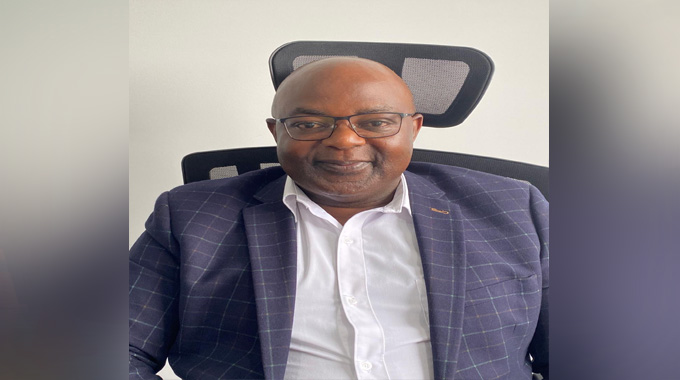
Stanford Chiwanga, [email protected]
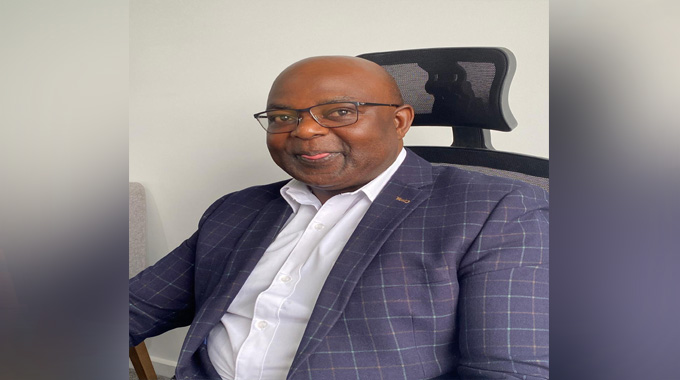
WHEN you meet Dr Abednego Chigwada, the first thing you notice is his composure — the steady, unforced confidence of a man who has spent years working in environments where safety, judgment and integrity are not abstract ideas but daily realities. He is a Zimbabwean son who has carried his roots across continents, building a career in some of the world’s most demanding high‑hazard industries. Now, he has been appointed to a senior Health, Safety and Environment leadership role on one of Australia’s most significant mine rehabilitation programmes — a milestone that carries both personal and national pride.
His journey to this moment has been anything but ordinary. Chigwada is a global safety, risk and environmental, social, and governance executive with more than 25 years of leadership experience across Tier‑1 mining, energy, infrastructure and government sectors in Australia, southern Africa and wider international operations. His career includes senior roles at Rio Tinto and Zimplats, and he now serves as HSE director for the Rum Jungle Rehabilitation Project under the Northern Territory Government — one of Australia’s most complex contaminated land restoration efforts. Along the way, he has completed a PhD focused on Human Error and Organisational Performance. These threads — human behaviour, technical rigour, and the dignity of responsibility — quietly define the way he leads.
For Chigwada, the milestone is exciting, yes, but it’s not something he wears like a badge. He talks about it with a grounded clarity that feels familiar to anyone who knows the unpretentious confidence of Zimbabwean professionals.
“It is both a privilege and a responsibility. Legacy mine rehabilitation projects carry deep environmental, social and historical significance,” he says.
There’s no embellishment — just honesty, the kind sharpened by years of work in high-risk operating environments across Africa and Australia.
This is not the type of job you fall into. Mine rehabilitation today is a multi-layered, highly technical undertaking, worlds away from the simple backfilling operations of decades past. These projects involve re‑engineering vast landforms, cleaning up historical contamination, restoring ecosystems and rebuilding trust — with communities, regulators and nature itself. For Chigwada, the point is not simply to manage a project, but to honour a responsibility.
“For me, the role is about stewardship — protecting people, restoring landscapes and ensuring that complex technical work is carried out with strong governance and disciplined risk management.”
There is something quietly powerful in hearing a son of the soil executive speak like this on an Australian stage. His career, which began in Zimbabwe, now sits at the intersection of world‑class engineering, environmental science and the human side of safety leadership. What’s striking is how naturally he navigates the technical and the philosophical.
Anyone who has worked on old mining sites knows they are rarely clean slates. They are places with history — sometimes painful history — etched into the ground. Chigwada doesn’t romanticise it.
“Rehabilitation work frequently involves managing historical environmental impacts while undertaking large‑scale construction and remediation activities,” he says.
In practical terms, that means everything from contaminated soils to complicated water flows, from massive earthworks to an army of contractors who all need to work in sync.
This is where experience counts. One of his first instincts on any project is to strip away the noise and focus on what truly matters.
“The first priority is establishing clarity around the project’s critical risks and ensuring that the controls designed to manage those risks are well understood by everyone involved.”
It sounds simple — and that’s exactly why it works. Clarity turns into alignment. Alignment turns into culture. Culture turns into safety.
If his Zimbabwean upbringing taught him resilience and grounded leadership, his international career has layered that with a global perspective. He’s worked across different regulatory systems, cultures and operational settings, and yet the patterns he sees are the same: the best organisations don’t treat safety and environmental responsibility as chores.
“Across regions there is growing recognition that safety, environmental protection and operational integrity must be integrated into business strategy rather than treated as compliance obligations,” he says.
It’s a world-view that feels both progressive and deeply pragmatic.
“Every individual within a system has a responsibility to protect what matters most. In high‑risk industries, safety, environmental protection and operational integrity depend on consistent attention to critical controls,” Chigwada says.
It’s the kind of message that resonates on a job site at dawn as much as it does in a boardroom at midday.
He is equally passionate about the human element of safety — especially in remote projects where fatigue, isolation and mental pressure can quietly erode well-being. He treats psychosocial risks as real operational hazards, not optional extras. It’s a view shaped by working in places where people sacrifice time with family and stability to keep complex projects running.
And then there’s the diplomacy. Rehabilitation work is rarely a solitary affair. It’s an intricate dance between engineers, regulators, communities, traditional owners and specialists from multiple fields. Trust, he says, is the foundation.
“Trust is built through transparency, consistency and respect.”
It’s the kind of line that, coming from anyone else, might sound rehearsed. But from him, it feels lived.
Ask Chigwada what success looks like, and his answer isn’t about awards or technical triumphs. It’s about legitimacy — the kind that can be seen, felt and believed.
“Success will be measured by whether communities and stakeholders have confidence that the land has been responsibly restored and that lessons from the past have informed better practices for the future.”
It’s a definition rooted in honesty, humility and a long view of history.
There is something quietly profound about seeing a Zimbabwean professional shaping such significant environmental decisions in Australia — a blending of continents, industries and experiences. His story isn’t loud. It’s steady. It’s earned. And in a world where mining is being forced to reckon with its past, it may be exactly the kind of leadership the sector needs.