admin
admin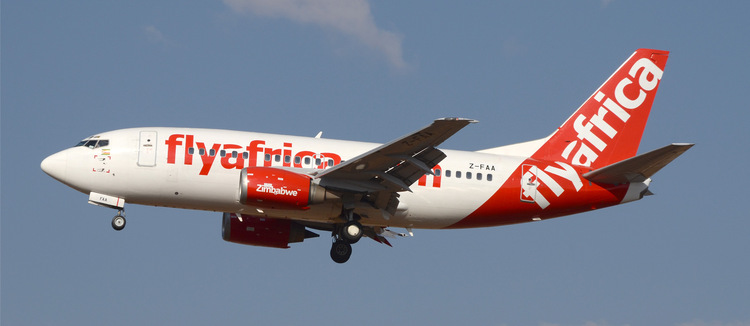
THE market is now used to the evident failure to launch by most fledgling local low-cost airlines. Despite repeated promises, they almost always fail to take off. Fly Africa Zimbabwe is one such airline, which, although it managed to successfully launch in 2014, crashed spectacularly last year following a nasty shareholder fallout between the Karase family that owned Nu Aero and its South African partners who were led by Mr Mike Bond.

But the airline has since been relicenced and there are expectations – although guarded – that it will soon take to the skies. Former customers, some of whom are yet to be compensated for flights that never were, are still looking forward for refunds.
It is against this background that our business reporter AFRICA MOYO (AM) tracked Fly Africa Zimbabwem chairman Mr Cassidy Mugwagwa (CM) to get the full picture of the future of the company.
******
AM:There was general confusion in the market when Fly Africa Zimbabwe abruptly stopped operations last year. There were however claims of a bitter shareholder’s dispute. What are the factors that led to the halt?
CM: There was indeed a shareholders’ dispute, with allegations of fraud from both the local shareholders as well as the foreign shareholders. Ours is not to judge, however. From where we sit now, it appears that FlyAfrica was run in a “cowboy” style. One could say it was grab-all-the-money and let’s not pay the creditors.
We are still ploughing through the mess they left to try and assemble some sense of order. We need to distinguish between FlyAfrica and Nu Aero.
FlyAfrica is the company registered in Mauritius and they were controlling the operations and receiving the web-booking monies, as well as monies booked through agents.
Nu Aero is the company that holds the AOC (air operator’s certificate) in Zimbabwe and the routes. We are Nu Aero and were to operate under franchise to FlyAfrica. FlyAfrica are in breach of the franchise agreement and have for all intents and purposes deserted the local company, yet they have received the funds from bookings
AM: But how have you addressed the contentious issues related to the shareholding disputes that affected the company’s operations last year?
CM: We have one new investor who has purchased the debt, so to speak; so, the shareholders from 1 February (2016) are one person. So, there are no further issues. However, we are still wading through the legacy of bad governance left by the previous controlling shareholder, being FlyAfrica Limited.
AM: There have been reports that FlyAfrica has reimbursed travellers who lost their bookings when the airline abruptly ceased operations, but new information obtained from sources and other affected travellers suggest that as much as $180 000 is still to be paid. How do you react to these claims?
CM: FlyAfrica Limited itself has not refunded passengers. Nu Aero, via its agent, Airconnect, has refunded in excess of $180 000. We are working through the bookings made via the Nu Aero Bank account. Bookings made on the web were made with FlyAfrica Ltd. The funds were in fact never ever remitted to Nu Aero in Zimbabwe. We urge travellers who made bookings via the web using credit cards to approach the banks and cancel the payment.
AM: How much does the company owe travellers and when does it plan to address the outstanding payments?
CM: We estimate that about $35 000 is due to travellers who booked via the designated offices. The value for bookings online is not known to Nu Aero as the system which controls this is owned by FlyAfrica Limited with registered offices out of Mauritius. Nu Aero will be launching a class action against FlyAfrica Limited to recover these funds on behalf of the travellers. To assist us gather this information, we will place adverts in the papers with details of where to email the original bookings to. We will then include this with the class action. We estimate there is about $300 000 worth of bookings not refunded.
AM: Turning to your intended return to the skies, when can this be and how far have you gone in preparing for take-off?
CM: We intend to depart mid-April. We had negotiated to operate under a franchise agreement from FlyAfrica Limited, however, they have, true to their style, breached the agreement. They were to supply us with web services, reservation systems, airplanes, etc. They have done none of this and, in fact, have taken payments on the web and again not remitted the funds to Nu Aero. In addition, they have failed to pay for the website as well as reservation system so Nu Aero has been left with no system. So, we in fact do not know who has booked. As for bookings taken on the web, we have not received those funds, yet (we) are having to either refund or put our valued passengers on other flights.
AM: What investment have you put in place to ensure your return will be seamless?
CM: We have secured alternate planes which we are in the process of placing on our AOC. We have secured the booking system, although we have to start from scratch. We have secured the necessary expertise. We are building a new website. We are re-branding. We will enter into sales and management agreements with Airconnect and have them handle the call centre, website bookings, etc. Operationally, control now rests within Zimbabwe.
AM: Tell us the measures that you have put in place to ensure that FlyAfrica does not face similar challenges as happened in the past?
CM: We have secured funding to pay off the creditors. In addition, we are Zimbabwe based and will be consolidating the airline in Zimbabwe. Our predecessors had huge infrastructure and were trying to establish four airlines plus a state-of-the-art maintenance facility with funds mainly generated from Zimbabwe. This was not sustainable. We are a Zimbabwe airline and have adjusted our overheads to within reasonable levels.
We are not going to use the funds from Zimbabwe in a rapid expansion plan but rather (to) consolidate. We have found larger planes with the same cost structure as the 737-500 we were using, this means our cost per passenger has reduced considerably. In essence, control will remain in Zimbabwe.
AM: There are critics who say low-cost airlines are difficult to sustain, especially where no wealthy foreign investor is involved. What is your comment on this?
CM: The head office must be established in the country of AOC with a lean infrastructure. Low cost has a bad reputation for customer service – this needs to change. However, we need to ensure from the start (that) we are properly funded and not in a catch-up situation.
AM: FlyAfrica plans to re-launch at a time when another low-cost airline, Fastjet, and other established players such as South African Airways and Air Zimbabwe have maintained a stranglehold on the route. How does FlyAfrica intend to confront the competition?
CM: We will again aim at new flyers, we will maintain our costs as well as maintain our prices. There is sufficient room in the market for new carriers. As opposed to a cheap entry seat with a rise to expensive seats after say 50 seat sales, we will start at $50 ($100) with taxes one-way and sell more at this price. Over Easter, the other low-fare carrier was selling at $250 one-way which is not low fare.
AM: Which initial routes are being targeted and at what fares? Are the fares sustainable in the long-term?
CM: Our routes will be Harare-Johannesburg-Harare; Harare-Bulawayo-Harare. We will then look at a 42/50 seater to connect the internal routes of Zimbabwe. Fares will start from $100 one-way for Harare-Johannesburg including tax. This is sustainable. In the past, they had a few seats open at $89,99; we will now have more seats available at the $100 price.
AM: What is the company’s long-term plans.
CM: We are re-branding to Nu – Aero and as the FlyAfrica Ltd are in breach of the franchise agreement, we will be terminating and operating as our own brand. We have had interest from larger airlines to amalgamate so this could be on the cards – a “big brother” so to speak.
We will be looking at more domestic routes and possibly even the Harare-London-Harare route.


 Online Reporter