admin
admin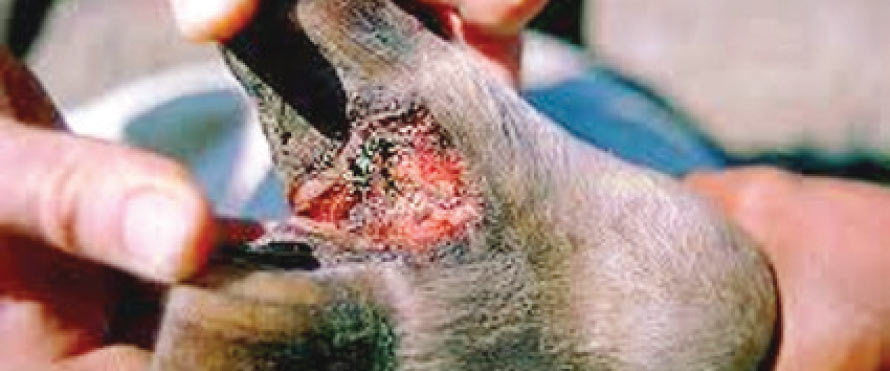

THE outbreak of Foot and Mouth Disease is reportedly spreading in most parts of Masvingo, Midlands, Matabeleland North and South provinces with indications the whole southern parts of the country might be declared a red zone if urgent measures are not taken to control its spread.
The situation, according to information gathered by Sunday Business, is being worsened by the shortage of money to buy vaccines and control the contagious viral infection affecting cattle.
According to a report from a meeting held on 4 May in Bulawayo between farmers and veterinary officers from the different provinces, the disease was spreading to new areas.
The report noted that in Matabeleland South affected areas were Greystone farm, Debshan headquarters, Nelly’s vlei Flack happy and Blueridge in Insiza North.
At Gwanda-Mzingwane dip tank, Mangwe-Weldane farm and at Matobo Weebit farm, Manadoo feedlot, Mbokodo feedlot and Malaba farm were affected.
In Beitbridge the affected area was Joko tank.
Three districts Insiza, Gwanda North and Beitbridge were under quarantine, the report noted.
In Matabeleland North, the report shows, infection was passed through Bulawayo cattle sale on 8 May while 257 head of cattle were yarded and dispersed to 26 properties.
Districts, which received the animals, were Umguza, Bubi, Tsholotsho, Mangwe, Matobo and Bulilima.
A follow up has shown that some of the affected areas include Kenberg and Umkaen in Umguza and Lockview in Bulawayo.
In Midlands, infection has been reported in Mberengwa, Zvishavane and Shurugwi District.
The Shurugwi infections were at the border with Gweru. A new infection was also reported in Mvuma at Shashe dip tank.
Matabeleland South provincial veterinary officer Dr Mbuso Moyo, confirmed the spreading outbreak, adding that the Department of Veterinary Services was facing challenges to expedite its vaccination programme due to limited FMD doses at their disposals.
“The outbreak of FMD cases in the province is now threatening with every corner now under threat. We have cases in Gwanda, Matobo, Insiza in the Filabusi area and Beitbridge.
“Our teams are currently on the ground conducting the vaccinations but the number of animals being vaccinated is very small because there is a shortage of vaccines,” Dr Moyo said.
He said the failure by Government to procure adequate vaccines for effective vaccination programmes was likely going to see a catastrophic spread of the disease culminating in cattle farmers failing to realise meaningful returns from their animals owing to movement restriction to prospective lucrative markets.
“We are also controlling the movement of the animals but with the current economic crisis we are facing, people will always seek illegal ways to avert the movement restrictions. The more it spread the more people suffer because there will be a lot of restrictions,” Dr Moyo said.
Matabeleland South has a herd of about 640 000 cattle.
An estimated 2,5 million of the country’s cattle are in danger of being affected by Foot and Mouth Disease, amid reports that $20 million is needed to vaccinate the animals mostly in the southern parts of the country.
The 2,5 million cattle that are likely to be affected by the disease if measures to control it are not expedited make up close to half of the country’s herd which is estimated at 5,2 million.
According to the Veterinary Services Department’s national FMD’s latest update an outbreak of FMD was first reported on 27 April 2014 in Mwenezi District in Masvingo.
The outbreak started in a non-vaccination area and spread to the vaccination area, which is now a year overdue and 4 170 cases have been reported so far.
In Masvingo District 9 158 cases have been recorded with the whole southern half of the district being infected and the outbreak is reported to be spreading northwards towards Chirumhanzu and Gutu.
In Chiredzi the outbreak is occurring in both the vaccination and non-vaccination areas with 2 521 cases being recorded so far. The outbreak was first reported on 1 November 2014.
The FMD outbreak was also recorded in Zvishavane District on 30 August 2014 and is still ongoing with 485 cases being recorded while the disease was also detected in Shurugwi in November 2014 and is ongoing with 23 cases having been reported.
Zimbabwe Commercial Farmers Union Matabeleland chairman Mr Winstone Babbage said they would this week embark on an extensive outreach programme in Matabeleland South to educate farmers about the foot and mouth disease.
“As ZCFU and the Veterinary Department of Livestock we will embark on an outreach programme starting Monday to conscientise the farmers about the impact of foot and mouth disease. We will start by going to Matobo and visit farm by farm and village by village and all the dip tanks to see what is going on and educate farmers about how to control the spread of the disease. Prevention is better than cure,” said Mr Babbage.
He said the problem was coming from irresponsible farmers who were moving cattle from affected areas to unaffected areas.
Mangwe Farmers Association chairman, Mr Adam Bango-Dube said although cases of FMD outbreak were still to be recorded in Mangwe District, the disease was of major concern to cattle farmers as it affects their business.
“Cattle business requires a lot of movement and if the animals cannot be moved then that curtails business directly. However, over and above all the efforts being done by Government to deal and combat the disease, the onus of averting it should also lie in the hands of the farmers.
“The farmers should be involved either through procurement of the vaccines or assisting in educating each other or distributing material about the disease. This way it will definitely ease the burden on Government to combat it on its own,” Mr Bango-Dube said.
Contacted for a comment, Agriculture, Mechanisation and Irrigation Development Deputy Minister responsible for livestock production, Cde Paddy Zhanda denied that there was a spread of FMD and a shortage of vaccines.
“I am currently out of the country but there is no such thing. You can contact Dr (Josphat) Nyika (Veterinary Services Department director of field veterinary services).
Although Dr Nyika could not be reached for a comment, the report from the farmers and veterinary officers meeting acknowledged that no mass vaccination had been done due to shortage of vaccines.
The report said Government had cleared a credit from Botswana to acquire vaccines although it could not be established how much the credit was worth.
It also pointed out that Government, the European Union through the Food and Agriculture Organisation and various farmer unions had raised money which might result in the purchase of 400 000 doses of vaccines.
In addition feedlotters have also purchased 6 000 doses to vaccinate their cattle.
The veterinary department reported that individuals should organise themselves into groups and bring the list of their requirements to the department.
The first case of FMD in the country was clinically detected on 16 August 2000 in a cattle feedlot in south-western Zimbabwe.
Prior to the outbreak, the country was known as an exporter of meat especially to the European market.
The outbreaks have adversely affected the meat industry.
Indications point to the fact that there are two sources of infection in the Zimbabwean outbreaks, both originating from the African buffalo species.
FMD is a severe, highly contagious viral disease of livestock with significant economic impact.
The disease affects cattle and swine as well as sheep, goats, and other cloven-hoofed ruminants.
All species of deer and antelope as well as elephant, and giraffe are susceptible to FMD.
In a susceptible population, morbidity approaches 100 percent. Intensively reared animals are more susceptible to the disease than traditional breeds.
The disease is rarely fatal in adult animals but there is often high mortality in young animals due to myocarditis or by lack of milk when the dam is infected by the disease.
FMD is characterised by fever and blister-like sores on the tongue and lips, in the mouth, on the teats and between the hooves. The disease causes severe production losses and while most affected animals recover, the disease often leaves them debilitated.



 Online Reporter