admin
admin
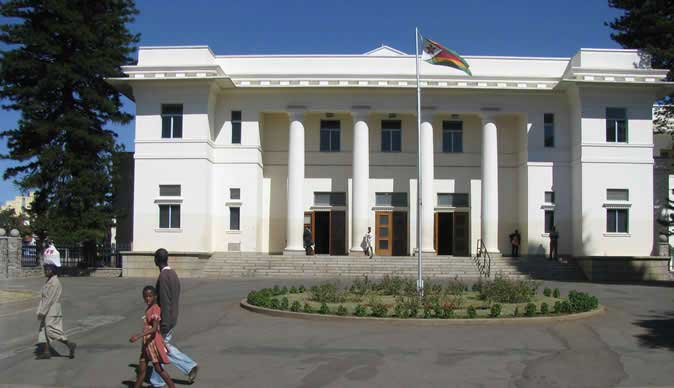
WHEN I came across this advertisement supplied by a friend, I considered just sticking in on this column without any further writing because it says it all. The National Railways of Zimbabwe (NRZ) and the power station next to it were two of the major drivers of the growth of the economy of Bulawayo.
For many reasons which will be highlighted in this column, their rehabilitation is vital to the re-industrialisation of the city.
The advertisement, at the height of the industrialisation of Bulawayo in the federation days, simply states a link between the location of Bulawayo, sunshine (solar) and the power station, which together can produce all our electricity needs, cheap industrial sites (this remains true unfortunately because of closed industries) and the availability of water beneath the industrial sites which I showed the abundance of in last week’s column.
However, the existence of certain geographic advantages or resources alone, without an infrastructure base to provide motion to ideas cannot take Bulawayo any further than it is.
This is where the railways and the coal powered electricity station in the city originally came into play and will remain vital into the future.
Bulawayo is in fact known for its cooling towers at the power station (koNtuthuziyathunqa) and its railways (uLoliwe) and both these had an obvious link to the geographical advantage of coal fields in nearby Hwange.
If the link between the geographic advantage and infrastructure is broken, everything falls apart, as we have seen in the last 10 years.
In this week’s column, we concentrate on the railways as again, there is no opportunity to describe all the infrastructure and geographic advantages fully.
Bulawayo is about midway between the largest economy in Africa, South Africa and the vast resources of the Democratic Republic of Congo.
In the western direction, it is the biggest city with direct access to the borders of Botswana, Angola, Namibia (Caprivi Strip) and Zambia.
The railway line network that links all these countries quite sensibly passes through Bulawayo for the purposes of either transporting minerals or other resources to this country or to South Africa and ports in other countries, including Beira in Mozambique.
Also reliant on the railways is the movement of finished goods to regional and international markets from this country and South Africa in particular.
This rail network also facilitated the movement of labour in all directions to service the primary production industries in all the directions mentioned above.
One is tempted to say that indeed travel for leisure purposes on this network was only incidental to the real business of putting industry and commerce in motion.
During my research, I tried to prove that the passenger services in the railways was only incidental to industry and came up with several observations about the African sub-equatorial rail network which is directly to Bulawayo.
- Every branch of railways ends at a mine, timberworks or some other heavy resource that needs to be transported. The road network does not follow this rule but rather ends where most people live.
- The main railway lines do not allow population density but pass through areas with major resources and where those resources are processed or invariably shipped out of Africa by sea.
- There is an important link related to the location of thousands of railway sidings and economic growth points in this network which I have not fully characterized.
It is clear to see how Bulawayo’s direct link to the riches of the whole subcontinent places and advantage to any strategic plan or value addition , onward selling and other activities that can grow where the major hurdle would be the ability to move to a certain mineral or industrial input from an area of its abundance to the preferred destination-Bulawayo.
When one looks at the range of minerals and other primary goods that are suited to rail transportation, the possibilities of industries that can grow in one where they can all pass through is bewildering.
Closer to Bulawayo, this infrastructure literally next to the trillions of litres of natural gas in Lupane could not have been better placed due to the unimaginable size and diversity of industry that is set to grow in Matabeleland North if coal bed methane gas is finally extracted and a chemical industry grows around the gas fields of Lupane (an inevitable discussion for another week).
The city of Bulawayo being 100 or so kilometres away and with a direct rail route and other infrastructure has many derivative growth options therefore.
In more recent years, tourism via rail has become topical as people talk about the good old days when passenger trains ran in and out of Bulawayo all the time but I maintain that service to industry was the reason for the railways.
The relationship between the railways being headquartered in this city and the existence of a healthy industry in Bulawayo is symbiotic. The railways could not function without a supporting industrial base providing engineering, catering, accommodation, clothing, bedding and the list can go on.
It is easy to see how a collapse of the railways would take the oxygen off many Bulawayo companies and how it is almost impossible to think about the railways when its supporting industrial base in Bulawayo is dying. One can link the demise of many Bulawayo’s engineering companies in particular, to the collapse of the national railways in Bulawayo.
A lot has been spoken about the urgency to revive the factories at the city’s industrial sites and those demands are quite right. What is puzzling is why the calls for rehabilitating the drivers of that industry are relatively weaker.
At the cost of repeating myself; Bulawayo cannot grow without the railways being fully operational. Bulawayo will miss out on opportunities to bring primary produce to it; either in transit or to be used in new industries performing value addition and beneficiation of the railways does not work.
Bulawayo will forego its importance as the biggest city with direct routes to the DRC, Angola, Zambia, Namibia, Botswana and South Africa if the rail network that connects these is not functional.
This city will not be able to fully benefit from the exploitation of the Lupane gas and coal fields and a huge primary industry base that is surely going to grow in that direction.
The sawmills, processed timber industry producing globally competitive products and furniture will not grow as long as expensive road transport is used.
Road transport for timber means that the only people who can transport timber are those that can afford fleets of heavy trucks and they are invariably foreign – so the timber leaves our borders.
The export of coal via road is very expensive and makes our coal less competitive on the international market. Rail transport direct to the export shipping terminal of Richards Bay Coal Terminal is the obvious route but cannot be achieved without a functioning railway.
Lastly and quite incidentally, the growth of tourism to all the interesting places that the railway passes through, the movement of the citizens of the Sadc region and exchange of culture is severely compromised without a functioning NRZ.
The link between the water underneath Bulawayo being used for industry, the natural resources that can pass through or be brought to Bulawayo from surroundings and the Sadc region and the consequential development of new value-additive industries, the capturing of sunshine and firing up of the old power station to ensure reliable energy supplies and a functioning National Railways of Zimbabwe, based in Bulawayo, cannot be broken. This series of links should be the backbone of a holistic strategy to re-industrialise Bulawayo.
Any talk of funding the re-growth of Bulawayo must not deal with superficial matters of finance only, but must protect the links described here underpinned by our much loved Loliwe, Nthuthuziyathunqa and all the industrial derivatives that follow.
Meanwhile, it is quiet at the railways and somebody needs to drive this political train out of that slumber.


 Online Reporter