Chronicle Editor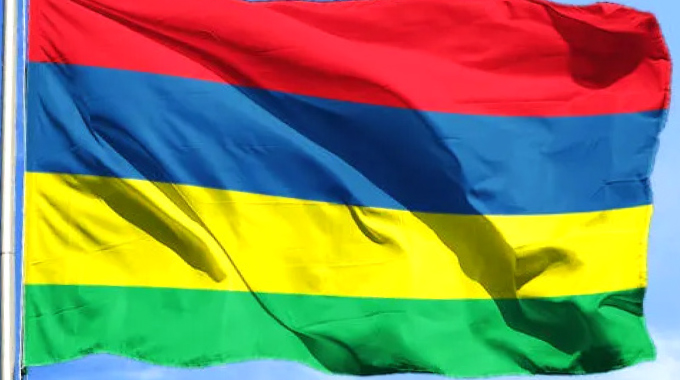
The Republic of Mauritius joined the Southern African Development Community (Sadc) in 1995. Mauritius attended the 15th Sadc Summit for the first time in Midrand, South Africa, on 28 August 1995, becoming the regional bloc’s 12th Member State and the first island nation to join Sadc, following the signing of instruments of accession by the country’s then Prime Minister Navinchandra Ramgoolam.
Mauritius is an island country in the Indian Ocean, located off the eastern coast of Africa. Physiographically, it is part of the Mascarene Islands.
Capital City: Port Louis
Area of Country: 2040 km²
Currency: Mauritian Rupee (MUR) 1Rs =100 cents
Head of Government: Prime Minister The Right Honourable Pravind Kumar Jugnauth
Head of State: His Excellency Mr Prithvirajsing Roopun G.C.S.K Republic of Mauritius
Independence Day: 12 Mar 1968
Official Languages: English and French
Population: 1,235,000
Natural Resources: Sugar Cane, Beaches, Sea, Flora, Fauna and Other Marine Resources
Mauritius lies about 800 km east of Madagascar in the Indian Ocean. Its outlying territories are Rodrigues Island, situated about 550 km eastward, the Cargados Carajos Shoals, 400 km northeastward and the Agalega Islands, 930 km northward from the main island.

Climate
The island of Mauritius is volcanic in origin and is almost entirely surrounded by coral reefs. The northern part is a plain that rises to a central plateau, varying in elevation from about 270 to 730 metres above sea level. The plateau is bordered by small mountains that may have formed the rim of an ancient volcano; the highest point is Piton de la Petite Rivière Noire in the southwest. The two major rivers, the Grand River South East and the Black River, are the primary sources of hydro-electric power. Lake Vacoas, one of the main reservoirs, is the chief source of water. More than half of the country’s area is arable and it is almost entirely planted in sugarcane, the major export crop. Vegetables and tea for local consumption are also grown.
The climate is maritime subtropical, with fairly uniform temperature throughout the year. Mean temperatures vary. Two seasons are recognised: hot (December to April) and cool (June to September).
The vegetation includes some 600 indigenous species, even though little original forest is left. The fauna includes the samber (a long-tailed, dark brown deer), tenrec (a spiny insectivore) and mongoose, as well as a variety of birds and insects. The island was once home to the dodo, a flightless bird that was extinct by 1681. Efforts began in the late 20th century to save several other species of endemic birds that were close to extinction.
People
Approximately two-thirds of the population is of Indo-Pakistani origin, most of whom are descendants of indentured labourers brought to work in the sugar industry during the 19th and early 20th centuries. About one-fourth of the population is Creole (of mixed French and African descent) and there are small numbers of people of Chinese and Franco-Mauritian descent.
Although English is the official language, it is spoken by a very small percentage of the population. Creole, a French-based patois, is spoken by about four-fifths of the population and is the lingua franca of the country. Bhojpuri, an Indo-Aryan language, is spoken by one-tenth of the population and French is spoken by a small percentage. Other languages spoken on the island include Hindi, Chinese, Marathi, Tamil, Telugu and Urdu. Mauritians commonly speak two, three, or even more languages and the educational system supports a wide range of language instruction.
Religious affiliation varies: about half of the population is Hindu, about one-third is Christian (the majority of whom are Roman Catholic) and — with the exception of a small group of Buddhists — the majority of the remainder are Muslims.
The population density in Mauritius is the highest of African countries and is among the highest in the world. Overpopulation became a serious problem after the eradication of falciparum malaria by the early 1950s, which led to a sharp increase in population. Driven by government policy, supported by all the Mauritian religious communities and assisted by the rapid pace of economic growth, the rate of natural increase dropped rapidly in the last decades of the 20th century and it is now below the world average. Emigration, primarily to Britain and France, also helped slow the annual growth rate.
The birth rate remains well below the world average, while the death rate is similar to the world average. Life expectancy — about 70 years for men and more than 75 years for women — is higher than the world average and is well above the average for African countries. About two-fifths of the country’s population is younger than age 30.
Economy
Mauritius has a mixed developing economy based on manufactured exports, agriculture, tourism and financial services. Government efforts to diversify the economy after 1980 have been successful and the island is no longer as completely dependent on sugar production as it was throughout most of its history. The gross domestic product, among the highest of African countries, grew more rapidly than the population in the 1990s and 2000s.
Although the significance of the agricultural sector has diminished with efforts to diversify the economy, it is still important. Sugar production, generating about one-sixth of export earnings, occupies about four-fifths of the total arable land. Tea and tobacco are also cash crops. Subsistence crops include potatoes, tomatoes and bananas. The livestock population primarily consists of poultry, sheep, goats, pigs and cattle.
Forests make up about one-fifth of the total land area of Mauritius. Rapid deforestation occurred during the colonial era and non-native species were introduced to repopulate the forestland, including the slash pine (Pinus elliottii), which is predominant, Japanese cedar (Cryptomeria japonica), and Moreton Bay pine (Araucaria cunninghamii). Eucalyptus trees and trees that belong to the beefwood (Casuarina) family are also present. Roundwood is the primary forest product, of which some two-fifths is used for fuel; sawn wood is also produced.
Mauritius is unique among countries in the region in that it consumes more wood products than it produces and must import the difference.
Technical assistance from Japan and India is regenerating the fishing industry, which has grown in importance. Mauritius’ waters contain many species of fish with commercial value, including tuna, snapper and grouper. Aquaculture is practiced with such species as channel bass and sea bream.
Mauritius has few viable mineral resources. Basalt and lime are mined. Electricity is largely generated from imported petroleum, with a small percentage derived from hydropower. Sugar plantations often use bagasse — the fibre that remains from sugarcane after sugar-bearing juice is extracted — as fuel to produce electricity.
There has been a steady increase in manufacturing since the 1970s. The Mauritius Export Processing Zone, which concentrates on labour-intensive processing of imported raw materials or semi-finished goods for the export market, has successfully attracted foreign investment. Economically, important manufactures include textiles, food processing, metal and metal products and chemical products.
Mauritius is home to many financial institutions, including a development bank, offshore banking facilities and several commercial banks. The Bank of Mauritius is the central bank and issues the country’s currency, the Mauritian rupee. The country’s stock exchange is located in Port Louis.
Imports, largely of machinery and transport equipment, petroleum and foodstuffs, outweigh exports of clothing and textiles, sugar and fish and fish products. Important trading partners include the United Kingdom, France, the United States, South Africa and China.
Significant growth in tourism since the 1970s has made it a major earner of foreign exchange. Information and communication technology is becoming increasingly important. In 2001, the government created the Information and Communication Technologies Authority to promote and oversee the burgeoning sector.
More than two-fifths of the labour force is employed in the areas of finance and services. Construction and manufacturing employ about one-third of the labour force and about one-tenth is employed in the agricultural sector.
Taxation is an important source of funding in Mauritius, accounting for about nine-tenths of the government’s revenue. About half of the total tax revenue is derived from taxes on goods and services. Trade taxes account for about one-fifth; corporate income tax, about one-eighth.
Mauritius has a strong transportation infrastructure. The road system is well developed and in good repair and almost all roadways are paved. Most of the country’s shipping activity is conducted through port facilities at Port Louis, which has been cultivated as a free port to encourage its development as an international shipping hub. An international airport is located at Plaisance and there are other airports located throughout the country. Air Mauritius, the national carrier, flies many international routes. The island does not have any rail service.
Full story on www.sundaynews.co.zw
The country’s telecommunications sector is well developed and among the best in the region. There has been rapid progress in this area owing to the country’s growing information and communication technology industry. About three-fourths of the population has mobile phone service, and one-fourth has internet service.
Politics
Mauritius became independent on 12 March, 1968. Under the constitution adopted that year, the country was a constitutional monarchy with the British monarch as head of state. In 1991, a constitutional amendment was passed providing for a republican form of government, with a president as head of state; the amendment went into effect in 1992. Legislative power is vested in a National Assembly, elected every five years and consisting of 62 elected members and up to an additional eight members drawn from the pool of candidates who were not elected but who may be appointed to broaden representation among minorities or under-represented parties. Executive power is exercised by a Council of Ministers headed by a prime minister (appointed by the president), who assembles a government from members of the National Assembly. The president and vice president are elected by the National Assembly for a term of five years.
For administrative purposes, the island of Mauritius is divided into districts. The outlying territories of Agalega, Cargados Carajos Shoals, and Rodrigues Island each have dependency status.
The Supreme Court is the highest judicial authority and includes courts of civil appeal and criminal appeal. There are also district courts.
The constitution provides for universal suffrage for citizens 18 years and older. The political process in Mauritius is open to participation by minorities and women. Minority representation is enhanced by the policy of appointing additional members to the National Assembly to achieve ethnic balance. Although women have held legislative seats and cabinet positions, their numbers have been few.
There are many political parties, but three large parties dominate Mauritian politics: the Mauritius Labour Party (MLP; Parti Travailliste [PTr]), the Mauritian Militant Movement (Mouvement Militant Mauricien; MMM), and the Militant Socialist Movement (Mouvement Socialiste Militant; MSM). The MLP and the MSM generally compete for the dominant Hindu vote, although they both have supporters in all communities. The MMM has its base in the minorities — the Creoles, Muslims, and non-Hindi-speaking Indian communities (especially the Tamils and Telugus) — although it too has prominent Hindu supporters. Coalitions among parties are frequent.
Mauritius does not maintain an active military force, although it does have a small paramilitary force that includes a coast guard unit. Despite some unrest, the country has, on the whole, seen political success. Since independence, Mauritius has sustained an open, free, democratic, and highly competitive political system. Elections have been held on a regular basis with the losing parties giving way to the winners. Its limited military structure has meant that it has been spared the difficulty of military coups.
Britannica.com/ https://www.sadc.int



 derick.khumalo