admin
admin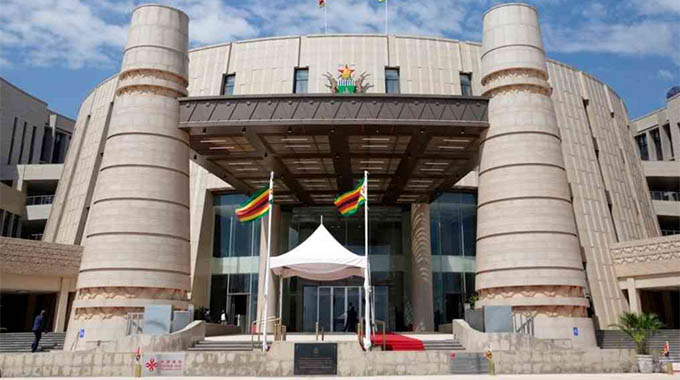
Ranga Mataire
Zimpapers Politics Hub
FOR the next three days, Zimbabwe will be the centre of regional focus as it hosts the 44th Ordinary Summit of Heads of State and Government in Harare.
This summit marks a pivotal moment for Zimbabwe as it assumes the SADC chair, positioning itself to influence the direction of regional development and cooperation.
Taking on the leadership of the bloc comes at a critical time for Zimbabwe and the region.
The summit’s theme, “Promoting innovation to unlock opportunities for sustained economic growth and development towards an industrialised SADC”, not only aligns with President Mnangagwa’s vision of achieving an upper middle-income society by 2030, but it also provides Zimbabwe with a platform to drive regional innovation and industrialisation efforts.
As SADC chair, Zimbabwe will play a key role in addressing pressing challenges, such as the recurrent droughts affecting millions across Southern Africa.
The country’s leadership over the next 12 months will be crucial in implementing sustainable measures to mitigate these impacts and ensuring regional resilience.
Ahead of the actual Heads of State and Government summit starting tomorrow and closing on Sunday, two crucial preceding meetings will take place at the New Parliament building in Mt Hampden.
These are the SADC Organ Troika Ministerial Committee and the SADC Organ Troika Summit that take place today.
SADC Secretariat’s head of communication and public relations, Ms Barbra Lopi, said the meetings were critical in directing how the two important organs would execute their mandates.
“The Ministerial Committee of the Troika of the Organ on Politics, Defence and Security Cooperation is one of the SADC institutions which is entrusted with the responsibility of coordinating the work and structures of the organ, in line with the SADC Protocol on Politics, Defence and Security Cooperation,” Ms Lopi said.
She explained that the SADC Organ on Politics Defence and Security Cooperation promoted peace and security in the region in line with Article 2 of the SADC Protocol on Politics, Defence and Security Cooperation. The SADC Organ troika reports to SADC Summit.
The troika system gives authority to the SADC chairperson, the incoming (deputy) chairperson, and the outgoing chairperson. It allows quick decision-making and policy direction between regular SADC Summits.
The SADC Organ on Politics, Defence, and Security, operating under the troika system, plays a crucial role in fostering peace, security, and stability within the SADC region.
It is essential to distinguish between the SADC Summit and the Organ Troika Summit, as they function independently. The chairperson of the organ does not concurrently serve as the Summit chair.
The operations, structure and functions of the organ are guided by the Protocol on Politics, Defence, and Security Cooperation, with the chairmanship rotating annually, similar to the Summit.
The troika system is implemented across various levels, including the Summit, the Organ on Politics, Defence, and Security Cooperation, the Council of Ministers, and the Standing Committee of Senior Officials.
Zimbabwe last hosted a regional summit of this scale 10 years ago during the 34th ordinary summit of Heads of State and Government, which took place in Victoria Falls on August 17-18, 2014.
It was at that 2014 summit that Zimbabwe introduced the theme of “value addition and beneficiation”.
It has since become a recurring focus at subsequent SADC Heads of State and Government summits, and it will now be at the forefront for Zimbabwe as it leads the region. This year’s theme of “Promoting innovation to unlock opportunities for sustained economic growth and development towards an industrialised SADC” aligns closely with President Mnangagwa’s vision of fostering innovation to achieve an upper middle-income society by 2030.
Harare has already hosted several key events, including the SADC Industrialisation Week, the SADC Council of Ministers Meeting, the SADC-BADEA Investment Forum, and the 7th SADC Public Lecture, which was delivered by President Mnangagwa at the University of Zimbabwe yesterday.


 Online Reporter