

 Online Reporter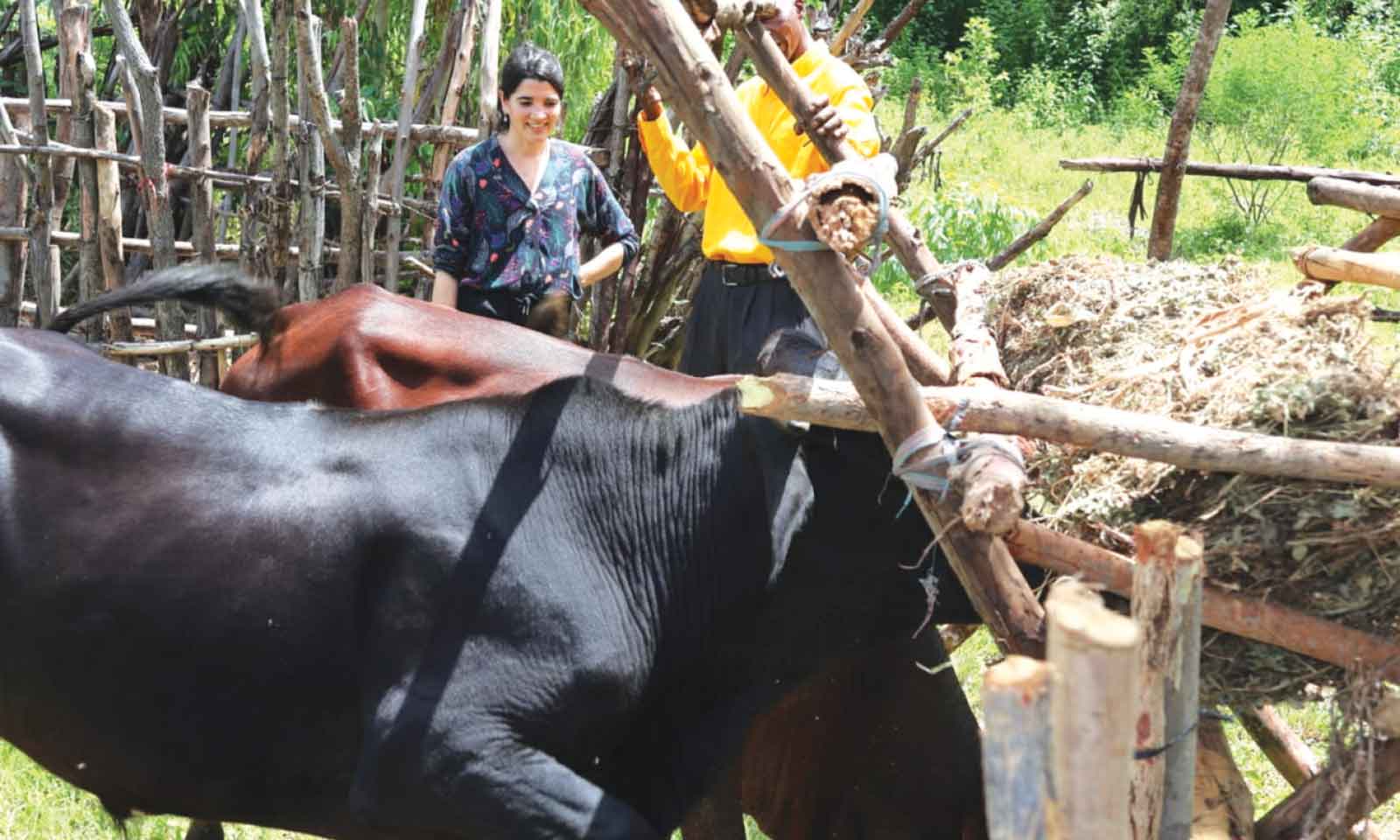
Theseus Shambare
Features Writer
In Zimbabwe’s rural districts, drought is no longer a distant threat whispered about in farming seasons past — it lingers longer than it used to.
It arrives unpredictably, leaving grazing lands thinner and cattle weaker.
Across Southern Africa, rising temperatures and erratic rainfall patterns are steadily shrinking natural pastures. Scientists warn that methane, a short-lived but highly potent greenhouse gas, is responsible for nearly a third of current global warming. In countries like Zimbabwe, where agriculture underpins rural livelihoods, livestock sit at the centre of that climate equation.
Cattle enteric fermentation alone accounts for 43,6 percent of Zimbabwe’s methane emissions, making the livestock sector both an economic pillar and an environmental pressure point.
Enteric fermentation is a natural digestive process in which microbes in the rumen decompose feed, producing methane as a by-product that is primarily released via belching (eructation).
In many communal areas, the pattern is painfully familiar: animals roam further in search of pasture, overgrazing strips the veld bare, weight drops during dry seasons, and calving rates decline.
Farmers often keep larger herds as insurance against losses, unintentionally increasing pressure on fragile land.
But in Ward 11 of Murehwa District in Mashonaland East, five smallholder farmers are quietly rewriting that script.
On the final day of a three-day national livestock climate programme, experts from Government departments, universities, research institutions and United Nations agencies drove into Mukurasha Village.
Before leaving the workshop in Harare on Friday, University of Zimbabwe lecturer and climate change consultant Dr Walter Svinurai briefed participants on Zimbabwe’s current capabilities and gaps in measuring and managing livestock emissions.
“Current livestock management alone cannot meet our national methane reduction targets,” Dr Svinurai said. “Improving feed, animal health and breeding practices, alongside better measurement and reporting, is critical to reduce emissions while sustaining rural livelihoods.”
He explained that while Zimbabwe has developed a Tier 2 Greenhouse Gas Inventory covering cattle from 1990 to 2023, existing measurement practices still rely heavily on limited feed sampling and estimated live weights rather than direct measurements.
Dr Svinurai highlighted the challenges of meeting the country’s Nationally Determined Contribution (NDC 3.0) targets, which include improving feed for five percent of the national herd, vaccinating 10 percent of cattle, and strengthening breeding programmes.
He emphasised that comprehensive mitigation will require a combination of improved feeding regimes, better animal health systems and robust data collection — all aimed at reducing methane emissions while sustaining productivity and rural livelihoods.
This briefing set the tone for the day. The delegation was about to witness how practical interventions on the ground, like those pioneered by the Five Stars farmers, can bridge national climate ambitions with real, observable results in communal farming systems.
They were not heading to a commercial ranch. They came to a communal homestead.
Inside a fenced pen stood three muscular beasts, calm and glossy-coated under the midday sun. Their fur shone with a health rarely associated with drought-prone communal systems. Nearby, neatly stacked hay bales signalled preparation rather than desperation. A grinding mill stood ready to crush maize stalks and legumes into carefully formulated feed.
This was not survival livestock.
It was climate-smart precision feeding in a rural setting.
“Imagine buying a beast weighing 100 kilogrammes and selling it at 285 kilogrammes in just three months,” said Erenica Chikuruwo, one of the farmers hosting the delegation.
For years, such growth rates were associated with commercial feedlots. In smallholder systems long defined by seasonal weight loss and unpredictable returns, it would have sounded far-fetched.
But for Erenica, Bertha and Misheck Nyoka, Washington Musanhi, Newton Mapanga and Oscar Makamba — who proudly call themselves the “Five Stars” — this is now routine.
Their journey began in 2012 when they received training under a programme supported by the Food and Agriculture Organisation of the United Nations (FAO). They were introduced to fodder production, feed formulation and agroforestry integration — approaches more commonly associated with large-scale operations.
Like many donor-supported projects, that programme eventually came to an end, but the practice did not.
“The project ended,” said Mrs Nyoka. “But we continued.”
Fourteen years later, their fields tell the story of that decision.
Portions of their land are now dedicated to lablab, velvet beans, African cowpeas and lucerne. Agroforestry legume trees line field boundaries, quietly enriching soils and offering additional fodder. During the rainy season, excess fodder is baled and stored for the dry months.
Maize stalks are crushed and mixed with protein-rich legumes. Feed troughs reduce waste, and hay racks regulate intake. Pen fattening limits unnecessary roaming, protecting communal grazing lands from excessive pressure.
For decades, communal cattle systems relied almost entirely on natural grazing. During drought years, animals lost condition and mortality rose. Poor nutrition also meant slower growth rates and irregular calving.
“With these formulations, I am now guaranteed a calf per year from each cow,” said Mrs Nyoka with a smile.
The environmental significance of that achievement extends beyond household income. Methane, emitted during digestion, is significantly more potent than carbon dioxide over a 20-year period. In Southern Africa, where livestock populations are substantial and climate vulnerability is high, inefficient feeding increases methane intensity per kilogramme of beef produced.
Standing beside rows of velvet beans during the visit, FAO’s cluster leader for livestock, environment and climate, Dr Aimable Uwizeye, explained the science behind what is unfolding in Ward 11.
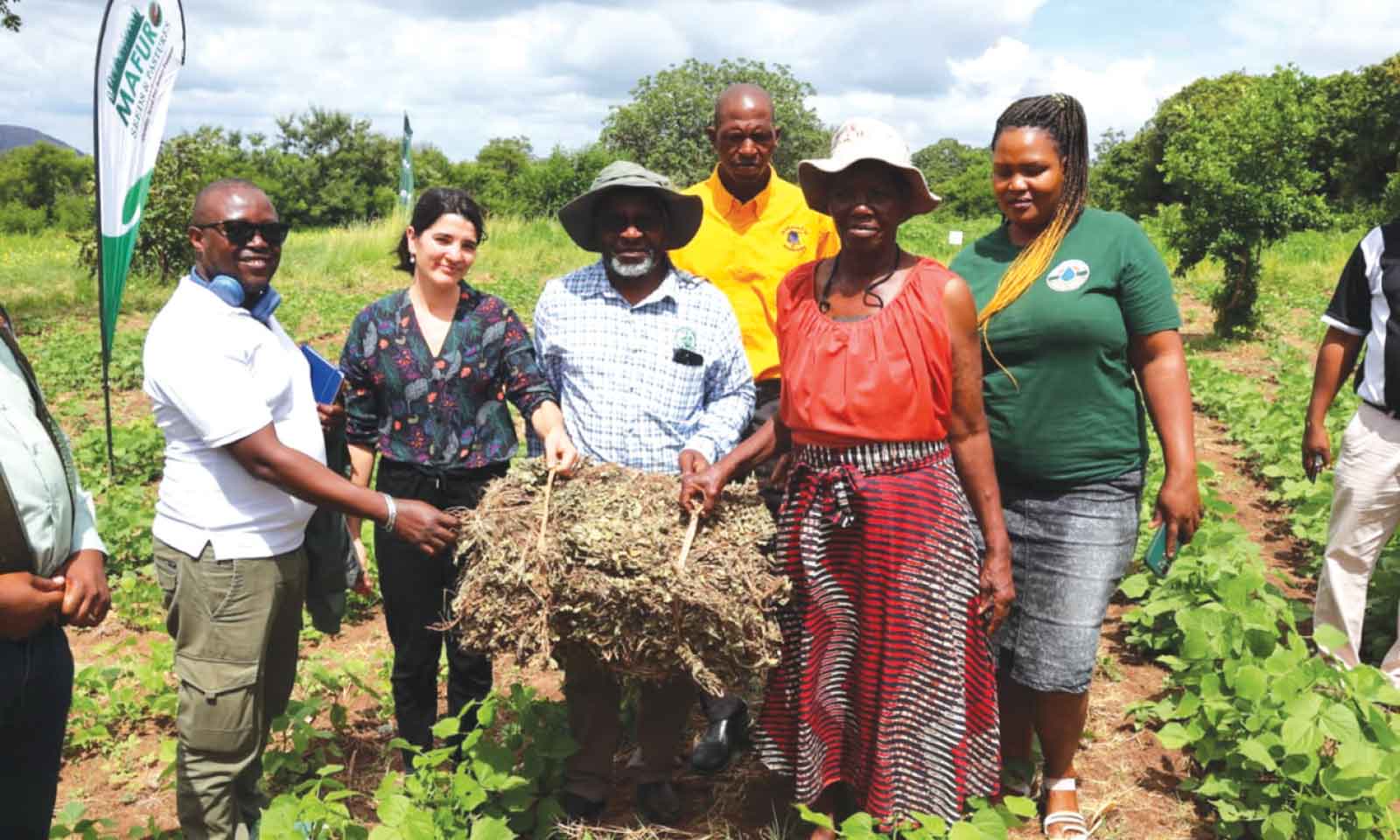
“It is very interesting to see farmers adopting feed strategies that include legumes like the velvet beans that you see here,” he said.
“The inclusion of legumes increases productivity because we are supplying animals with proteins.”
Higher-quality feed improves digestion efficiency, meaning animals convert feed into weight more effectively. Certain legume trees used in agroforestry systems can reduce methane emissions from cattle by up to nine percent.
“In integrating short-lived climate mitigation into policy, we want to focus on feed,” Dr Uwizeye said. “Helping farmers adopt better feed practices so that they can reduce methane and increase productivity.”
The logic is simple but powerful: when animals reach market weight faster, they emit less methane over their lifetime per kilogramme of meat produced. Efficiency becomes climate action.
Zimbabwe has experienced increasingly erratic rainfall patterns over the past two decades, with drought cycles tightening and grazing windows narrowing. Climate projections for Southern Africa suggest that dry spells are likely to intensify, placing additional strain on rain-fed agricultural systems.
Climate change mitigation officer in the Ministry of Environment, Climate and Wildlife, Mr Tapiwa Kamuruko, described fodder production as both mitigation and adaptation.
“This project is very important in the climate context,” he said. “We want to build resilience given the impacts we are experiencing.”
The hay bales stacked beside the pens represent that resilience in practical form. During off-seasons, when communal grazing dries up, stored legumes and formulated rations maintain body condition and reproductive health. Without such buffers, drought often forces distress sales or leads to livestock losses.
In environmental terms, overgrazing during dry spells accelerates soil erosion and reduces biodiversity. Structured feeding systems help interrupt that cycle.
Director of livestock research in the Ministry of Lands, Agriculture, Fisheries, Water and Rural Development, Mr Andrew Chamisa, said Government and partners have worked with these farmers since 2012.



