Chronicle Editor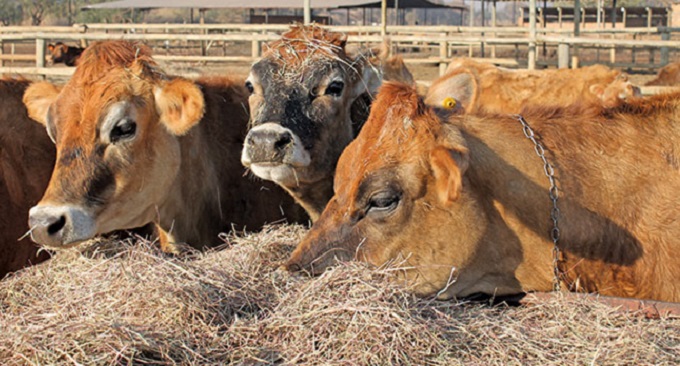
Judith Phiri, Business Reporter
FARMERS in Beitbridge have adopted fodder production as a drought mitigation measure aimed at alleviating poverty deaths in livestock.
Beitbridge like the rest of Matabeleland South Province falls under agroecological Region 5 which is perennially hot and one of the driest parts of the province. Producing crops for the market in the area is very difficult unless a farmer has access to irrigation facilities and most farmers in the area depend on livestock as a major source of income together with remittances from the diaspora.
In an interview, Ward 11 farmer, Mrs Mpulukeng Lamula said the district had a very good livestock marketing network through organised livestock auctions which were done every month in almost every ward.
“However, livestock poverty deaths have been eroding the contribution of livestock as a source of income for Beitbridge farmers. Poor grazing conditions that are induced by droughts are responsible for these livestock poverty deaths. In 2020 and 2021, over 10 000 cattle were lost to poverty deaths as the natural pastures had depleted. These poverty deaths are still a threat in the district as the frequency of droughts remains high,” she said.
She said more than 13 tonnes of fodder seed comprising of velvet beans, lab-lab and forage sorghum were distributed to 2 584 households. Mrs Lamula said fodder production trainings were then delivered to farmers and the increased access to fodder seeds and production trainings had positive interactive effect on knowledge and practice of farmers.
“New knowledge saw farmers adopting production of fodder on a larger scale at an average of 0.4 hectare per household in 2022/2023 season. Fodder yields sharply went up to an average of 4 tonnes of hay/hectare. While new knowledge on proper fodder harvesting timing, haymaking has seen us as livestock farmers exhibiting new capacity to maintain fodder banks of high-quality fodder,” she added.
The farmers also created a group which they called Faranani Group where they come together to share knowledge and solutions aimed at reducing livestock poverty deaths in Beitbridge. One of the group members, Mr Hendrick Mbedzi said the new knowledge on fodder allowed them to enterprise around fodder production.
“In 2022 we produced and harvested 11.25 tonnes of fodder that we sold to the community and earned us US$1 100.This year we have produced 14 tonnes again. We are going to process all the 14 tonnes before we sell it. Farmers have embraced fodder utilisation in order to guard against livestock poverty deaths, which is a business opportunity for us,” he said.
He said of interest is that 2 015 farmers who grew fodder this year harvested 1 964 tonnes of fodder hay that has been put in fodder banks.
Mr Mbedzi said the amount would support supplementation of natural grazing on a total of 2 727 cattle through the November to December period which was traditionally a high-risk period with regards to poverty deaths in Beitbridge as rangeland would be degraded severely.



 Online Reporter