

 admin
admin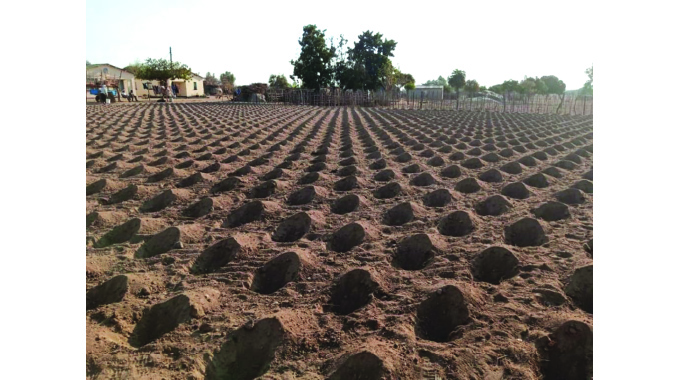
Sharon Shayanewako
WITH cereals and traditional grains featuring prominently in this year’s remodelled Pfumvudza/Intwasa inputs package, the Government has challenged farmers to follow all principles of good agronomy, as they produce their crops to achieve household and national food security.
The move is meant to ensure the country successfully produces crops to boost food as well as avail raw materials that will allow industries to start operating to capacity in line with Vision 2030 of becoming an upper-middle-income economy.
The Pfumvudza/Intwasa programme is set to benefit small-scale farmers, A1, communal, old resettlement and urban farmers in the production of cereals, oilseeds and legumes.
In an interview yesterday, cereal specialist in the department of Cereal Crops, Miss Jacqueline Chikarate told The Herald that the adoption of good agronomic practices was the hallmark of ensuring bumper harvests.
“Planning is the key aspect under Pfumvudza programme. Dig pressure basins and gather mulch in time. Make sure the pressure basins are 15cm by 15cm so that there is enough space to hold enough moisture for planting,” she explained.
Weeds are the major challenge for most farmers, as they have the potential to utilise all the nutrients that are available in the soil, leaving the crop unhealthy. “The summer cropping season is fast approaching. Farmers should make sure their plots are weed free. Weeds can draw all the nutrients that are in the soil. This will leave the crops unhealthy and result in low productivity,” observed Miss Chikarate.
She added that timely application of fertiliser was key in boosting crop productivity and farmers should apply it based on the results of their soil analysis.
“Timely application of top dressing is essential and farmers should make sure that they use split applications. Fertiliser quantities to be applied should be influenced by results from the soil tests farmers did,” she explained further.
Miss Chikarate encouraged farmers to apply good agronomic practices in the production of traditional grains such as sorghum, millet, cowpeas saying they were climate-proofing crops that would also ensure food security and nutrition variability at household level.
Pfumvudza/Intwasa programme is expected to anchor the upcoming summer cropping season through supporting three million communal households and 500 000 urban farmers.
The programme will support five Pfumvudza plots-each measuring 39m by 16m per household with agro-ecological regions specific crop input packages for maize, sorghum, pearl millet, soya beans, sunflower, groundnuts, vegetables and African peas.
The package will also include water retention enhancers, herbicides package for three plots and a fall-armyworm control package.
The country has adopted Pfumvudza/Intwasa concept based on the principles of minimum soil disturbance (holing out), mulching to conserve moisture, timeliness of operations and adopting of good agronomic practices.
National food self-sufficiency is crucial to the Government’s economic development tool- the National Development Strategy 1 (NDS1), which identifies food security and nutrition as key drivers of economic revival.



 Online Reporter