admin
admin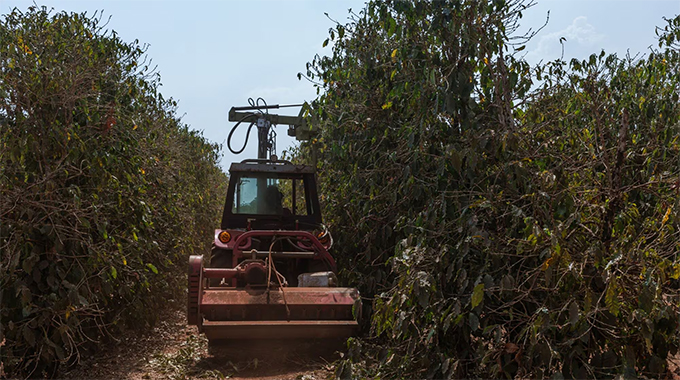
For six months, not a drop of rain fell on José Orlando Cintra Filho’s coffee crops.
The white flowers that typically inspire hope of a good arabica harvest — the bean variety favored by chains including Starbucks Corp — still haven’t blossomed. Instead, the trees withered. Cintra Filho, knowing he didn’t have enough water in his reservoirs, stopped irrigating his farms and trimmed some branches earlier than usual.
Next year’s harvest is already shrinking.
“I’ve been in coffee for 36 years and I have never been through this,” he said, hectares of parched trees surrounding him in a major coffee producing area known as Mogiana Paulista.
The worst drought in Brazil’s history is doing more than jeopardising coffee, sugar and soybean crops. Dead vegetation is giving way to fires, sending greenhouse gases into the atmosphere and disappearing more of the Amazon rainforest.
Key rivers, responsible for transporting a third of the nation’s prized soy crop, are drying out. Utility costs are up given that the country gets two-thirds of its energy from hydropower.
And as one the world’s largest crop exporters, any trouble in Brazil’s agriculture business has knock-on effects for food prices around the world.
What’s worse is that because of climate change, this is becoming the norm. Brazil has been facing “chronic and severe drought” since 2012, according to Bráulio Borges, a senior economist at LCA Consultores in Sao Paulo.
Such issues have cost the nation between 0,8 percent and 1,6 percent of gross domestic product each year. While fiscal spending had lifted growth so far this year, the long-running problems with rain have “chronically taken away more than 10 percent of accumulated growth from 2012 until now.”
That’s a significant problem for an economy that gets almost a quarter of its GDP from the agriculture business.
Nearly 60 percent of Brazil has suffered some degree of dryness since late 2023. – Bloomberg


 Online Reporter