Eddie Chikamhi
Zimpapers Sports Hub
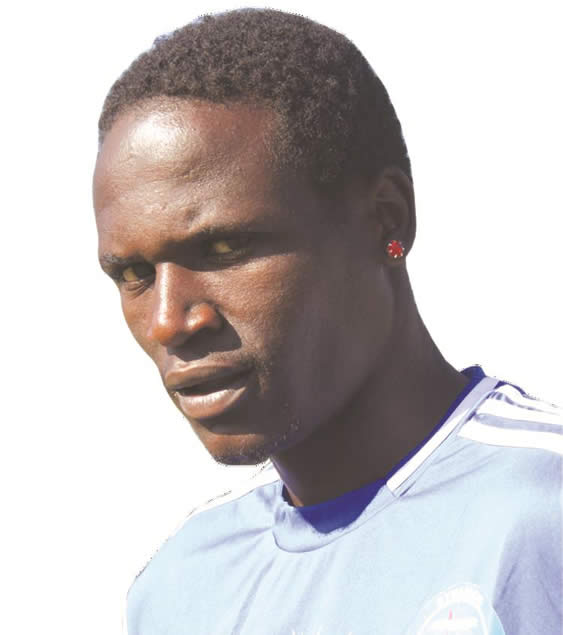
THERE was a time when thousands sang Rodrick Mutuma’s name.
There was another when many believed the former Dynamos, CAPS United and Highlanders striker would never recover from the struggles that derailed his career.
Today, Mutuma turns out in Division Two alongside a group of former Premier Soccer League stars whose names once filled Zimbabwe’s biggest stadiums.
At Norton Big Boys, they have found a new purpose.
The club has brought together familiar faces from Zimbabwe’s football past, including former Dynamos and Legia Warsaw striker Takesure Chinyama, ex-Warriors defender Hardlife Zvirekwi, midfielders Tafadzwa Rusike, Oscar Machapa and Valentine Ndaba, striker Evans Gwekwerere and player-coach Charles Rukwanhi.
What began as a social football gathering among former professionals has grown into one of the country’s most remarkable football projects.
“When we formed a social football team, we realised that we were beating all the teams that we played against and then we decided, why not play in a more competitive league? That’s how the idea to play in Division Two came about,” Rukwanhi told Zimpapers Sports Hub.
Norton Big Boys won the Mashonaland West phase of the inaugural Munhumutapa Challenge Cup and remain firmly in contention for promotion from the ZIFA Mashonaland West Division Two league.
But the results tell only part of the story.
For many of these players, retirement was never going to be easy.
The project has become a support system for former footballers navigating life after the professional game, a period that can often bring financial hardship, loneliness, mental health challenges and, in some cases, drug and substance abuse.
Over time, it has become much more than a football team. It has become a place where former players remain connected to the game while rebuilding their lives and helping others.
“Apart from just playing football, we also do a lot of mentorship,” said Rukwanhi.
“We usually spend time talking to younger players after matches and try to pass on our knowledge and experience to the next generation.
“We share lessons on football techniques, game management and life skills on and off the field. We have players who succeeded during and after their careers and they can teach young footballers valuable lessons.
“We also have some who made mistakes and mismanaged their careers. So, this becomes a two-fold learning opportunity and, for many, a second chance in life.
“Our sponsors are giving us tremendous support, which allows us to look beyond football. Some of the players are investing in coaching and football administration courses while planning for the future.”
Through sponsorship from Betterbrands and Mayor Logistics, the club has become an extended family, helping former stars maintain their fitness, preserve friendships and continue giving back to the communities that once celebrated them.
It has also translated into results on the pitch.
Despite fielding a squad largely made up of retired and semi-retired players, Norton Big Boys have become one of the strongest sides in their league.
Many of their opponents rely on youthful energy, but the Big Boys rely on experience.
“But we are stronger mentally and technically,” said Rukwanhi.
“They find it difficult to match our technical ability and decision-making. We use more brains than energy.”
Experience has become the team’s greatest strength.
Football intelligence, composure and game management have allowed them to compete with younger opponents.
For Gwekwerere, that responsibility goes beyond football.
“The main message that we are preaching is about staying away from drugs,” he said.
“Our sponsors are fully behind this initiative. That’s why you see the message ‘No to Drugs’ on the back of our jerseys.
“We are taking this campaign to former and current players from the lower divisions all the way to the Premier Soccer League. We want them to stay away from substances like mutoriro, dagga and crystal meth.
“If you want a long and successful football career, you must avoid these substances because they destroy careers and ultimately destroy lives.”
Few understand that message better than Mutuma.
His struggles with substance abuse have played out in public.
Today, he speaks about recovery.
“I am happy with this programme,” he said. I was one of the former players who became involved in drugs and this initiative has helped me fight that battle. As you can see, I am now on the road to recovery.”
Promotion would be welcome. Another cup would be celebrated.
But those ambitions no longer define the club. For players whose careers once brought fame, pressure and packed stadiums, simply finding a place where experience is valued, mistakes become lessons and teammates become family has proved just as meaningful as any trophy.
For Mutuma, the biggest victory may simply be pulling on a football shirt again, surrounded by teammates who have helped him find his way back.