admin
admin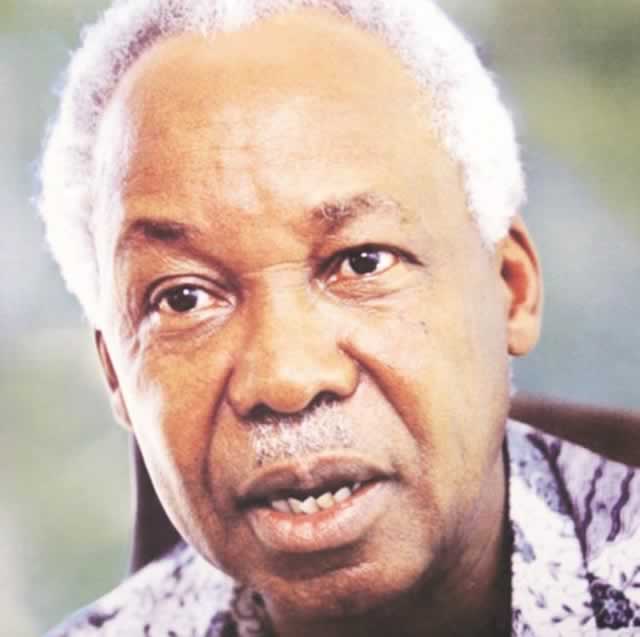
Ranga Mataire Writing Black
In the advent of new technology with its attendant addictive ephemeral social media platforms like Facebook, WhatsApp, Instagram, Twitter – many citizens tend to forget that what empowers us is the knowledge of one’s base.
A base is what African luminaries like Ivan Van Sertima, Amilcar Cabral or Marcus Garvey generally refer to as historical inspirational reference point.
Without an inspirational reference, it is difficult for one to navigate the intricate web of life’s vagaries.
Indeed, we are living in dangerous times in which children are growing up hooked on things that clearly alienate them from a solid base that empowers the understanding of the dynamics of a ‘global’ world tilted in favour of those with the means of ensuring their cultural products dominate the world.
We are living in a world that tells us that knowing one’s base no longer matters because we have become global citizens. We are told to frown upon our heroes and heroines. They associate our heroes and heroines with either evil spirits or with failure.
That’s why for example, the battle of Pupu where King Lobengula’s Imbizo Regiment under the command of General Mtshana Khumalo defeated the colonialist Allan Wilson Patrol is never properly documented.
Africa is under a very sophisticated onslaught. We are relentlessly told to deride, ridicule and forget our heroes and heroines because doing so will empower us to have a solid historical reference point that imbues us to forge ahead with confidence and zeal.
Ironically, those who are in a relentless war to make us forget our heroes or ridicule them glorify their own heroes and heroines to a point of even sanitising their sordid acts.
I was reminded of this virulent attempt to make us forget our heroes by the almost silent treatment given to the commemoration of the death of Africa’s liberation icon and Tanzania’s founding President Julius Nyerere who died on October 14 1999.
In most African countries, even in Southern Africa, 14 October passed like any other day.
There was virtually nothing in the media to remember and celebrate this icon whose contribution to the liberation of Africa was invaluable and immortal. It is sad to note that in our ‘busy’ lives we are contributing in the flashing out the memory of luminaries that have contributed immensely to our social, political and economic well-being as Africans.
Mwalimu Julius Nyerere must never be forgotten.
Here is a man whose ideas on democracy were not only far ahead of his time but were based on historical social experiences of an individual society or nation.
He advocated for the kind of democracy based on people’s best interests and not on parochial political interests.
Here is a man who advocated that Africans must live up according to their own principles of democracy and not to live up to other countries’ principles of democracy.
Indeed, Africans can learn a lot from Nyerere, especially his speech in June 1991 in Rio De Janeiro, Brazil when he said: “Democracy is not a bottle of Coca-Cola, which you can import. Democracy should develop according to a particular country.”
Nyerere’s ideas on women empowerment and their political inclusion was far ahead of his time.
It was Julius Nyerere who bestowed so much responsibility and trust on Bibi Titi Mohamed who played a critical role in making Tanganyika independent when as the leader of Tanganyika African National Union (Tanu)’s women wing mobilised and recruited women, convincing a large number to join the struggle.
Bibi Titi Mohammed held different ministerial posts under President Nyerere when Tanganyika attained independence setting the pace for other African countries to ensure that women play a crucial role in all spheres of life.
But above everything else, Nyerere believed in unity and on many occasions reinforced the idea that without unity there is no future for Africa.
Unity, he said, was key in protecting Africans against neo-colonialism.
Renowned historian Phyllis Johnson describes Nyerere as the father of Southern African liberation and one of the founding fathers of the Southern African Development Community (SADC).
How can Africa forget such a man?
Why should time allow us to forget such an individual whose sharp intellect and integrity managed to unite a country with 120 ethnic groups, united by their Swahili language and by social harmony constructed on the ideals of peace, justice, unity and personal commitment.
Tanzania provided political, material and moral support to other African countries in the Sadc region until independence was achieved in Mozambique (1975, Angola), Zimbabwe (1980), Namibia (1990) and South Africa (1994).
The OAU Liberation Committee that coordinated and spearheaded the liberation of the rest of the continent was hosted by Tanzania and most liberation movements were based in this country. So how can Africans particularly those in southern Africa forget Mwalimu Julius Nyerere? Surely, the gods of this continent will forsake us.
And as we reflect on Nyerere’s contribution to our well-being, let us also not forget Cde Samora Machel, the founding leader of Mozambique who died in a mysterious plane crash in the Lebombo Mountains near Mbuzini in South Africa on his way home from a meeting in Lusaka, Zambia on October 19.
Tomorrow marks 35 years since that mysterious death.
Cde Machel was a visionary who understood that the independence of Mozambique would be meaningless without the independence of his fellow neighbours like Zimbabwe.
He thus opened his heart, country, human and economic resources and accommodated Zanla freedom fighters, allowing them to use his country as their base to fight settler colonialists in Rhodesia.
For the sake of the future, we must never allow the memory of Cde Machel to escape us.
How can we become a people with a solid base if we fail to be inspired by the sacrifice, dedication and valour of Cde Samora? Africa and Southern Africa must valorise and immortalise its heroes.


 Online Reporter