

 Online Reporter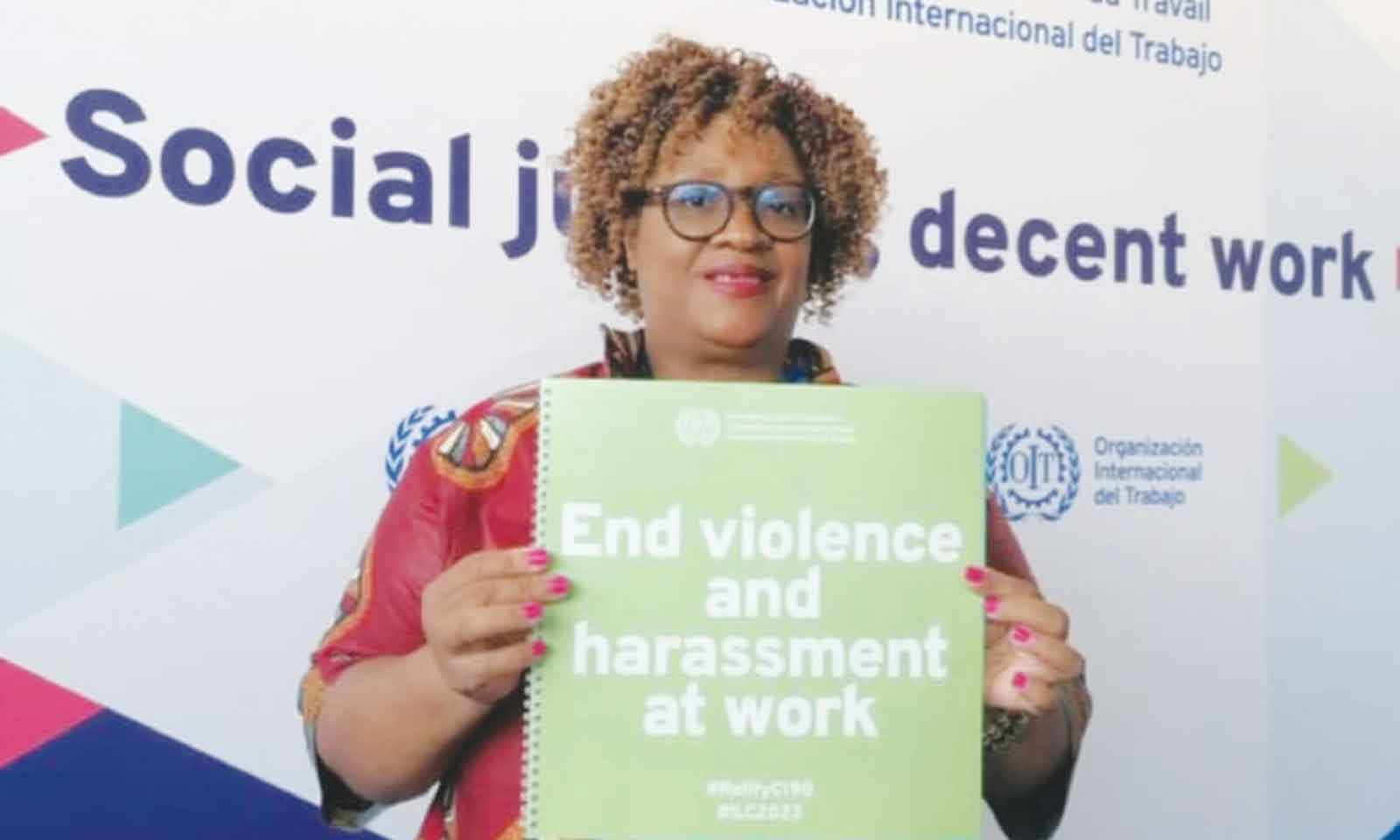
Fungai Lupande
Mashonaland Central Bureau
FIONA GANDIWA MAGAYA has spent more than two decades championing safer, fairer and more inclusive workplaces for Zimbabwean women.
A labour, education and gender equality consultant, she has become one of the country’s leading voices in gender mainstreaming.
Her work ensures women and men are considered in all policies, programmes and decision-making processes.
Armed with a Postgraduate Diploma in Law from the University of Zimbabwe and a Certificate in Globalisation and Labour Rights from the Institute of Social Studies in the Netherlands, Fiona is also an International Labour Organisation (ILO) Certified Gender Audit Specialist.
These qualifications have strengthened her ability to identify gender gaps within institutions and advise organisations on how best to close them.
Fiona’s work is firmly rooted in her 22-year career at the Zimbabwe Congress of Trade Unions (ZCTU).
For 16 of those years, she served as a Gender, Legal and Education Specialist, working closely with workers who faced discrimination, harassment and unequal treatment.
She trained union leaders, negotiated with employers and Government representatives, and ensured women’s concerns were included in collective bargaining.
Through this work, she built a reputation as a fearless advocate for gender justice and decent work.
She insists that women must be present at decision-making tables if real change is to be achieved.
Her expertise eventually took her to the global stage, where she contributed to two groundbreaking international labour standards:
ILO Convention 189 on Domestic Workers, the first global instrument to set minimum protections for domestic employees, a sector dominated by women.
ILO Convention 190 on Violence and Harassment is the first international treaty affirming every worker’s right to a workplace free from violence, including gender-based violence.
Her participation in these negotiations not only demonstrated Zimbabwe’s commitment to gender equality, but also placed Fiona among Africa’s influential voices in labour rights and gender advocacy.
Speaking at a recent gender symposium in Harare, Fiona emphasised that deeply rooted social and cultural norms continue to drive inequality across Africa.
Despite progressive constitutions, including Zimbabwe’s own Bill of Rights, many gendered expectations remain unchanged.
She noted that although Africa is divided into regions, West, East and Southern Africa, societal expectations of men and women remain strikingly similar.
These expectations, she said, are shaped by long-standing social constructs.
“Across societies, certain behaviours are considered acceptable for men, but unacceptable for women,” she said.
Citing Nigeria as an example where men with multiple partners are often tolerated while women are criticised for the same behaviour.
“We are silently saying, ‘men can do it, but women cannot.’ This double standard continues to disadvantage women and girls,” she said.
Fiona added that cultural norms within families also play a major role.
Many parents still fail to teach boys basic caregiving or household skills, reinforcing the belief that such responsibilities belong only to women.
These norms have far-reaching effects: women remain underrepresented in leadership, lack equal access to education, and face economic barriers such as limited access to credit and business support.
In some workplaces, even personal protective equipment is not designed with women in mind.
“On paper, our constitutions are among the most progressive on the continent,” she said.
“But the question is: are these rights being fully enjoyed by women and girls in reality?”
Through her consultancy work, Fiona supports organisations to:
- Revise discriminatory policies
- Include gender concerns in negotiations
- Train leaders on gender-responsive planning
- Embed women’s rights in workplace rules and national legislation
- Improve the representation of women in leadership
In her presentation at the symposium she boldly outlined the challenges women face in the world of work, including unsafe workplaces, job insecurity, wage theft, the gender pay gap, weak social protection systems, limited access to credit and training, and persistent gender-based violence.
She placed special emphasis on women in rural communities, domestic work, informal trading and the growing gig economy, groups often left out of national development plans.
Fiona continues to remind policymakers that gender equality is not optional but a fundamental right.
She urges Government and labour unions to ratify and domesticate ILO Convention 190, strengthen social protection for informal workers and create workplaces where every worker is safe from violence and harassment.
Through her work, teaching and advocacy, Fiona Gandiwa Magaya is helping shape a world of work where women are not only present but empowered, protected and valued.



