Ivan Zhakata and Nokuthula Dube
FOREIGN entrepreneurs are increasingly occupying space in Zimbabwe’s retail sector, which is legally reserved for local citizens. While the legislation is clear, enforcement appears to be a major challenge.
Entrepreneurs from countries including Nigeria, Ghana, the Democratic Republic of Congo, Rwanda, India, China, and Tanzania have established retail outlets throughout Harare’s central business district. Notable concentrations are found along Chinhoyi Street, Kaguvi Street, Angwa Street and George Silundika Avenue.
However, many of these traders operate under business licences registered in the names of Zimbabwean nationals or without any official permits. Investigations reveal that some foreign entrepreneurs have gone beyond running individual shops, securing entire buildings which they rent, subdivide into stalls, and lease out to local traders. This has led to the emergence of foreign-managed mini-markets.
For instance, a Congolese national on Angwa Street is reportedly managing over 20 retail units in a single commercial building. None of these businesses are publicly displaying valid investment licences from the Zimbabwe Investment and Development Agency (Zida), or complying with other regulatory requirements.
The rapid increase in unregistered tuck shops and mini-markets has raised concern among local entrepreneurs and formal retailers. Major supermarket chains such as TM Pick n Pay, OK Zimbabwe and Spar have reported a decline in foot traffic and sales, partly attributed to the proliferation of unregulated competition.
These informal outlets often sell essential goods such as cooking oil, rice, sugar and clothing at prices significantly lower than those offered by formal retailers. This has raised concerns about possible tax evasion, smuggling, and unfair trading practices.
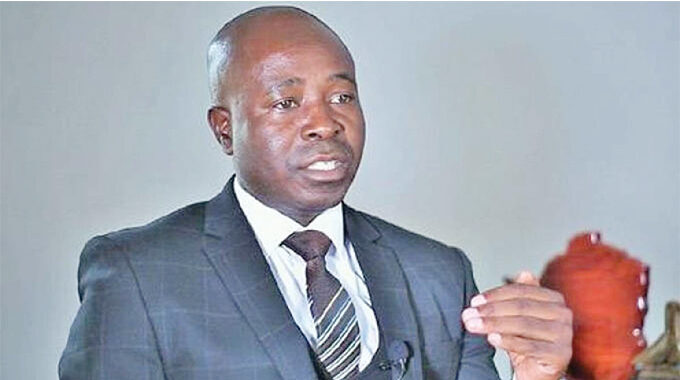
Confederation of Zimbabwe Retailers (CZR) president, Dr Denford Mutashu, said the retail and wholesale sectors are reserved for Zimbabweans under the law.
“We also have reports of investors entering the country claiming to invest in manufacturing, mining or other productive sectors, only to divert into retail. That is not only unfortunate but unacceptable,” he said.
“CZR will soon conduct a stocktake to determine who should remain or vacate the sector to create space for locals. It is also disheartening that some individuals have become a nuisance by engaging in activities such as drug trafficking, marriages of convenience, financing opposition politics, money laundering, and general disregard for the country’s laws.
“Some operate retail and wholesale businesses with no traceable local investment. There are even individuals who entered Zimbabwe as ‘refugees’ but frequently travel back to build luxurious homes in the very countries they claimed to have fled from.”
Permanent Secretary in the Ministry of Industry and Commerce, Dr Thomas Utete Wushe, clarified that foreigners may only operate in reserved sectors if specifically authorised by the minister.
“The concept of reserved sectors stems from the country’s commitment to promoting indigenisation and the economic empowerment of Zimbabwean citizens,” he said.
“The main objective is to ensure locals have a greater stake in the national economy, especially in sectors that have low barriers to entry or are not capital-intensive. In 2024, stakeholders successfully lobbied for the addition of five more sectors to the reserved list, citing unfair competition from foreign-owned businesses. These were approved by the Minister of Finance following extensive consultations.”
The newly reserved sectors, as per the Finance Act No. 2 of 2024, include the haulage and logistics industry, pharmaceutical retailing, shipping and forwarding, customs and clearing, and borehole drilling.
Dr Wushe noted that the Finance Act No. 2 of 2018, under which the Indigenisation and Economic Empowerment Act was amended, also empowers the Minister of Industry and Commerce to introduce regulations that set operating thresholds for companies in reserved sectors.
“Currently, the regulatory framework lacks specific thresholds for all reserved sectors,” he said.
“This has made enforcement inconsistent. Foreign investors wishing to participate in reserved sectors must formally apply to the Minister of Industry and Commerce.”
He added that the Ministry conducts regular compliance checks to monitor foreign operations within these sectors.
However, legal loopholes, weak enforcement, and reported corruption among some municipal officials have allowed these irregular operations to continue largely unchecked.
Harare City Council spokesperson, Mr Stanley Gama, said the Council does not issue licences to foreigners seeking to operate in reserved sectors unless they provide a permit from the Ministry of Industry and Commerce.
“We screen all new applications. Those falling under reserved sectors are informed of the requirement to produce ministerial approval before a licence can be issued,” he said.
Local traders and small business associations are now urging the Government to step up enforcement efforts to restore fairness and compliance in the sector.