admin
admin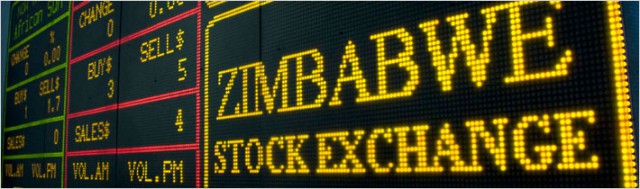
 Mernat Mafirakurewa Business Editor
Foreign investors will continue to dominate the country’s equities market this year on the back of the tight liquidity situation gripping the country, a local securities firm has said.
In its March 2014 Equities Market Review and Strategy Outlook, Invictus Securities Zimbabwe reports that the year was likely to be characterised by a subdued economic performance and the re-integration with the international community, albeit at a very slow pace.
“Our view is that foreign participation will continue to expand to around 60 percent by year end.
“We expect foreign investors to buy on weakness in 2014,” Invictus said in a research note.
“The drive to preserve value and hunting for bargains in a subdued market are going to be the major themes in making investment considerations in 2014.
“We expect the market to remain flat or even give back some of the gains recorded in 2013 on the back of slower economic growth reflected largely in weak consumer demand and tight liquidity conditions.”
Invictus said exporters as well as agriculture related stocks were expected to perform well on the back of a good rainy season and strong performance from the agriculture sector.
A broad policy shift to be more accommodative especially with regards to indigenisation is also anticipated.
“We expect the industrial index to decline by 10 percent to 181,90 points and the market capitalisation to contract to 4,68 billion,” Invictus said.
The introduction of CSD in the first half of the year and adoption of Automated Trading System expected in 2015 would lead to a significant increase in the efficiency, transparency and accountability of the Zimbabwe Stock Exchange.
Last year was positive for the Zimbabwe Stock Exchange listed stocks with the industrial index growth among the highest in Sub-Saharan Africa as a result of the stock exchange catching up with the rest of the world and anticipation that the July 31 polls would have been a trigger for rerating of valuations to align with the rest of the region.
Turnover grew by 8,3 percent while volumes continued to contract. Foreign trades contributed 50 percent of total turnover with more buying than selling while heavy counters dominated with the top two accounting for more than half the year’s turnover.
The country’s economy has been on a rebound since 2009 when the country adopted multiple currency systems and implemented a raft of measures aimed at stabilising the economy.



 Online Reporter