admin
admin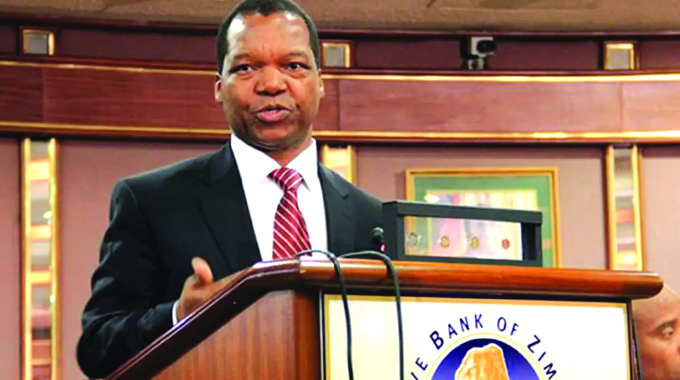
Michael Tome
Business Reporter
THE Reserve Bank of Zimbabwe (RBZ) allotted a total of US$834,7 million to various productive sectors of the economy through the auction system during the seven months to July 2022 compared to US$1,1 billion in the same period last year.
RBZ Governor Dr John Mangudya revealed this in his mid-term monetary policy statement, pointing out that the decline in forex allocations was in tandem with the reduced number of bids approved on the auction system, as the interbank forex system takes root.
According to the MPS, the 2022 disbursements thus represent 91 percent of the total bids submitted to the auction as of July 26 2022.
In the first half of 2022, bids per auction averaged 1 450 per week from 2 000 in the fourth quarter of 2021, which is a 27, 5 percent decline.
The RBZ attributed the drop in number of auction bids to the introduction of the willing-buyer willing-seller foreign exchange trading mechanism, a market oriented price discovery system upon which pricing should be based.
The central bank noted that Small to Medium Enterprises received 17 percent of the funds from the auction system in the first half of 2022 compared to a share of 11 percent in the same period in 2021.
Since its launch, the auction system as at July 26 2022 had allocated a total of US$3,43 billion.
A total of US$2,93 billion was disbursed on the main auction while US$498 million was allotted via the SMEs auction.
Over 65 percent of allotments by the RBZ went towards supporting productive sectors with 41 percent of the total allotments directed towards procurement of raw materials whilst 22 percent funded importation of capital goods. About three percent of the total amount was allocated towards fuel, electricity, and gas procurement. Dr Mangudya also indicated that the central bank was moving to address the confidence deficit in the auction system by clearing the backlog of allocations.
“To enhance market confidence, the bank has cleared the backlog of all allotted amounts in respect of auctions (auction) 94 to (auction) 102 and is in the process of settling the ring-fenced backlog from main auctions 83 to 93, amounting to US$169 million, with a view to clearing it within a short space of time,” said Dr Mangudya.
He highlighted that the apex bank had devised mechanisms to synchronise foreign exchange rates on the two official forex trading platforms.
“To support an efficient market for foreign exchange, the bank has moved to eliminate the gap between the auction and the willing-buyer willing-seller exchange rates. It is the bank’s view that the willing-buyer willing-seller exchange rate is a good indicator of the foreign exchange rate in the economy,” he said.
The central bank chief also indicated that the parallel market exchange rate movements were to a large extent influenced by speculative sentiment and forward pricing behavior, especially by providers of goods and services to the Government.
Small to Medium Enterprises Association of Zimbabwe (SMEAZ) chief executive officer Farai Mutambanengwe said the late settling of bids at the auction was leading to reduced interest and trust in the system by businesses.
“The percentage of SMEs participating in the auction has actually grown, but the actual figures being allocated on the auction have come down, the auction is no longer very functional, and fewer people are now trying to use the auction because it is not settling in time, ” said Mr Mutambanengwe.
Finance and Economic Development Minister, Professor Mthuli Ncube is on record saying the disbursements from the auction system had managed to prop up industry performance and the authorities were now in the process of fine-tuning the platform so that it becomes an efficient platform for exchange–rate price discovery.



 Online Reporter