

 admin
admin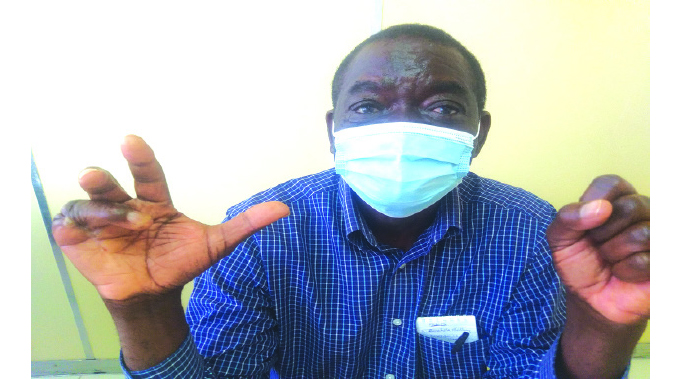
George Maponga in Masvingo
On September 29, 1979 in the morning, as the heinous but vanquished Rhodesian colonial regime was throwing its last punches in a futile bid to delay majority rule, Cde Tendeukai Isaac Chinooneka was staring death in the face on the extreme fringes of Sengwe communal lands where he was surrounded by a detachment of apartheid South African soldiers.
As his right hand had been badly wounded by bullets, Cde Chinooneka’s last line of defence on the unforgettable morning was a Chinese-made hand grenade.
Cde Chinooneka, whose nom-de-guerre, was Ironman Chikara, had been deployed to Section 4, detachment One in the area around Chikwarakwara in the Limpopo Valley during the war of liberation. He is now the Masvingo war veterans provincial chair and vice chair of the Veterans of the Liberation Struggle League (Masvingo Chapter).
On this fateful September morning, he found himself cornered by an all-white apartheid South African army detachment that had encircled him after setting up several ambushes against Cde Chinooneka’s section of Zanla combatants deployed in the area.
As one of the approaching white SA soldiers released a hail of bullets in a bid to “liquidate” him from his hideout on the edges of a small dry, ephemeral stream by hitting him on the chest, the bullets somehow miraculously hit the gun’s “bolt group mechanism” area instead.
The bullets then ricocheted to his right hand hitting his small finger that immediately fell to the ground. More fire continued coming from the SA soldiers, but still missed Cde Chinooneka who was bleeding profusely on his injured right hand after it’s back was also almost perforated by bullets.
Disabled and unable to shoot after his right hand had been badly injured, Cde Chinooneka removed his jacket and tied his bleeding hand to prevent serious blood loss.
Seemingly oblivious of lurking danger from the unrelenting South African soldiers, he mustered enough courage to put his AK 47 automatic rifle on one of his shoulders and pulled out a Chinese-made grenade with his left hand.
He then used his mouth to unscrew the hand grenade and threw it towards the direction of his stunned tormentors before taking to his heels.
“I threw the grenade in their direction and that decision saved my life. For some few minutes there was a lull in shooting activity,” recalled Cde Chinooneka.
“This enabled me to run to safety as the enemy was still confused by a cloud of dust that formed and the deafening sound from the explosion. I don’t know whether the grenade killed one of them but it helped me to escape with my life that day.”
By the time he managed to cover himself with green shrubbery in a bush thicket after making good his escape from the marauding SA soldiers, Cde Chinooneka had also endured three more bullet wounds around his pelvic area.
“At least three bullets hit me on my right arm and the pelvic area, but all the bullets fortunately missed my major bones after entering from one side and coming out on the other side. This enabled me to keep on running until I took cover in a bushy thicket where I camouflaged myself with trees leaves,” he explained.
“The SA soldiers followed me and from my hideout I could now see over 30 of them armed to the teeth. They never saw me because I was hiding and also I did not leave any trails of blood because blood from my injuries was collecting in my jacket and denims.”
Cde Chinooneka waited until it was dusk to leave the hideout and started walking towards Chisvisvi area, which was the gathering point for his section. Guerrillas always had a gathering point where they would meet after contact with the enemy.
The terrain was rugged and hilly, but Cde Chinooneka still carrying his AK 47 and badly injured continued to walk towards the agreed gathering point where he hoped to meet his colleagues under their section of nine men.
Unbeknown to him when he arrived in Chisvisvi, the South African soldiers had already passed through the village and torched houses. The soldiers beat and killed people resulting in him failing to seek refuge and get help on his bleeding wounds.
He quickly identified another secure position around the area where he hid and slept until the next morning while planning the next move.
Problems for Cde Chinooneka and his section had started on September 28, 1979 in the operational area that covered parts of Chikombedzi, Lutumba, Chiturupasi, Dumba and Chikwarakwara in the Limpopo Valley in Sengwe.
Cde Chinooneka said because most villagers or povo had been confined to protected villages created by the Rhodesians to cut food supplies to freedom fighters, his section had gone for over a week without eating any starch surviving on meat alone.
These villagers used to make them “nyoloti” dried and pounded meat in mince form to eat and “udangwani” porridge made from pounded millet chuff. This was served as starch and with the coming of keeps and general lack of food in the arid area, life had become tougher for his section.
“We had gone for over a week without eating any starch and we were getting weaker and weaker. The povo that gave us food was now restricted in “keeps” so we engaged some villagers to trade beef with mealie meal with families across Limpopo River in South Africa.”
“We waited for the mealie-meal from our positions on the day and we got deliveries. That night we had sadza as part of our meal after a very long time. It was good to eat sadza after such a long time. After eating we slept at our positions for the night.”
He said the next morning, their section commander deployed three seguranzas (security men) around 5am to mop the area where they were based and check if there were no enemies.
As the security men were combing around ,they discovered that a detachment of all-white apartheid SA had encircled their base and suddenly started firing at them prompting gunfire exchange after the seguranzas took cover.
“We then also moved from our positions and joined the fight. A fierce battle ensued which lasted for some hours. Trouble crept in when the South African soldiers called for air power support and without warning we saw several helicopters hovering overhead and we immediately knew that we were in great danger,” he further said.
“We lost two Cdes (Mabhunu Muchapera) and the other one I can’t remember during that battle and resolved that we should flee since we were overwhelmed and only meet at the gathering point (Chisvisvi),” he added.
Cde Chinooneka said he fled from the battle scene stepping on animal footpaths and using cover of vegetation.
He only started walking through the rugged Limpopo Valley terrain to the gathering point after feeling he was out of range of the South African soldiers.
“Little did I know that the enemy had also set up sever ambushes in various directions from our base. As I was walking and feeling safe, I noticed some suspicious footprints that had been deliberately left by the enemy to enable them to aim and shoot more accurately at me.
Meanwhile, from his secret hideout in the Chisvisvi area, an injured Cde Chinooneka would crawl to a nearby dry riverbed and dig for water to drink in a pond known as “mufuku” before crawling back.
“I did this for two days and by this time I was feeling weaker and weaker due to bleeding and starvation. Then luck struck after I noticed a povo during one of my visits to the watering point.”
Cde Chinooneka said the povo in question was someone by the name Chauke.
“This man saved my life because he is the one who treated my wound using traditional medicine and also fed me for over two weeks from my hideout until my fellow guerrillas found me.”
The Masvingo war veterans leader said he would regularly change positions every time Chauke brought him food in the bush to first make sure he was alone.
“He had two wives and I feared that he was going to sell me out, but he never did until I was taken by my fellow Cdes to the rear in Mozambique via Sango,” he said.
Upon arrival in Mozambique, Cde Chinooneka was hospitalized at Maputo General Hospital where he was treated further though Chauke’s traditional medicine had already healed the wound.
He said he was taken to a place called Mashava in Maputo and later transferred to a place called Miroti Mission in Cabo Delgado province in northern Mozambique. He stayed there until he was again transferred with others injured in the war to Sofala camp.
Cde Chinooneka went to Echo Assembly point in Nyanga after ceasefire and then Chitungwiza Assembly point. He was again moved to Entumbane in Bulawayo until his integration into the unified Zimbabwe National Army in 1981 where he was attested with the rank of a private.
The Masvingo war veterans leader paid tribute to Vice President Dr Constantino Guvheya Nyikadzino Chiwenga, who he said as Commander of Bulawayo-based One Brigade allowed him to further his education in 1982 when he was now a lance corporal.
“After being attested into the army, I still had a burning desire to proceed with my education like my peers who I left home when I joined the struggle in Mozambique. I did my A Level via night school and attained 5 points in Geography, Economics and Sociology.”
“I was working in the Ordinance and Supply Department at Llewelyn Barracks and approached a white Captain (Lawson) and asked for permission to continue with my schooling. He said I must get demobilized first, but I refused.”
Cde Chinooneka said he decided to take the bull by the horns and approached then Brigadier General Chiwenga for assistance to further his education.
“He (VP Chiwenga) might have forgotten how much he changed my life, but I will never forget what he did to me because chinokanganwa idemo muti haukanganwi.”
“I went to his office and said shefu varungu varikutirambidza kudzidza asi ndizvo zvatairwira and suddenly he (VP Chiwenga) he held up a phone and had an instruction that I be allowed with my school while still in the army,” said Cde Chinooneka.
As a result of VP Chiwenga’s intervention, Cde Chinooneka was among the inaugural group of 102 all-male pioneer students at Belvedere Technical Teachers’ College.
After graduation in 1985, Cde Chinooneka was posted to 4.1 Infantry Brigade in the Education Corps where he taught Geography and Agriculture at 4.1 Secondary School. His rank had been elevated to corporal now.
After promotion to Warrant Officer Class 2 in 1990, Cde Chinooneka enrolled to study for a Bachelor of Education Degree in Geography at the University of Zimbabwe and completed in 1992. In 1996 he applied to study for a Masters in Educational Administration and finished in 1997 when he retired from the army.
After three years, Cde Chinooneka secured employment at Masvingo Teacher’s College as a lecturer before joining Masvingo State University as a lecturer in Educational Leadership, Management and Administration in 2002.
The university has since changed to Great Zimbabwe University and Cde Chinooneka is still teaching there. To ice his educational cake, he completed his PHD (Management, Leadership and Policy) with the University of KwaZulu Natal last year.
Cde Chinooneka was born on August 2 1955 at Chinooneka village in Buhera and attended Nyanzira Primary and Makumbe Mission High Schools in his area.
After completing his “A” Level, he went to Harare to look for a job before trekking to Chiredzi still looking for employment.
While in Chiredzi, he was part of youths who ran amok, staged protests after being addressed by Zanu senior activist in Masvingo the late Cde Thomas Zawaira,who became the ancient city’s first black mayor after independence. He was arrested for defiance.
Following his release, Cde Chinooneka and three colleagues joined the liberation struggled in 1976 escaping the country via Gonarezhou National Park.
He received military training at Nechingwea in Tanzania where he specialized in military tactics. Upon completion of training, he was posted to the Chikwarakwara area in the Limpopo Valley which was under the Gaza operational zone out of three Zanla operational zones which also included Manica and Tete.
“I went to war to defend the dignity of the black man in his land of birth. I fought for equal opportunities. In our home area today, we have a river just before Buhera Office that is called “Kofoto” which loosely means calming down. This river is where our forefathers on their way to Buhera Office to acquire national identity cards had to start showing respect to the white men. They for example, would remove a hat before crossing to get to the white man’s office and that humiliation made me decide to join the struggle,” said Cde Chinooneka who is a father of three.


 Online Reporter