Online Reporter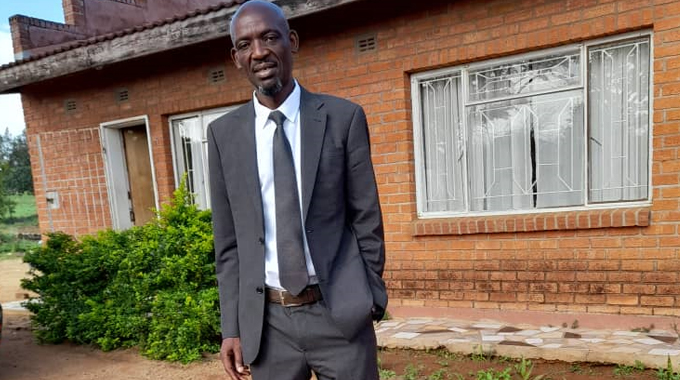
Trish Mukwazo, [email protected]
FROM the depths of drug addiction and a history of serial armed robbery, Pastor Douglas Sibanda has emerged transformed, embracing a born-again Christian. He now channels his energy into serving God and guiding others, especially young people, towards redemption and freedom from substance abuse.
Sibanda, a former high-profile armed robber, shared his journey from a life of crime and drug addiction to spiritual rebirth. Operating across Namibia, South Africa, Botswana, and Zimbabwe, he targeted banks and defrauded many. His redemption came through the Gospel, thanks to his ex-wife’s persistent prayers.
“When they shared the message of Jesus, I felt a strong desire to be born again. I began seeking God earnestly, even fasting, and I felt the toxins within my soul being washed away,” Sibanda said.

He says that the key to breaking free from addiction lies in spiritual rebirth, as the Bible states, “Therefore, if anyone is in Christ, the new creation has come: The old has gone, the new is here!”
Sibanda now spreads the word of God, helping those struggling with drug abuse and worldly distractions. His journey began with experimenting with marijuana and alcohol in secondary school.
“I started experimenting with drugs in Form 2, but I stopped afterwards. I think it was simply peer pressure,” he said.
Sibanda’s serious drug use began when he became involved in crime around 1994.
“One thing about crime is that before you commit it, you feel anxiety, fear, panic, and depression. So, we would use drugs to calm ourselves down. When I was involved in crime, that’s when I started using drugs heavily,” he said.
Confronted with the stark realities that precede criminal acts, Sibanda revealed to Saturday Chronicle that substance use was a means of escaping reality.
“We wanted to silence our guilty conscience. You don’t want to hear that voice condemning you. So, drugs made us feel okay with ourselves, and we weren’t bothered by our conscience. For that reason, that’s when I’d say my addiction started. The more you use, the more you take,” Sibanda said.
In Harare, around 2000, Sibanda’s drug use escalated from marijuana to Histalix, a cough syrup he found particularly potent.

“Before that, I also used to drink heavily. You know, when you are in crime, you develop a tendency to party. It was every day, drinking our money in shebeens.
Histalix was a good substitute for beer because it didn’t give me a hangover. It wasn’t expensive. It had fewer complications compared to beer. So, during that time, I stopped drinking beer, not completely, but I wasn’t really a drinker,” Sibanda said.
Driven by financial desperation, a common plight in the economic hardships of the time, Sibanda was drawn into a life of crime.
“I needed money. I was grown up. I was raised by a single mother, and she had to struggle to educate me. And by the time I finished school, I knew I was on my own.
I couldn’t go back to my mother, and even if I did, she couldn’t do much for me,” Sibanda said.
Having served as a cadet in the Zimbabwe National Army in the early 90s, Sibanda failed to complete his training due to his alcohol addiction, losing a potential path to stability.
“I got drunk, and I never went back to complete my course. When I lost that employment, it meant I had to do something. I had completed A-level. While I was drinking and desperate, I was just looking for anything.”
Introduced to the world of crime by a friend, he began defrauding people through false pretences.
“We would pretend to exchange money, but we would give them smaller denominations. My addiction really did affect my relationships with my family and friends who weren’t into drugs. So, slowly, I became detached from them. And, of course, my ex-wife, who was my wife then, she would ask me to stop smoking in front of the children, which I couldn’t and didn’t.
“That’s where my children learned about abusing drugs. This is what I regret. Because I used to take drugs in front of them, and they got affected. Now, they are abusing drugs themselves,” Sibanda said.
After being convicted, fears plagued his mind, prompting him to refine his criminal methods.
“Am I going to finish my sentence? Will I make it, or will I die in prison? That’s what I was thinking. I was thinking about my family, my wife, and things like that. But I never thought, ‘Let me leave this thing and maybe go out and do something else.’ No. When I was in prison, I actually thought next time, I should be cleverer and wiser,” he said.
Sibanda told Saturday Chronicle that upon his release, he became a more organised criminal, employing lawyers and bribing police officers.
“I never went to prison after that, or if I did, I never lasted in custody. I was a sophisticated criminal. It was very hard for you to get me behind bars. It was really almost impossible, because I had money,” he said.
Having studied accounts up to A-level, Sibanda knew how to invest money in unit trusts.
“I knew how to manage my finances. I understood the laws of money very well, unlike other criminals. I always had money in my pockets,” he said.
He said his time in prison did not rehabilitate him, but rather turned him into a hardened criminal.
“I was never rehabilitated. It actually made me feel worse when I came out. It really escalated my crime. I was more professional than before, more organised than before. So that was the impact. I think what really made me want to change was when I got into big-time crime, but I wasn’t directly involved anymore. So, what would happen is that when we dealt with people, I would be left behind. And we were dealing with people, especially white people, who didn’t report these cases.
“They didn’t report these cases because they were also afraid, because we were dealing with foreign currency, and in most countries, dealing with foreign currency is illegal. Even in Zimbabwe, it used to be illegal, and you could be arrested. There was a charge for that. We were targeting white people, Chinese, and other foreigners who wouldn’t report us.
“But what I realised was that when I was watching these people after they discovered they had been conned, the way they were desperate, the way they were crying. Somebody would run and do funny things, others would cry, and I just got this remorse in me that made me decide that I cannot live like this,” Sibanda said.
Seeing the impact his criminal schemes had on his victims, the financial and emotional devastation he caused, Sibanda said that was a turning point in his life.
“When I saw that, I just got this regret in me to stop what we were doing. Slowly, I began to resent what we were doing. And one day, I remember when we were in Namibia, I told my boys I was owed a lot of money by them, because sometimes I would bail them out of prison and most of them owed me. I remember I told them, we were in a hotel, I had made up my mind. I was saying, no, I’m not going back to crime.”
It was in 2005 that he made the decision to reform and turn away from crime.