

 Online Reporter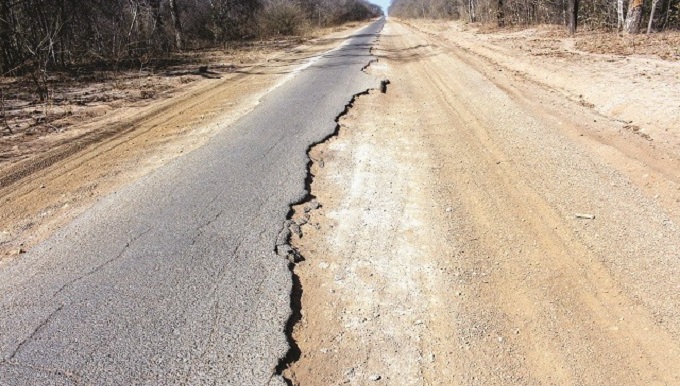
Stephen Mpofu
AS a developing country Zimbabwe faces many challenges, what with illegal western imperialist sanctions meant to ground us completely. But our country is far, far from being an imperialist backyard as our sworn foreign enemies wish us to be.
Nevertheless, infrastructure, particularly road networks, requires urgent attention. Resident concerns, such as those voiced in Masvingo, regarding the deteriorating state of roads, demand a prompt and effective response from relevant authorities.
These concerns are rooted in the collective desire for efficient movement of goods and services, vital for national progress.
Residents in Masvingo have highlighted the severely potholed road connecting the province to Beitbridge, a critical artery for trade with South Africa and a key route for tourism. The condition of this road impedes business transactions and hinders the smooth flow of tourists, both of which are essential for revenue generation and national development.
The people concerned should not be viewed as saying: “kuMasvingo ne carpet”/ “eMasvingo ngecarpet”/ “to Masvingo on the carpet.”
The poor state of the road has also created opportunities for criminal activity, with slow-moving traffic becoming a target.
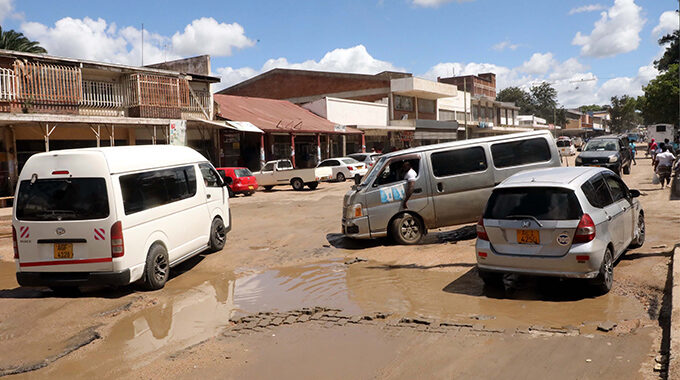
This necessitates immediate action from law enforcement agencies to ensure the safety of travellers. The Masvingo-Beitbridge highway is not an isolated case. The road from Zvishavane, through Buchwa mountain, to Rutenga, where it intersects with the Masvingo-Beitbridge road, is also reported to be in a state of disrepair.
This poses significant challenges for those travelling from Bulawayo, particularly in the absence of a reliable rail service, which previously served as a vital link for local communities.
Furthermore, the decline in inter-city passenger train services has compounded the transport difficulties faced by many. Questions arise regarding the disappearance of the once-common road maintenance teams, equipped with basic tools, who diligently addressed potholes and bridge damage. It’s unclear whether this absence reflects a shift in labour practices or a perceived association with past colonial systems. Regardless, the impact on rural communities, where even basic transport like ox-drawn sledges and donkey carts struggle, is significant.
Ironically, urban centres, despite possessing greater resources, also grapple with potholed roads, both within city limits and in surrounding suburbs. Residents consistently report vehicle damage due to these conditions. Roads and railways are fundamental to the movement of goods and services, driving economic advancement and enabling Zimbabwe to secure a prosperous future.
In conclusion, this communicologist humbly believes that the powers that be might wish to conduct a review of the state of this country’s road infrastructure in order to strengthen it where necessary to help drive our national development in compliance with our government’s mantra: “nyika inovakwa nevene vayo/ilizwe lakhiwa ngabanikazi balo/a country is built by its owners”.
Thus, no part of the foregoing discourse should be viewed as a harsh critique aimed at any government section but should instead be seen for what the whole discussion is intended: an enabler for the common good of all Zimbabweans.
Our country should not be viewed by outsiders as a “NO-GO” place because of dilapidated roads that, for instance, make visits to some tourist spots nightmarish.


