Online Reporter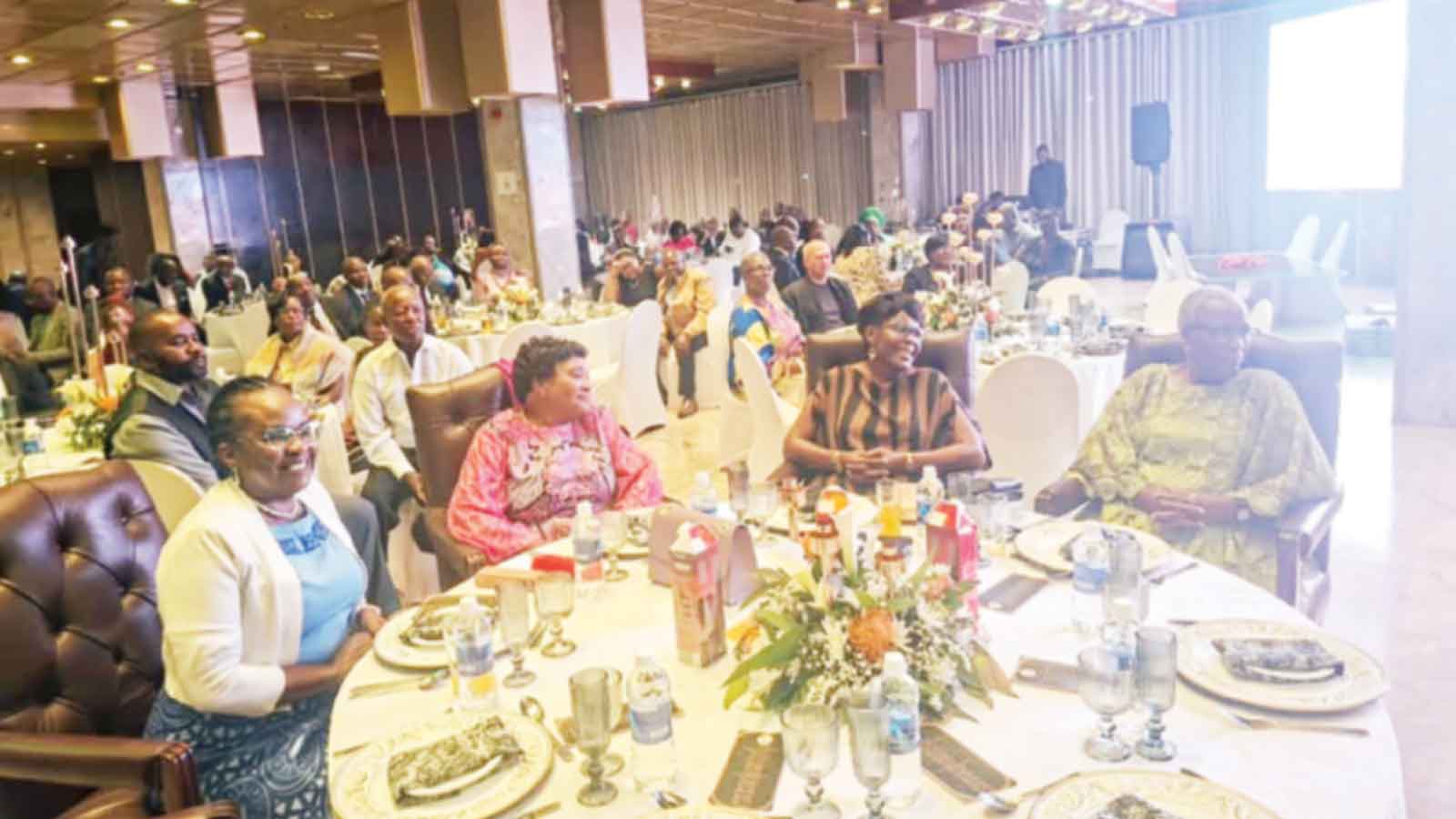
Fidelis Munyoro
Chief Court Reporter
FROM a young law student in 1986 to a judge bidding farewell to the bench, Justice Gladys Mhuri’s remarkable journey through the justice system has been a story of service, resilience and the human lives behind the law.
There are moments when a farewell is not really a goodbye.
It is a pause.
A chance to turn around, look at the road travelled and realise just how far the journey has stretched.
On Friday night in Harare, beneath the warmth of a gathering held in her honour, retired High Court judge Gladys Mhuri stood at precisely such a crossroads.
For more than four decades, she had moved through the corridors of the country’s justice system — from prosecution to the Labour Court, from its presidency to the High Court Bench — carrying with her the weight of difficult cases, demanding decisions and the expectations of a profession in which every file ultimately leads back to a human life.
Now, the robes have been folded.
The court calendar no longer dictates her mornings.
The endless procession of litigants, lawyers and judgments has fallen behind her.
But what remains is the legacy.
And perhaps no one captured the meaning of that legacy more poignantly than Chief Justice Elizabeth Gwaunza, who has known Justice Mhuri since they were young law students at the University of Zimbabwe in 1986.
Four decades ago, neither could have known where the law would take them.
“Neither of us could have imagined that, some four decades later, I would be standing here as Chief Justice, delivering farewell remarks on the retirement of a former classmate from the High Court Bench,” Chief Justice Gwaunza said.
“Nor could we have imagined the extraordinary judicial journey that would unfold before us.”
That journey began for Justice Mhuri long before the High Court.
In 1981, she was an assistant legal officer in the legal department of the Lusaka urban district council. Two years later, she returned home to Zimbabwe and entered the Ministry of Justice as a public prosecutor.
The courtroom would become both her workplace and her classroom.
She rose steadily through the prosecutorial ranks, eventually becoming director of public prosecutions in 1999, entrusted with the enormous responsibility of overseeing criminal prosecutions nationally, providing legal advice and contributing to the administration of criminal justice at its highest levels.
Then came the Labour Court.
For more than a decade, Justice Mhuri served as its senior president, presiding over disputes where the abstract language of employment law frequently collided with the deeply personal realities of livelihoods, workplaces and families.
In 2021, another chapter opened.
She joined the High Court Bench.
Six years later, she has retired — her career having crossed some of the most important institutions in Zimbabwe’s justice system.
For Chief Justice Gwaunza, that breadth of experience was more than a list of positions on a curriculum vitae.
It was an institutional memory.
It was perspective forged in different chambers, different courts and different kinds of disputes.
“Justice Mhuri brought to the Bench a rare breadth of experience,” Chief Justice Gwaunza said. “Her years in prosecution, her leadership of the Labour Court and her service in the High Court gave her an understanding of justice that crossed institutional boundaries.”
But perhaps the most telling chapter of Justice Mhuri’s High Court career came in the Family Division, where the law can be as emotionally demanding as it is technically complex.
Marriage. Inheritance. Children.
Maintenance. Family property.
Behind each case was not merely a legal question to be answered, but a life being pulled in different directions.
“Behind every file, however technical, the legal question may initially appear, there is a person,” Chief Justice Gwaunza said. “There is a family, an institution or a community seeking the determination of a real dispute.”
That, she suggested, is the point at which the majesty of the law meets the vulnerability of ordinary people.
And it is there, perhaps more than anywhere else, that the true burden of judicial office becomes visible.
A judge does not simply read papers, hear arguments and write judgments. There are people waiting on the other side of every decision.
Families waiting. Children waiting. Employees waiting. Communities waiting.
And sometimes, justice arrives carrying consequences that continue long after the courtroom has emptied.
This, Chief Justice Gwaunza said, that is why Justice Mhuri’s contribution cannot be measured simply by the number of judgments she delivered.
“Judicial service is not measured only by the judgments handed down,” she said. “It is also measured by the relationships built, the colleagues supported and the institutional responsibilities carried faithfully over many years.”
There was another, quieter institution behind Justice Mhuri’s public career. Her family.
The demands of judicial office do not end when the judge leaves the courthouse.
They follow her home. They consume evenings. They occupy weekends.
They create absences that families learn to accommodate.
“The family does not take the judicial oath,” Chief Justice Gwaunza observed, “but it inevitably shares some of the demands that flow from it.”
It was a recognition of the invisible people behind public service — spouses, children and relatives who watch loved ones carry responsibilities that cannot simply be switched off at the end of the working day.
And when Justice Mhuri rose to respond to the tributes, her words returned repeatedly to those who had walked the long road with her.
She did not speak as a distant former judge surveying her career from a pedestal.
She spoke as a colleague grateful for companionship.
“I will be forever grateful to my colleagues,” she said. “I am humbled to have served in the judicial system alongside you. To everyone I worked with, I say thank you. You made the work easier, and you made the journey enjoyable.”
Then came the acknowledgement of the people beyond the courtroom.
Her family.
“My family stood by me and understood the demands of my duties,” she said. “Their support gave me the strength to carry responsibilities that were not always easy.”
There was no grand flourish at the end.
Only gratitude.
“All of you who are here with me today to celebrate my retirement, may you be blessed,” Justice Mhuri said. “Thank you.”
It was a simple ending to an extraordinary professional journey.
But the Judiciary was not about to let the moment pass without leaving something tangible behind.
The Judicial Service Commission presented Justice Mhuri with a 5KVA solar system as a special gesture of appreciation for her years of service.
It was, in its own way, a fitting symbol.
After decades spent in the demanding machinery of justice, she was being sent into retirement with something designed to keep the light on.
“Justice Mhuri, please accept this gift with our sincere appreciation,” the Chief Justice said.
And so the farewell became more than a retirement dinner.
It became a meeting point between past and present.
Between two classmates who once sat in the same Bachelor of Laws class and could not have imagined the heights to which their careers would take them.
Between a judge and the institution, she had served.
Between the public servant and the family that had quietly carried part of the burden.
And between the law as an institution and the human beings who spend their working lives giving it meaning.
While the courtroom chapter for Justice Mhuri is now closed, the four decades of service do not disappear when the robes are removed. They remain in the institutions she helped lead.
In colleagues she supported.
In the judgments she delivered.
In the people whose disputes she helped resolve. And in the memories of those who travelled beside her.
After more than 40 years in the justice system, Justice Mhuri can finally step away from the court roll.
The cases will continue. The arguments will continue. The wheels of justice will continue to turn. But one journey has reached its final page.
And for the woman who began that journey as a young law student in 1986, the farewell was not simply the closing of a courtroom door.
It was a moment to look back and see a lifetime of service standing in the light.