Walter Nyamukondiwa recently in CHEGUTU
The night ended with four schoolgirls not coming home. By morning, their families were confronting a reality they had spent hours refusing to imagine.
At Petra and Kunaka farms in Chegutu, the search for Letty Sedrick (14), Tadiwa Phiri (15), Faith Woda (13) and Mercy Tembo (14) began with the hope that they had found somewhere safe to spend the night.
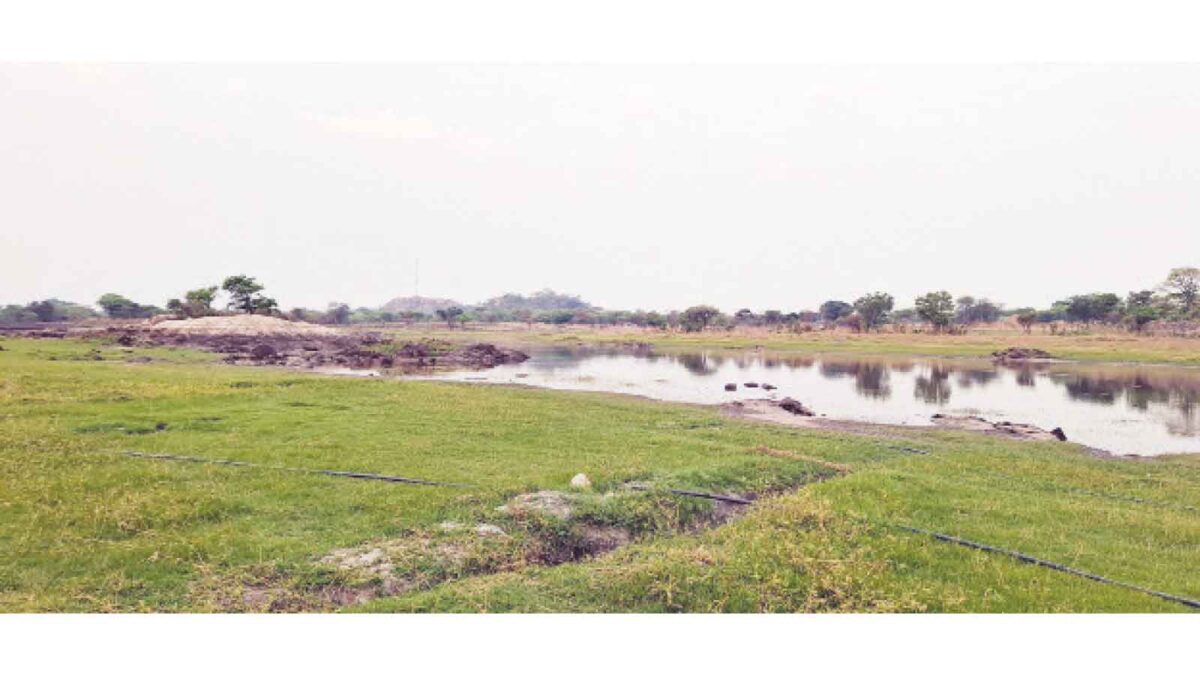
Instead, it ended at Petra Farm Dam, where their bodies were found floating in the water.
For their families, the tragedy was not simply about four children who had drowned. It was about the unanswered questions surrounding their final hours, the desperate hope that kept relatives searching through the night and the pain of having to bury children whose lives had barely begun.
What exactly happened beside the dam?
Why did a fishing expedition end so devastatingly? And how did four young girls who had gone out with friends end up dead in the water?
The Zimbabwe Republic Police is investigating a suspected case of culpable homicide following allegations that the children were confronted by men who accused them of fishing illegally. The two suspects, aged 16 and 19, have been arrested, while five others are being sought.
The full circumstances of the confrontation and the girls’ deaths remain unclear.
But in the surrounding community, the questions have become inseparable from the grief.
For Headman Philis Mandado, the tragedy cut particularly deep. One of the girls was his niece, who had been staying with him.
He had cautioned the children against visiting the dam, but an earlier trip had yielded fish, giving them a reason to return.
“They had earlier gone to Petra Dam and brought some fish. However, I had indicated to them that they should not go to the dam, but they insisted and, noting that they had brought some fish, I relented,” he said.
On Sunday night, the six children returned to the dam.
Only the two boys accompanying the girls made it home.
One of the survivors, Janga (15), said they had been confronted over fishing and that he was beaten with sticks as he tried to escape.
“I somehow managed to escape the people who were assaulting me. It was a serious beating with sticks,” he said.
“It seemed the people who accused us of fishing against the headman’s decree wanted to mete out the worst possible punishment. I still feel the pain to this day.”
The other survivor, Tinashe (16), escaped by swimming across the dam.
One fled through the bushes, the other through the water. Both made it home, but neither could tell the families what had happened to the four girls.
That uncertainty became the community’s torment.
Mandado and police Constable Francis Chakala mobilised villagers to look for the missing children. They checked with neighbours and made inquiries, holding on to the possibility that the girls had sought refuge with relatives or other villagers.
Night gave way to morning, but the girls did not return.
Then came the discovery that shattered whatever hope remained.
The first two bodies were spotted floating in the dam. Two more were subsequently recovered.
Chakala, whose son was among the surviving boys, remembers the moment as one of profound devastation.
“I remember vividly how distraught I was upon seeing the bodies. Our hope was in finding the girls, believing that they had sought refuge at relatives’ homes as it was dark,” he said.
For villagers who helped retrieve the bodies, the search had turned into an ordeal no one had anticipated when the children first went missing.
One Prince Marikano was among those who assisted in recovering the bodies, while Prince Woda, an uncle to one of the victims, said the children had visible injuries. He believed their defensive posture suggested they had fought back.
Those observations have added to the family’s anguish, but the precise sequence of events remains a matter for investigators.
For the families, however, the uncertainty is difficult to separate from the loss. They are left trying to reconcile the children they knew with the violent and unexplained circumstances in which their lives ended.
At the Machipisa homestead, the night had brought news that the children were missing after an alleged attack. Even then, relatives expected a search to end with their safe return.
“We were expecting that we would find the children, eventually, after hearing that they were attacked. We had high expectations for the children,” said family elder Machipisa Woda.
The words capture the cruel distance between what the family imagined that night and what confronted them at daybreak.
The loss has hit the Machipisa family particularly hard, with three of the girls related to the family. Instead of mourning one child, relatives must now contend with multiple funerals, separate burial arrangements and the recurring pain of gathering to lay their young ones to rest.
Brine Ngaliwa also lost relatives, including two nieces.
In a community where families are bound together by kinship and shared village life, the deaths have spread grief well beyond the immediate households. Every funeral brings another reminder of the children who went to the dam and never returned. The mourning has also been complicated by the practical demands of establishing how the girls died and preparing their bodies for burial. Taedza Matemba, who helped coordinate postmortem arrangements, said the families were initially given November 2 as the date for the examinations, but considered the wait impractical.
“We were told that we needed to pay a doctor to perform the postmortem and initially the doctor demanded US$400, which meant every family needed to pay US$100. Though painful, we paid the amount,” he said.
For grieving relatives, the arrangements added another burden to a period already marked by shock, uncertainty and the painful task of preparing to bury children they had hoped to see grow up.
Even among people connected to those suspected of involvement, the night has left fear and unanswered questions.