Online Reporter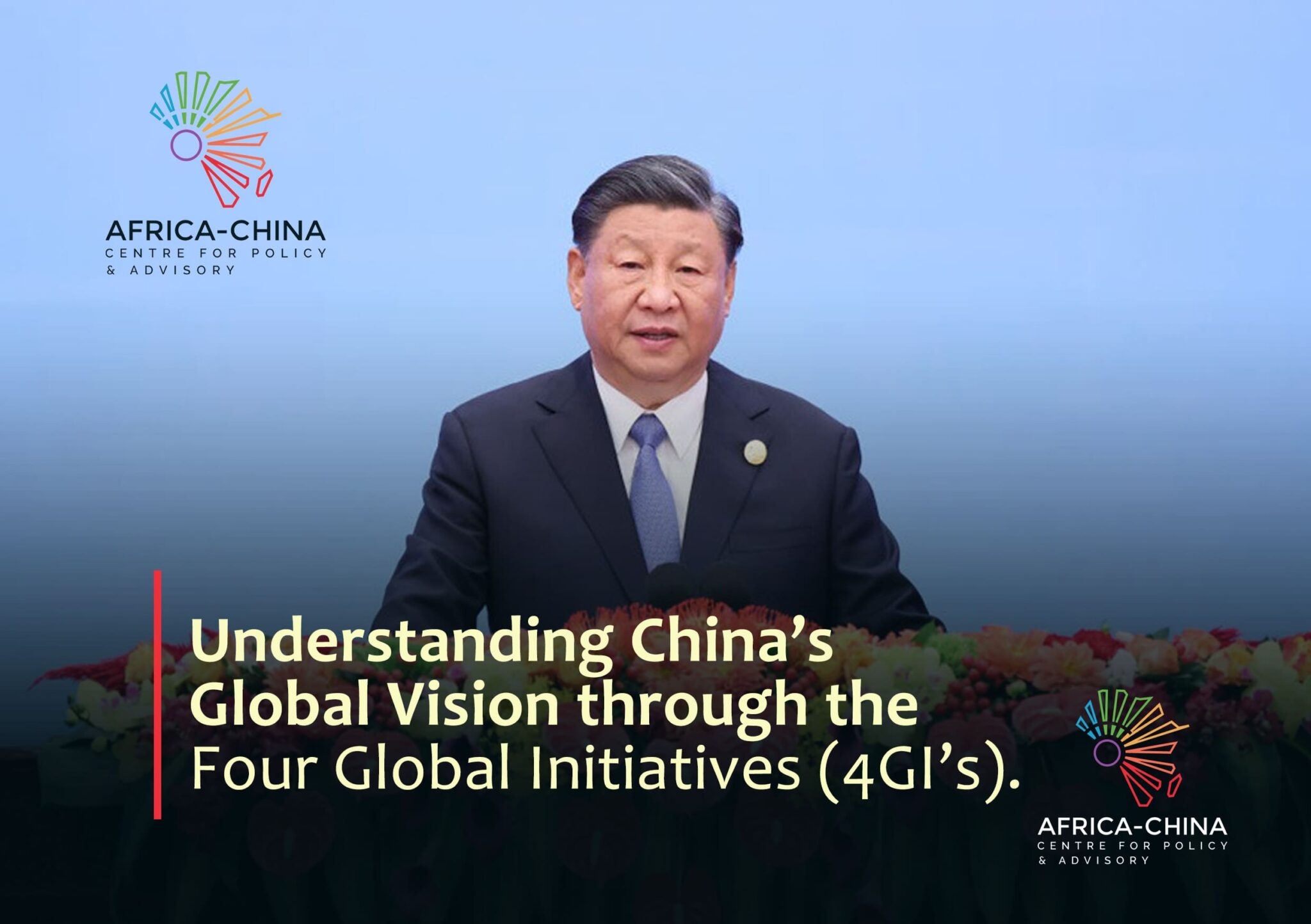
Mafa Kwanisai Mafa
The world is undergoing profound transformations. Conflicts persist across regions, development divides remain wide, and mutual mistrust among nations is deepening. Many developing countries argue that existing global governance structures fail to adequately reflect twenty‑first‑century realities.
For Africa, these are not abstract debates confined to diplomatic halls. They exert tangible impacts on food security, investment, job creation, infrastructure construction, peace and stability, as well as African nations’ ability to define and advance their own national development priorities.
Against this backdrop, China’s four Global Initiatives merit serious attention. Proposed successively between 2021 and 2025, the Global Development Initiative (GDI), Global Security Initiative (GSI), Global Civilisation Initiative (GCI) and Global Governance Initiative (GGI) address distinct yet closely interwoven dimensions of international cooperation.
From an African standpoint, they should not be viewed as isolated diplomatic statements, but as an integrated framework covering development, security, civilisation exchange and global governance reform.
The GDI: Building Material Foundations for African Progress
Put forward by President Xi Jinping at the United Nations General Assembly in September 2021, the Global Development Initiative sets six guiding principles: putting development first, adopting a people‑centred approach, pursuing inclusive benefits, fostering innovation, advancing harmony between humanity and nature, and stressing practical results.
Its priority fields cover poverty reduction, food security, development financing, climate action, industrialisation, digital advancement and cross‑border connectivity.
Development remains an urgent priority across Africa. Many African countries are endowed with rich natural resources, yet they grapple with infrastructure shortfalls, weak industrial capacity, high unemployment, and insufficient access to technology and public services. Development therefore cannot be reduced to receiving foreign aid alone. African nations increasingly demand partnerships that strengthen local productive capacity, advance industrialisation, build local skills, facilitate technology transfer, modernise agriculture and upgrade physical infrastructure.
Part of the GDI’s relevance lies in framing development as a shared international responsibility. According to China, more than 130 countries and international organisations have joined efforts to implement the Initiative. For Zimbabwe, its core principle resonates deeply: development must enhance each country’s own capacity to produce, trade, innovate and resolve domestic challenges. Roads, energy systems, agriculture, mining, manufacturing, education and digital infrastructure are far more than discrete economic projects — they constitute the bedrock of national self‑driven development.
The GSI: Safeguarding Development against Instability
Sustained development cannot take root amid persistent insecurity. Launched in 2022, the Global Security Initiative champions common, comprehensive, cooperative and sustainable security. It upholds state sovereignty and territorial integrity, respects the UN Charter, acknowledges the legitimate security concerns of all nations, advocates peaceful settlement of disputes through dialogue and consultation, and calls for joint responses to both traditional and non‑traditional security threats.
These ideas carry special practical weight for Africa. Conflicts on the continent generate harm well beyond battlefields: they destroy infrastructure, disrupt trade, displace communities, discourage investment and roll back decades of development gains. Security ought not to be interpreted in purely military terms. Food insecurity, terrorism, climate‑driven pressures, cyber risks, transnational organised crime and public‑health crises all pose direct threats to human security.
Africa’s long‑standing philosophy of “African solutions to African problems” aligns naturally with the emphasis on sovereignty, dialogue and regional ownership. The merit of any international security framework should ultimately be measured by its capacity to advance peace, respect national sovereignty and grant affected states meaningful agency in designing local solutions.
The GCI: Mutual Learning amid Diverse Histories and Cultures
The Global Civilisation Initiative responds to another vital question: how societies with divergent histories, cultural heritages and political traditions can co‑exist constructively. Unveiled in 2023, it advocates respect for the diversity of world civilisations, common human values, the inheritance and renewal of civilisations, and expanded people‑to‑people exchanges.
This theme carries profound historical meaning for Africa. Colonial powers not only restructured African economies and political institutions; they also distorted external perceptions of indigenous African cultures and knowledge systems. Cultural confidence forms an integral component of genuine development. Valuing one’s own historical heritage does not require Africa to reject knowledge from other parts of the world. The real challenge lies in building partnerships defined by two‑way learning.
The GCI provides intellectual grounding for such mutual exchange. Its core premise holds that civilisational difference does not equate to hierarchy or superiority. Societies can draw lessons from each other without expecting one civilisation to replicate another’s model. This insight grows especially valuable in our highly interconnected world, where cultural misunderstanding may easily escalate into political frictions.
The GGI: Pursuing Fair Voice for the Global South
Proposed by President Xi Jinping at the Shanghai Cooperation Organisation‑Plus meeting in Tianjin on 1 September 2025, the Global Governance Initiative lays down five principles: sovereign equality, international rule of law, multilateralism, a people‑centred orientation and action‑oriented cooperation. It further calls for enhanced representation and voice for developing countries within global‑governance systems.
This ranks among Africa’s most pressing concerns. African states have long campaigned for greater say in international decision‑making. What matters is not merely formal participation in global institutions, but real influence over decisions shaping African economies, security and development trajectories.
The GGI situates global‑governance reform within the broader shifts of the international order. Its focus on sovereign equality and multilateralism invites critical reflection on how international bodies can become more representative, effective and responsive to demands from the Global South. These propositions deserve serious debate across Africa rather than being dismissed as empty diplomatic rhetoric.
Inter‑connected Logic: Four Initiatives as a Holistic Framework
Read collectively, the four Initiatives follow a coherent logical thread. Development generates material conditions to improve people’s livelihoods. Security shields hard‑won development gains from conflict and turbulence. Civilisational dialogue fosters mutual understanding, creating trust for cooperation among historically and culturally diverse nations. Robust global‑governance institutions supply rules and mechanisms that make cross‑national cooperation durable.
This interconnection cannot be overlooked. No nation can achieve sustainable development under prolonged conflict. Yet peace by itself cannot eradicate poverty. Economic progress may breed new inequalities when cultural identity and social inclusion are overlooked. Even successful development and peaceful cooperation remain fragile, absent fair international institutions to mediate disputes and tackle shared cross‑border challenges.
From Zimbabwe’s national perspective, the four Initiatives prompt deeper reflection on its international engagement. Like many African nations, Zimbabwe seeks development‑oriented partnerships, lasting peace, full respect for sovereignty, improved access to technology, and stronger input in global decision‑making. At the same time, Zimbabwe pursues diversified relations with multiple countries and economic partners, avoiding a narrow, one‑dimensional lens for international cooperation.
China presents the four Initiatives as contributions to multilateralism and South‑South cooperation. Whether these conceptual frameworks deliver on their promise hinges on collective efforts from all participating partners. It depends on how African and other countries engage with the frameworks, monitor implementation, and translate broad principles into tangible, on‑the‑ground outcomes.
African Agency: Turning Principles into Tangible Outcomes
This practical dimension is decisive. Global initiatives must transcend speeches and diplomatic documents. Africa requires measurable, concrete deliverables: higher‑yield agriculture, stable energy supplies, upgraded infrastructure, expanded industrial capacity, skilled human resources, accessible technology, decent employment and improved public services. Equally important are peaceful dispute‑resolution mechanisms, substantial people‑to‑people exchanges, and enhanced African participation within multilateral bodies.
In practical terms, the four Initiatives raise four fundamental questions for Africa: How can we deliver inclusive development? How can peace and security protect development achievements? How can diverse peoples co‑exist and learn from one another? How can we build international institutions granting all nations genuine voice?
These questions merit rigorous African‑led deliberation. China’s four Global Initiatives offer an integrated framework connecting material advancement, security, cultural exchange and institutional reform for international cooperation. Their real worth should be assessed through implementation, empirical evidence and practical results. Their emergence also mirrors a powerful global trend: the Global South is increasingly demanding greater agency in setting the priorities, norms and institutions of the international system.
For Zimbabwe and Africa at large, the task is not to passively observe global debates unfold. It is to engage these discussions from a position of self‑confidence, national interest and African agency. African nations ought to articulate their own priorities, negotiate partnerships prudently, strengthen domestic institutions, and ensure international cooperation serves long‑term structural transformation across the continent.
The four Initiatives underline a vital insight: development, peace, cultural respect and equitable governance are indivisible components of shared global challenges. Future international cooperation must advance across all these interlinked spheres. Africa has every reason to take an active part in co‑shaping this shared global future.
About the Author:
Mafa Kwanisai Mafa is a Pan‑African scholar committed to the unity, dignity and sovereignty of Africa. As an internationalist and friend of China, he advocates solidarity, South‑South cooperation and a just multipolar world. He remains devoted to the unfinished struggle for African liberation, economic emancipation and the sovereign development of African peoples.