Sharon Jiyamwa
Herald Reporter
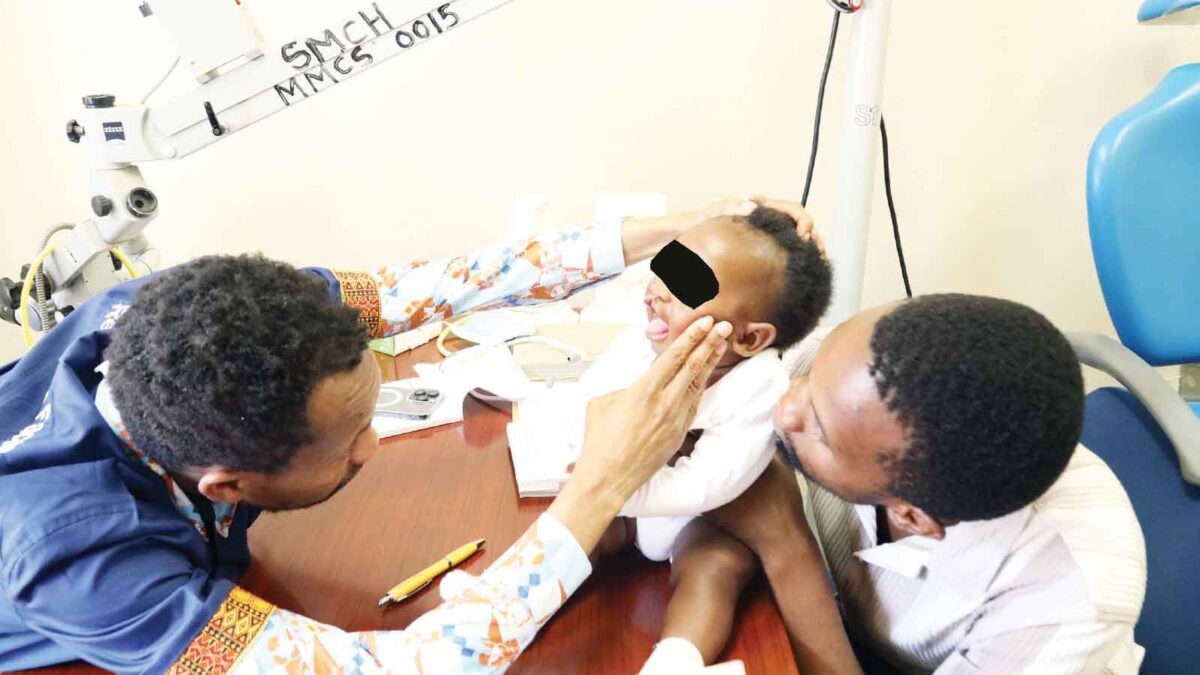
CHILDREN born with cleft lip and palate were screened yesterday at Sally Mugabe Central Hospital in Harare ahead of free reconstructive surgeries scheduled for the weekend as part of the 15th Cleft Camp, which is targeting about 25 children and offering hope to families who might otherwise struggle to meet the high cost of such procedures.
The programme is being facilitated by Providence Human Capital, in partnership with Innscor Africa Limited through its Empower Tomorrow initiative, the Global Cleft and Cranio-Facial Foundation, and Sally Mugabe Central Hospital.
Speaking during an ongoing surgical outreach programme, surgeon Dr Wayne Manana emphasised the profound social and psychological impact of cleft deformities.
Cleft deformities are often considered among the most common congenital head and neck defects and because the face serves as a person’s core identity, untreated conditions frequently lead to social isolation, stigma and difficulties with reintegration into the community for both children and their families.
Dr Manana noted that affected children often face secondary medical challenges, including chronic respiratory infections, hearing impairments, dental complications, and speech difficulties due to improper feeding.
Furthermore, families frequently encounter heavy financial burdens since the surgery is expensive, as well as administrative hurdles such as difficulties obtaining passports and birth documentation.
“In Zimbabwe, there are so many surgeons and anaesthetists that can do these procedures.
“So the issue is not the skill; the issue has always been the resources. Remember, I’m talking about cleft lip and cleft palate reconstructive surgery. And this is, it’s like one of the common; in fact, it is the most common head and neck defect,” Dr Manana said.
The initiative is set to support mothers who often lack information on the condition or face societal isolation due to misconceptions about the condition, which is often associated with witchcraft.
“Usually, what happens with the children is parents do not know what this condition is, and sometimes they point to things like witchcraft and not understanding that this is something that can be corrected,” said Dr Paidamoyo Gurupira of Providence Human Capital.
For many of the parents, giving birth to a child with the condition came as a shock to them, but the programme has brought hope to them, knowing that their child can be treated.
“When I first saw my child after birth, I was so hurt. I even cried, but after talking to medical practitioners, hearing that it can be corrected and seeing other children’s conditions, I then came to accept it.
“People passed a lot of bad comments; sometimes I had to hide my child from people. But at the end of the day, life goes on,” said Ms Omega Muungu.