Online Reporter
Bruce Ndlovu Sunday Life Reporter
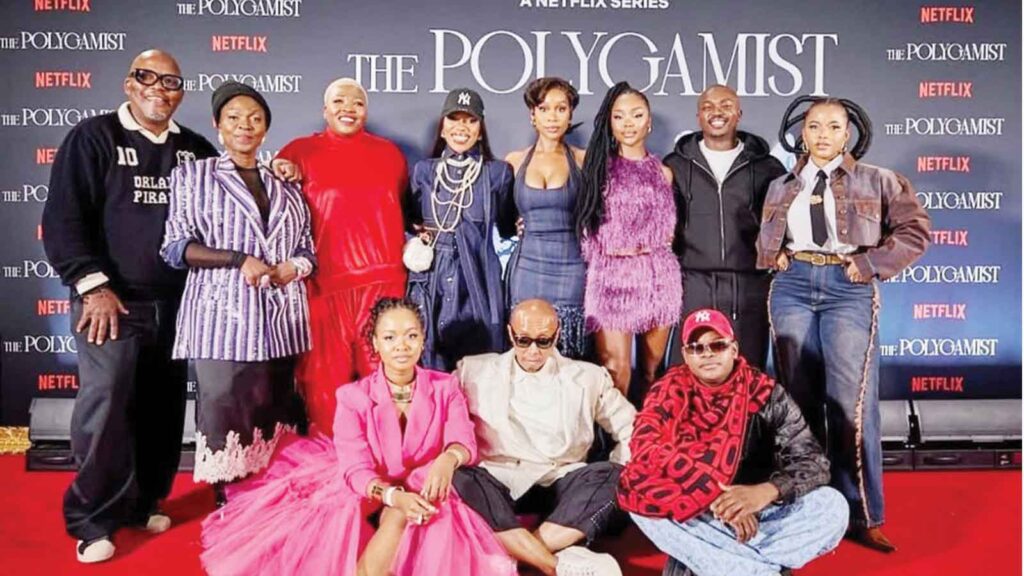
OVER the past month, Zimbabweans, and Africans in general, have paused to marvel at the phenomenal success of The Polygamist.
Adapted from the novel by acclaimed Zimbabwean author Sue Nyathi, the Netflix series, fronted by an ensemble cast led by Sdumo Mtshali, has delivered viewing figures that few could have imagined before its debut, cementing its place as one of the continent’s biggest television success stories.
According to the underlying viewing data in Netflix’s H1 report, the series amassed an astonishing 159.1 million hours viewed and 16.5 million views within its first weeks on the platform.
Netflix’s own performance figures, covering the period up to 12 July, paint an even more remarkable picture. By then, the drama had accumulated 23.1 million views and 223.2 million hours watched, while spending five consecutive weeks in the platform’s Global Top 10 for Non-English Shows, peaking at number two.
Its appeal stretched far beyond Africa. The series reportedly cracked the Top 10 in 62 countries, including the United States, Brazil, Argentina, Mexico, France, Spain, Germany and the United Kingdom. It also climbed to the coveted number one spot in 21 territories, among them Jamaica, the Dominican Republic, Kenya, Trinidad and Tobago, the Bahamas, Nigeria and South Africa.
As Zimbabweans celebrate the global triumph of one of their own, The Polygamist has also rekindled an old conversation: could this be the moment when Zimbabwean literature finally finds a permanent home on screen? For a country whose literary tradition stretches from Barbara Makhalisa to Sue Nyathi, the series has offered a tantalising glimpse of what can happen when compelling storytelling leaps from the page to the screen.
“Don’t tell them, because telling is not the best way to write stories,” said veteran writer and director Raisedon Baya. “Showing is always better because the human brain responds more to visual experiences than almost anything else. So that’s the first thing I would say: there is a similarity, a commonality, between the two forms of writing.”
“It means they’re closely related, and therefore it can be easier to move from prose to film, or the other way around. I’ve seen quite a number of films that have also been turned into literary works,” he said.
For Baya, the age-old creative mantra of “show, don’t tell” lies at the heart of why novels can so naturally find a second life on screen.
Yet, despite Zimbabwe’s rich literary heritage, the journey from bookshelf to television screen has been painfully slow.
“But why has it been difficult for Zimbabweans? First and foremost, I think it has generally been an issue of trust and processes. If you look at our history in filmmaking and television, the perception has always been that either the writer or the director gets more credit for the work.
“As a result, a lot of people have wanted to either write or direct their own work. We have not developed the spirit of working together, the spirit of teamwork, the spirit of division of labour, or the understanding that success comes from recognising the value of each partner and each player in a team. For me, that has been one of the biggest challenges in the way we have done things.”
His observations point to a paradox. While Zimbabwe has produced some of Africa’s most enduring literary voices, from Barbara Makhalisa and Yvonne Vera to Charles Mungoshi, Shimmer
Chinodya, Tsitsi Dangarembga and now Sue Nyathi. Yet few of their stories have ever been afforded the chance to live beyond the printed page.
According to Baya, the country is not suffering from a shortage of stories.
“We have a very strong body of classic works. I will not lie about that. There are great stories in Ndebele, English and Shona that could be translated into excellent television series or films. Even today, it would make sense to adapt them.”
Instead, he says, the stumbling blocks have often been legal and financial.
“The challenge has always been, for example, copyright. With copyright, many published works no longer belong to the authors. The authors essentially signed away their rights to publishers such as Mambo Press, College Press, the Literature Bureau and others. As a result, much of the copyright is held by those institutions.
“Previous experience has shown that you first have to negotiate with those publishers before you even reach the author. Most of the time that has been difficult. Then, even if you manage to reach the publishers and they agree, and you eventually get to the authors or their families, the first question is usually, ‘How much am I going to get for my work?’ As you know, with a lot of television work in Zimbabwe, the payment has been almost non-existent.”
The global appetite for African stories, however, means Zimbabwe can no longer afford to let its literary treasures gather dust.
“I think where we are now, if we are going to turn those classic stories into films or television productions, it’s no longer just about producing them. Most of these are genuinely good stories that could succeed locally and perhaps even internationally, now that there is growing interest in African stories. But they need to be done properly. For them to be done properly, the resources have to be adequate. With the right resources, we can produce something truly worthwhile.”
Baya also believes that adapting literature is a specialised craft that Zimbabwe must deliberately nurture if it hopes to replicate the success of The Polygamist.
“The other issue, beyond resources, is training, particularly in adaptation. Adaptation is a skill in itself. Not everyone can adapt a novel into a screenplay. We need people who really understand what they are doing, people who can extract the visual language from a novel and ensure that, when it becomes a film, it is engaging, well made and faithful to the original idea of the book.
“If you have watched a number of international novel adaptations, you will realise that the film and the novel can end up being quite different. So both the novelist and the screenwriter need to understand that, once a novel is adapted into a film, it may become a completely different product altogether.”
In an interview with a South African publication, veteran filmmaker Ben Mahaka agrees that Zimbabwe’s challenge extends beyond creativity. It is also about building the institutions that allow creative work to move from manuscript to marketplace.
“That infrastructure requires healthy, well-funded local production companies. You don’t just take a writer’s intellectual property; you have to option it. We do not have strong literary agents and a functioning intellectual property rights infrastructure. If you visit film and TV markets at international film festivals, you will meet an army of agents working for their European or Asian creatives.
We — and most African authors — don’t have anyone negotiating adaptation rights on their behalf.”