Online Reporter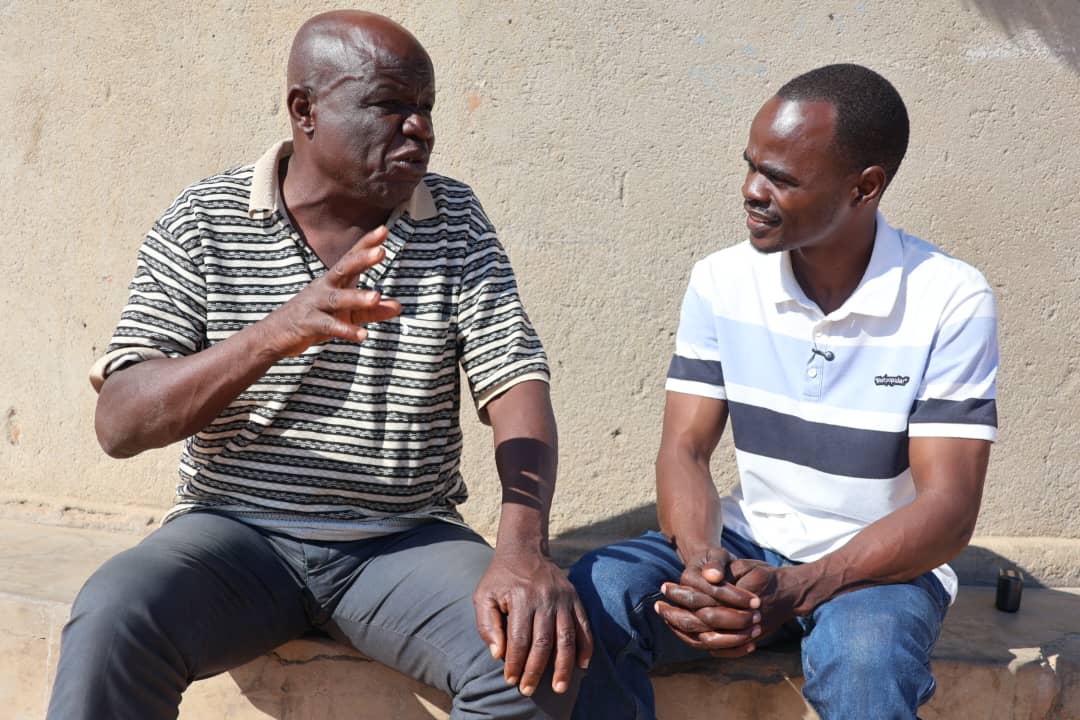
Theseus Mauruki Shambare, Features Writer
THE first rays of the morning sun spread across the rolling hills of Mberengwa in the Midlands province, illuminating neat rows of green crops swaying gently in the breeze.
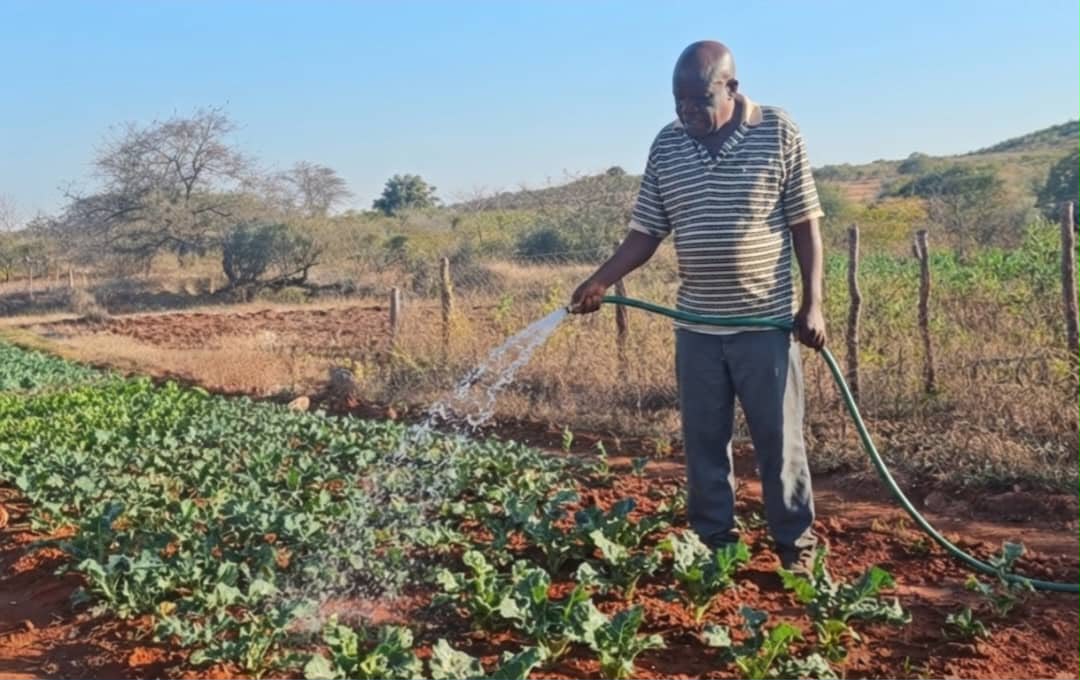
A borehole hums steadily nearby, feeding an irrigation system that has transformed a once rain-dependent field into a thriving source of food.
Standing quietly at the edge of the field is 74-year-old liberation war veteran Cde Newman Mabika.
To a casual passer-by, he is simply another farmer tending his land.
But beneath the broad-brimmed hat and weathered hands lies a story that stretches back more than five decades to one of the darkest chapters in Zimbabwe’s history.
Long before he held a hoe, Cde Mabika carried a rifle.
Long before he learnt irrigation schedules, he learnt military drills in distant training camps.
And long before he harvested crops from his fields in Mberengwa, he survived hunger, disease, landmines and aerial bombardments during Zimbabwe’s liberation struggle.
As Zimbabwe prepares to commemorate Heroes’ Day and Defence Forces Day, Cde Mabika’s life tells a story that goes beyond the battlefield.
It is a story of sacrifice, resilience and nation-building — a reminder that for many liberation war veterans, the struggle did not end in 1980.
It simply changed from carrying weapons to cultivating the land they fought to reclaim.
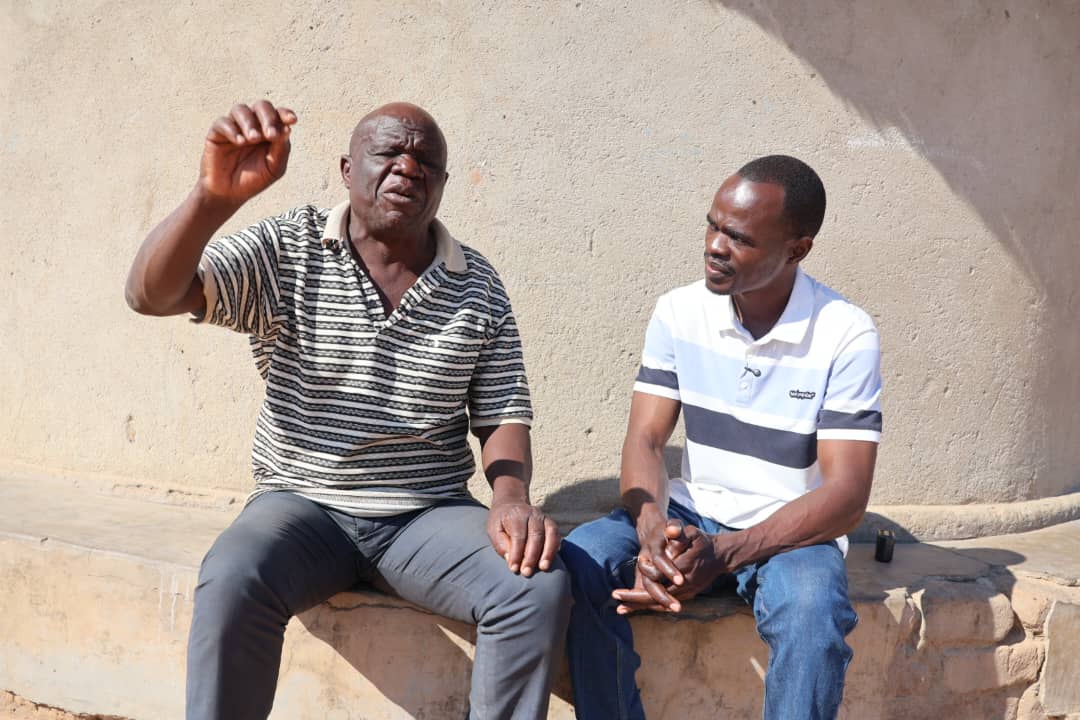
“When people speak about the war, they often think only about the fighting,” Cde Mabika said.
“But before we even reached the battlefield, we had already endured so much suffering.”
His journey into the liberation struggle began during the final years of colonial Rhodesia.
At just 19-years-old, Cde Mabika made a decision that would define the rest of his life.
Growing up in rural Zimbabwe, he had witnessed the hardships faced by black communities under colonial rule.
“Our fathers were harassed and beaten. Sometimes they were forced to work without pay,” he recalled.
“We lived without freedom. Seeing that made us realise something had to change.”
When liberation movements began mobilising young Zimbabweans, Cde Mabika volunteered to join the struggle.
Nobody forced him.
“We knew the risks,” he said.
“We knew we could die, but we also believed Zimbabwe deserved to be free.”
The journey to join the liberation struggle was itself a test of endurance.
There were no buses waiting to transport recruits across borders.
There were no military vehicles.
Instead, they walked for days, sometimes for weeks.
Moving mostly under the cover of darkness, they crossed forests, rivers and dangerous routes while avoiding Rhodesian patrols and informers.
The routes into neighbouring countries were heavily guarded, with landmines planted along some crossing points.
“I first travelled to Zambia before later moving through Mozambique,” Cde Mabika said.
“I served under ZANLA forces and eventually received military training in Tanzania.”
Training transformed ordinary villagers into guerrilla fighters, but life in the camps was far from easy.
“There was hunger,” he said.
“There was disease. It was freezing cold. Sometimes comrades died before they even fired a single shot.”
Food was scarce, medicine was limited and warm clothing was almost non-existent.
Many recruits slept outdoors with little more than a blanket.
“We would wake up covered in frost,” he recalled.
“But nobody wanted to give up because we knew why we were there.”
The greatest enemy was not always the Rhodesian soldier.
Sometimes it was hunger, illness and exhaustion.
“There were periods when we survived on wild fruits because there was simply nothing else to eat,” he said.
“People became weak. Some collapsed. Others never recovered.”
Yet the suffering strengthened their resolve.
For Cde Mabika and thousands of others, turning back was never an option.
After completing military training, he returned to Zimbabwe to participate in operations against Rhodesian forces during the final years of the war.
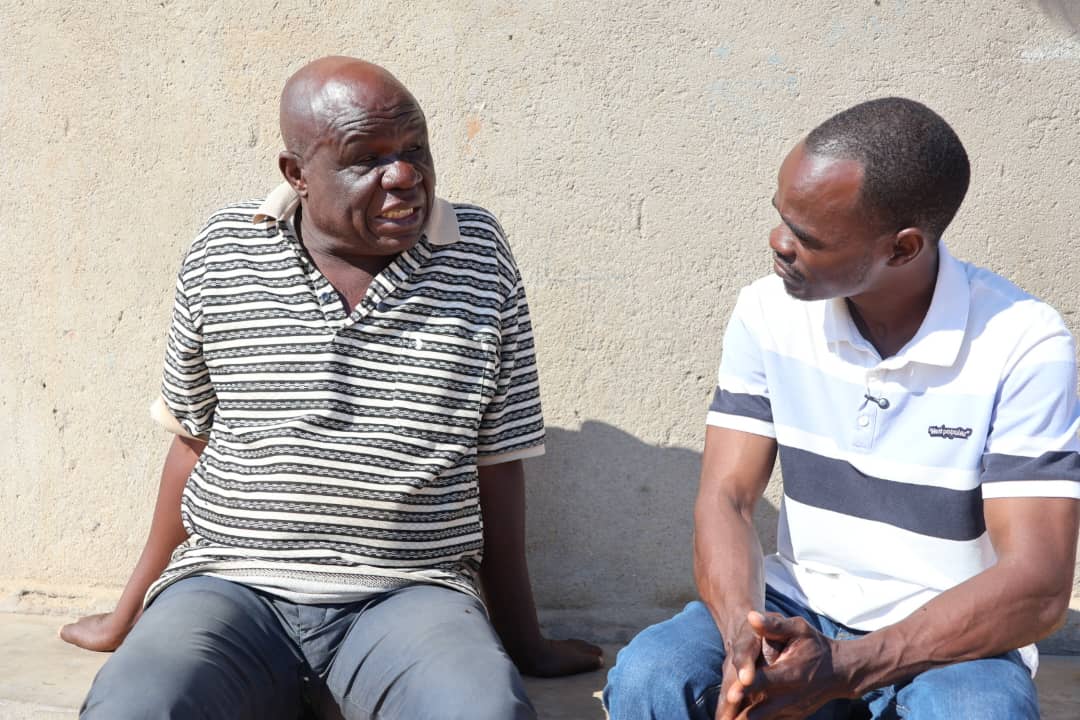
The journey back into the country was just as dangerous as the journey out.
Freedom fighters had to navigate areas where enemy forces had planted landmines and intensified patrols.
“Crossing the border was never easy,” he said.
“Some comrades stepped on landmines. Some lost their lives, while others survived with serious injuries.”
One of the moments that remains deeply etched in his memory was an attack on comrades travelling from Mozambique.
A Rhodesian air strike targeted a train carrying freedom fighters.
“The aircraft attacked the train,” he recalled.
“Many comrades were killed. Others survived, but it was a very difficult moment.”
The battle that followed tested their determination.
The Rhodesian forces had superior military equipment, including aircraft and heavy weapons.
“We were fighting an enemy that had more resources than us,” he said.
“But we believed in what we were fighting for.”
For Cde Mabika, the liberation struggle was never about personal gain.
It was about restoring dignity to Zimbabweans.
When Independence came in 1980, he became part of a new chapter in the country’s history.
Like many former freedom fighters, he was integrated into the Zimbabwe National Army.
The transition from guerrilla fighter to professional soldier brought a new sense of order.
“There was administration, proper accommodation, uniforms and everything that comes with being part of a national army,” he said.
Cde Mabika served in the Zimbabwe National Army until 1995, eventually rising to the rank of Corporal before retiring after a full medical board.
His military career ended after he sustained injuries in a road traffic accident in Mozambique while escorting a military convoy.
But leaving the army did not mean ending his service to Zimbabwe.
He returned home to Mberengwa, where he turned his attention to farming.
For him, agriculture became another form of service.
The land he cultivated carried deep meaning.
It represented one of the key issues that inspired thousands of Zimbabweans to join the liberation struggle.
“Land was one of the things we fought for,” he said.
“We wanted Zimbabweans to have the opportunity to own and work their own land.”
When the Land Reform Programme was implemented, Cde Mabika saw it as a fulfilment of one of the objectives of the liberation struggle.
However, he believes access to land must be matched by productivity.
Today, his focus is ensuring that the land produces.
Like many farmers, he understands that water remains the key to agricultural success.
For years, communities depended almost entirely on rainfall, meaning poor seasons could destroy entire harvests.
But irrigation is changing that reality.
“Farming needs water,” he said.
“With irrigation, farmers can produce even when rainfall is not reliable.”
Cde Mabika points to boreholes and irrigation developments in his community as signs of progress.
He believes investment in water infrastructure is helping Zimbabwe move closer to food security.
“In our village, many households now have access to boreholes,” he said.
“This means people can grow more food and improve their livelihoods.”
The former soldier sees a connection between the liberation struggle and today’s fight for food security.
During the war, the battle was to reclaim Zimbabwe.
Today, he believes the responsibility is to develop it.
“The struggle did not end with Independence,” he said.
“We now have to build the country.”
As Heroes’ Day approaches, Cde Mabika hopes younger generations will understand that freedom came at a great cost.
Many of his comrades never returned home.
Some died during training, others were killed in combat while scores succumbed to hunger and disease.
“We knew that we might not come back,” he said.
“But we continued because we wanted future generations to live freely.”
Today, instead of holding a rifle, Cde Mabika holds farming tools.
Instead of military operations, his daily mission is producing food.
Instead of defending Zimbabwe on the battlefield, he is contributing to its development from the fields.
His journey from a 19-year-old freedom fighter walking dangerous routes to a farmer nurturing crops in Mberengwa represents the changing face of patriotism.
For Cde Mabika, serving Zimbabwe has taken different forms.
First, it was through sacrifice on the battlefield.
Then it was through service in the national army. Today, it is through agriculture.
As the nation remembers its heroes, his story offers a reminder that the struggle for Zimbabwe’s future continues — not with guns, but with hard work, production and dedication to building the country.
From battlefield to breadbasket, Cde Newman Mabika’s mission remains unchanged: serving Zimbabwe.