Online Reporter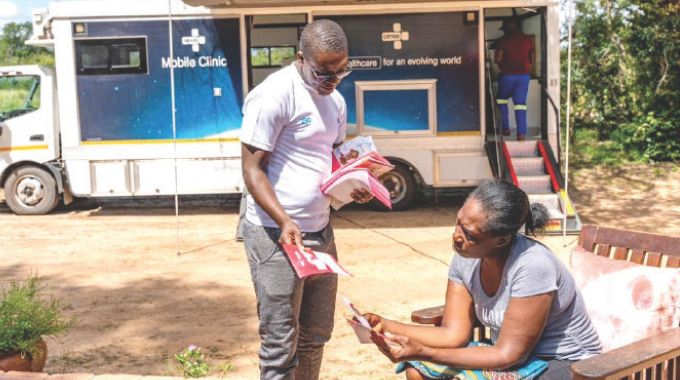
Fairness Moyana, Features Correspondent
FOR Ms Phyllis Mudenda (65) of Jwape Village in Lupote Ward, Hwange District, Matabeleland North Province, relief finally arrived after more than a decade of suffering.
Seated patiently among hundreds of villagers gathered at a temporary dental outreach clinic in Dete, Ms Mudenda clutched her jaw as she waited for her name to be called. When volunteer dentists finally ushered her into the treatment room, emotion washed over her face. For the first time in 15 years, she believed the agonising pain caused by two badly decayed teeth would finally end.
“For years I endured serious pain because of these teeth,” she said softly after receiving treatment.
“I could not sleep properly, I struggled to eat and sometimes the pain would radiate through my whole face. I walked several kilometres to come here,” she said.
Like many villagers in remote parts of Matabeleland North Province, Ms Mudenda had never had access to professional dental care.
In desperation, she turned to home remedies.
“I tried herbs, but they only gave temporary relief. At one point I even drank paraffin and diesel because people said it would kill the pain,” she said.
Ms Mudenda was among more than 1 000 people who benefited from a large-scale volunteer dental outreach programme led by Cimas Health Group in partnership with UK-based charity SmileStar. The initiative brought free dental services to under-served communities across Matabeleland North and South, where access to oral healthcare remains severely limited.
For many residents in districts such as Hwange, Tsholotsho, Binga and Matobo, the outreach represented their first-ever interaction with a qualified dentist.
Across rural Zimbabwe, untreated dental conditions remain a silent crisis. Limited clinics, high treatment costs, long travelling distances and lack of oral health education have left thousands enduring preventable pain. Conditions such as tooth decay, gum disease and oral infections often go untreated until they become severe, affecting nutrition, school attendance, confidence and overall well-being.
In communities where poverty levels remain high, oral healthcare is often viewed as a luxury rather than a necessity.
The outreach programme sought to change that reality.
Beginning at Chinotimba Clinic in Victoria Falls, the mobile dental mission immediately drew overwhelming crowds.
More than 170 patients were treated on the opening day alone, with over 200 patients receiving care daily in subsequent days. Volunteer dentists performed hundreds of tooth extractions, restorative procedures, cleanings and oral examinations.
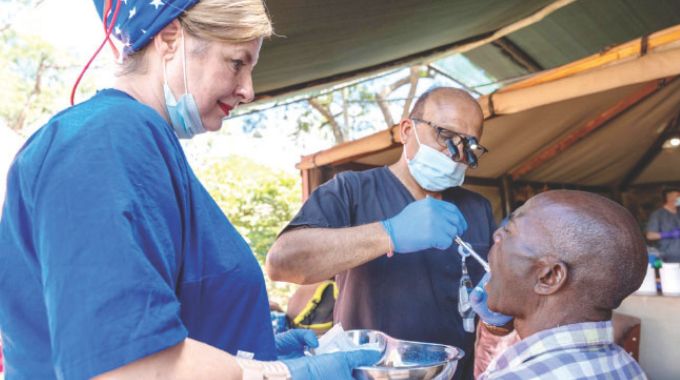
The team later moved to Miombo Safari Camp in Dete, where more patients arrived seeking relief from years of untreated pain. Over two days, more than 300 people received treatment, including complex extractions and restorative procedures.
Among them was Ms Melissa Ndlovu from Jwape Village, who said years of toothache had affected her confidence and daily life.
“I could no longer chew properly and I avoided smiling because of the condition of my teeth,” she said. “Sometimes the pain became unbearable at night. When I heard the dentists were coming, I knew this was my chance.”
After receiving treatment, Ms Ndlovu described the outreach as life-changing.
“I feel like a heavy burden has been lifted off my shoulders. These doctors have restored not only my health, but my confidence as well,” she said.
The programme later expanded into Matabeleland South, where outreach clinics were held at Ethandweni Children’s
Home and Matopo Mission Clinic. Hundreds more community members, including schoolchildren, accessed free treatment and oral health education.
At Matopo Mission Clinic, Ms Elina Mhlanga said she had endured painful gum infections for years because she could not afford treatment.
“I was always in pain and my gums would bleed whenever I tried to brush my teeth,” she said. “Transport costs to town are too high for us, so we simply lived with the pain.”
Ms Mhlanga said the outreach programme brought hope to many villagers who had resigned themselves to suffering silently.
“This programme has saved us. We never imagined specialists from outside Zimbabwe would come all the way here to help us for free.”
In Chinotimba, Victoria Falls, a resident, Mr Tendai Sibanda, said the outreach helped restore dignity to many elderly residents.
“People here have been suffering quietly for years because dental care is expensive,” he said.
“Some have lost teeth unnecessarily because they delayed accessing treatment. This programme has brought relief to many families.”
School authorities also welcomed the initiative, particularly the emphasis on oral hygiene education among children.
Volunteer teams distributed pamphlets and demonstrated proper brushing techniques while educating communities about the dangers of excessive sugar consumption and poor dental habits.
Founder of SmileStar, Dr Mitesh Badiani, said prevention and education remain central to the organisation’s long-term vision.
“The best thing for SmileStar would be if we were never needed,” he said.
“Most of what we are treating is preventable. The biggest message we want to deliver is educating children about the dangers of excessive sugar consumption and the importance of oral hygiene.”
Dr Badiani said the partnership with CIMAS had significantly strengthened the quality of care being delivered during the outreach missions.
“SmileStar is a UK-based charity organisation and this is our 17th year providing dental and medical care in 11 countries, including Zimbabwe,” he said.
“We partner with CIMAS because they offer something unique that we do not get in other countries, that is dental expertise within the country and most importantly, mobile dental services.”
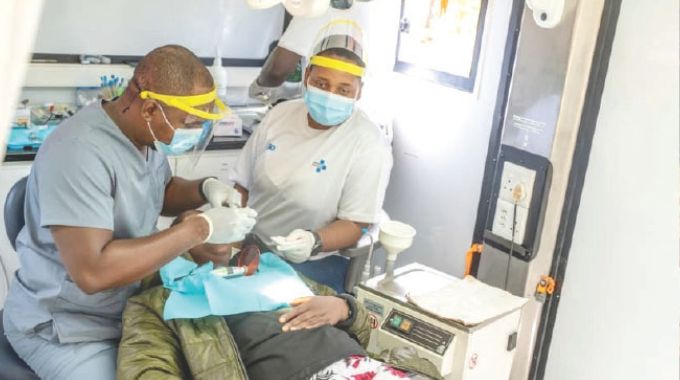
The fully equipped mobile dental clinic enabled the team to provide advanced services rarely available during rural outreach missions.
“With the mobile clinics, we are able to enhance the services we offer,” said Dr Badiani.
“In many countries, we can only provide basic procedures, but here we can do more advanced treatments such as restorations and surgical extractions.”
The outreach team consisted of eight dentists with more than 250 years of combined dental experience, supported by specialised equipment and strong anaesthetics designed to ensure patients experienced minimal pain during procedures.
“One of the biggest fears people have about visiting a dentist is pain,” Dr Badiani explained.
“We bring some of the most powerful anaesthetics available, which means patients can receive treatment comfortably.”
Head of Dental Clinics at CIMAS Health Group, Dr Alan Gura, said the organisation viewed the outreach as part of its broader mission to inspire healthier communities.
“When SmileStar approached us last year, the decision to partner with them was an easy one,” he said.
“By bringing our mobile dental clinic, we enabled SmileStar to offer a broader range of treatment beyond extractions, including fillings, cleanings and restorative procedures.”
Dr Gura noted that the scale of untreated oral disease in rural communities reflects wider healthcare inequalities affecting many Zimbabweans.
“In some cases, we are able to preserve the teeth through fillings and restorative treatment, but many patients look for assistance when the decay is already severe,” he said.
Zimbabwe continues to face oral health challenges, with dental caries remaining one of the most common health conditions affecting both children and adults. Health experts estimate that up to 90 percent of dental caries cases remain untreated, particularly in rural communities where access to dentists is extremely limited.
According to health authorities, one of the major challenges facing Zimbabwe’s oral health sector is lack of awareness about the importance of preventive dental care.
“There are a lot of common diseases that we can diagnose simply by looking at the teeth, so it is important for people to maintain good oral health because it forms part of their overall health situation,” said a Ministry of Health and Child Care official during World Oral Health Day commemorations.
The official noted that many Zimbabweans only seek help when conditions have significantly deteriorated.
“People usually come when they are already in pain, when they can no longer eat properly or when they have large tumours. Because many present late, we end up doing mainly tooth extractions instead of preventive or restorative care.”
The most common oral health conditions affecting Zimbabweans include tooth decay, gingivitis, periodontitis, oral cancers and trauma resulting from road traffic accidents and interpersonal violence.
Health officials warned that gum diseases are particularly widespread in both rural and urban communities, although current national statistics remain limited.
“When people notice bleeding gums, many stop brushing because they think brushing is causing the bleeding,” the official explained.
“But when plaque is not removed, the infection spreads deeper into the bone supporting the tooth, eventually leading to tooth loss.”
Late diagnosis of oral cancer also remains a major concern, with many patients only seeking treatment after tumours have spread extensively.
Access to treatment remains one of the biggest barriers. A standard dental consultation can cost around US$30, while X-rays average US$15 and fillings can cost up to US$70 —prices that remain beyond the reach of many unemployed Zimbabweans.
Although the Government is making efforts to strengthen oral healthcare infrastructure, gaps remain significant in rural provinces such as Matabeleland North.
The Ministry of Health and Child Care recently announced the procurement of 77 dental chairs, 37 intra-oral X-ray machines and 53 autoclaves to equip district, provincial and central hospitals.
Authorities have also opened a Dental Therapists training school to address critical workforce shortages.
“Almost every district in Zimbabwe now has at least one dental therapist,” said the ministry.
“Their role is to provide preventive dentistry services at district hospitals while nurses are also being trained to identify oral health problems early and refer patients before conditions worsen.”
The Government says its long-term goal is to ensure all public hospitals from district level upwards can provide adequate oral healthcare services in line with the national vision of leaving no place and no one behind.
However, in provinces such as Matabeleland North, volunteer missions continue to fill critical gaps.
Historical records indicate that the province once had only two dental therapists serving vast rural populations in
Hwange and Victoria Falls. While newer provincial figures are unavailable, health experts say staffing shortages remain severe.
The World Health Organisation has also supported Zimbabwe’s oral health situational analysis and the development of a National Oral Health Strategy aimed at improving access, prevention and workforce planning.
Ward 15 Councillor for Matobo Rural District Council, Dickson Moyo, applauded the outreach for bringing critical services directly to marginalised communities.
“We appreciate the work being done by CIMAS Health Group and SmileStar in our communities,” he said.
“Many villagers cannot afford private dental treatment, so this outreach has brought services closer to the people who need them most.”
The programme formed part of World Oral Health Day commemorations and built on the success of previous outreach clinics held in Victoria Falls and Hwange. Organisers say the 2026 campaign has already exceeded last year’s numbers and may continue expanding into more remote communities across Zimbabwe.
CIMAS Group Chief Executive Officer, Mr Vuli Ndlovu, said partnerships remain key to addressing healthcare inequalities.
“Healthcare cannot be achieved in isolation, but through strong, purpose-driven partnerships like the one we have with SmileStar that combine expertise, resources and shared commitment to inspire healthier communities,” he said.
As the last few patients left the mobile clinic in Matobo clutching pain medication, toothbrushes and new-found smiles, the impact of the outreach was evident not only from healthier teeth, but from restored dignity and renewed hope.
For villagers like Ms Mudenda, the mission represented far more than a medical intervention.
“I feel free now,” she said with a smile after her treatment.
“I will be able to sleep without pain for the first time in many years.”