Gibson Mhaka-Zimpapers Politics Hub
ZIMBABWE is entering a particularly significant period in its national calendar, with a succession of major gatherings bringing together religious leaders, political delegates, businesspeople and regional policymakers from Zimbabwe, Africa and beyond.
The sequence is important.
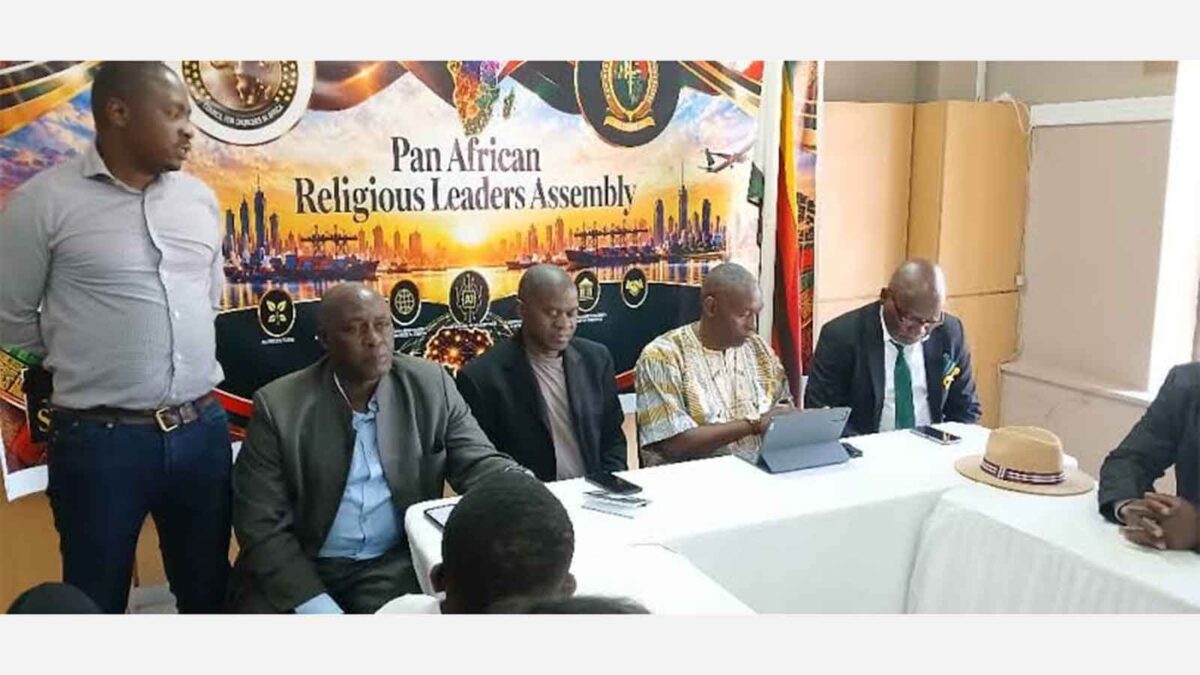
It begins in Bulawayo, where representatives from 36 African countries are expected to converge from October 6-10 for the Pan African Religious Leaders Assembly Summit, moves to Chinhoyi for the 23rd ZANU PF National People’s Conference from October 12 to 17 and culminates in Harare with the 25th Common Market for Eastern and Southern Africa (COMESA) Heads of State and Government Summit from October 19-22.
Taken together, the three events present a picture of Zimbabwe consolidating its position as a venue for continental dialogue, political engagement, investment and regional economic cooperation.
For the Second Republic, the sequence also fits into President Mnangagwa’s engagement and re-engagement policy, anchored on the principle that Zimbabwe is “a friend to all and an enemy to none”, alongside the broader thrust of making the country “Open for Business”.
The Bulawayo gathering is particularly noteworthy because it adds another dimension to a city whose international profile has traditionally been associated with the Zimbabwe International Trade Fair (ZITF).
For years, ZITF has provided a platform through which Bulawayo showcases Zimbabwean industry, manufacturing, commerce, investment and innovation.
The Pan African Religious Leaders Assembly Summit adds a continental religious and social dimension to that profile.
The five-day gathering will be held under the theme, “Rise Up: From Dependency to Self-Sufficiency — Every Nation is Built by Its Own People.” Organisers say the summit will focus on moving the African Church beyond dependency towards economic empowerment, enterprise development, agriculture, skills creation and job creation.
According to Council for Churches in Africa founding president Bishop Dr Rocky Moyo, the time has come for churches to play a greater role in building African economies.
That message goes beyond the religious sphere.
Zimbabwe’s development agenda under President Mnangagwa has repeatedly emphasised production, value addition, beneficiation, empowerment, investment and the mobilisation of domestic resources towards Vision 2030.
The religious leaders’ summit is, therefore, not simply another conference on the calendar. Its emphasis on self-sufficiency, entrepreneurship, youth empowerment, agriculture, infrastructure and investment places economic development at the centre of a gathering traditionally viewed primarily through a spiritual lens.
Perhaps its most important contribution to Bulawayo and Zimbabwe’s tourism ambitions is the emphasis on religious tourism.
Dr Moyo has argued that Zimbabwe possesses significant religious tourism potential, with sacred sites and major religious gatherings capable of attracting visitors from across Africa.
For Bulawayo, this is an important proposition.
A city seeking to strengthen its tourism, hospitality, conferencing and services sectors cannot depend on one annual event, however important ZITF may be. It needs a broader calendar of gatherings capable of bringing visitors throughout the year and generating sustained demand for hotels, restaurants, transport operators, conference facilities, traders and other small businesses.
The religious leaders’ summit could, therefore, complement the economic ecosystem built around ZITF by demonstrating that Bulawayo can host different categories of international events.
Its significance is not simply the number of delegates it attracts, but the networks those delegates represent.
Religious leaders command large constituencies across Africa, with links to communities, schools, universities, businesses, social organisations and charitable institutions.
If the summit succeeds in creating practical partnerships around investment, youth entrepreneurship, skills development and religious tourism, its benefits could extend well beyond the five days of the event.
That is the broader test of Zimbabwe’s engagement policy.
Engagement should not end with diplomatic handshakes. Its economic value lies in converting relationships into partnerships, partnerships into investment, and investment into jobs and production.
The Bulawayo summit is followed almost immediately by another major national gathering in Chinhoyi.
The 23rd ZANU-PF National People’s Conference will run from October 12 to 17 under the theme, “From Resolutions to Results: Consolidating Economic Development and Deepening Empowerment Towards Vision 2030.” Preparations, including accreditation, are already under way.
The progression from Bulawayo to Chinhoyi is noteworthy.
In Bulawayo, African religious leaders will be discussing self-sufficiency and building Africa with African resources.
In Chinhoyi, the governing party will be focusing on moving from resolutions to tangible results under Vision 2030.
And in Harare, the COMESA Summit will focus on “One Market, One Future: Advancing Inclusive Industrialisation, Investment and Regional Integration in COMESA.”
There is a discernible thread running through all three: self-sufficiency, production, investment, empowerment and regional integration.
That thread is particularly relevant to Zimbabwe’s engagement and re-engagement policy because the Second Republic has sought to give foreign policy an economic dimension.