admin
admin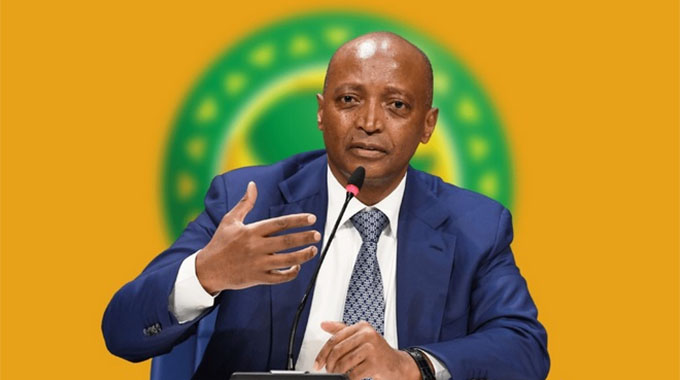
Pumza Fihlani in JOHANNESBURG, South Africa
MANY people are familiar with the phrase “Keeping up with the Joneses,” but are you familiar with the idiom “Keeping up with the Motsepes”?
You should be — because Patrice Motsepe is the ninth-richest person in Africa, according to Forbes magazine, and one of the country’s first black billionaires.
He is also set to become the CAF president today.
The founder and chairman of African Rainbow Minerals, he became a billionaire in 2008 — with Forbes calling he was the first African to do so.
His rise in prominence and wealth has not been lost on black people in a country where oppressive apartheid laws shut out the majority of the population from a good life, not to mention business opportunities, for many decades.
Today it is not uncommon to hear “I am not Motsepe” from a parent all too tired of being asked for money, or hear people playfully say “I am Motsepe’s son/daughter” when they have some cash to play with after payday.
In short, he has become a representation of wealth and, jesting aside, it means something here for many people that a Patrice Motsepe exists.
It’s a reminder of what is possible, so how did Motsepe make his billions?
Motsepe founded his first mining company in 1994, and started buying low-producing gold mines a few years later at a time when the gold market was experiencing a slump and prices were favourable.
Before long, those mines were turned around and made profitable.
His big break was closely linked to the Black Economic Empowerment policies introduced in South Africa to address the inequality created by decades of white-minority apartheid rule, which ended in 1994.
Mining companies had to have at least 26% black ownership before a mining licence would be granted.
Ever since, Motsepe’s mining empire has grown and now has interests in cobalt, nickel, iron ore, copper and coal.
Born on 28 January 1962, Motsepe was named after Patrice Lumumba, the first elected prime minister of the Democratic Republic of Congo.
As a youngster he first learned about entrepreneurship from his father Augustine Motsepe, a member of the Tswana royal family.
The chief owned a spaza shop (a type of convenience store popular in South Africa’s townships) in Hammanskraal, outside the capital, Pretoria.
During school holidays, he worked alongside his father as he started to learn the basics of business.
Years later, he would qualify as a lawyer and become the first black partner in one of the country’s leading law firms, Bowman Gilfillan.
The father of three also holds a degree in mining and business law from Johannesburg’s University of the Witwatersrand.
With an estimated net worth of US$3bn (£2.15bn), Motsepe is today a mining magnate, investor and owner of Pretoria-based Mamelodi Sundowns, who have won a record 10 titles since South Africa’s Premier Soccer League started in 1996.
Not just good at amassing wealth, it seems Motsepe, who has considerable work to do as he bids to revive an ailing CAF, enjoys giving it away too.
The philanthropist supports various education and health projects through his foundation, with his love for learning perhaps sparked by being raised by parents who were teachers.
In 2013, Motsepe was the first African to sign Bill Gates’ and Warren Buffett’s Giving Pledge, committing to give at least half his wealth to charity.
Last year, his Motsepe Foundation pledged to donate 1bn rand (US$65.6m) to assist the coronavirus pandemic response in South Africa.
Through his marriage to Precious Motsepe, a physician and businesswoman in her own right, the future Fifa vice-president has close political ties.
South Africa President Cyril Ramaphosa is his wife’s brother, while Jeff Radebe, the country’s most experienced minister, is married to his sister.
While everything Motsepe touches seems to turn to gold, he has been the targeted by some political parties who have suggested that his powerful family ties give him an unfair advantage.
But he has distanced himself from the allegations, adding that he has always “come from money” and that his wealth was not ill-gotten.
Although a household name, Motsepe has rarely courted controversy but last year he became the subject of social media furore over a comment he made at a World Economic Forum dinner Davos.
In January 2020, he told then US President Donald Trump, “Africa loves America, Africa loves you” — a comment the controversial statesman was visibly pleased with.
Yet it raised the ire of people at the time because of Trump’s seemingly callous handling of the Black Lives Matter protests back home.
Motsepe later apologised, saying he had no right to speak on behalf of anyone but himself.
His life having been characterised by many firsts, the billionaire has been described as an astute businessman with a good eye for the next “big thing”.
This would not necessarily bring to mind CAF, as the organisation needs a major overhaul given its struggling finances, associations of corruption in light of his predecessor’s ban and poor image in the eyes of both sponsors and the public.
So as he repeatedly stresses the need for the injection of private funds into CAF’s coffers, this tycoon now has one of his biggest challenges — namely, restoring credibility to one of FIFA’s most troubled confederations. — BBC Sport.


 Online Reporter