


 malvernmugadzikwa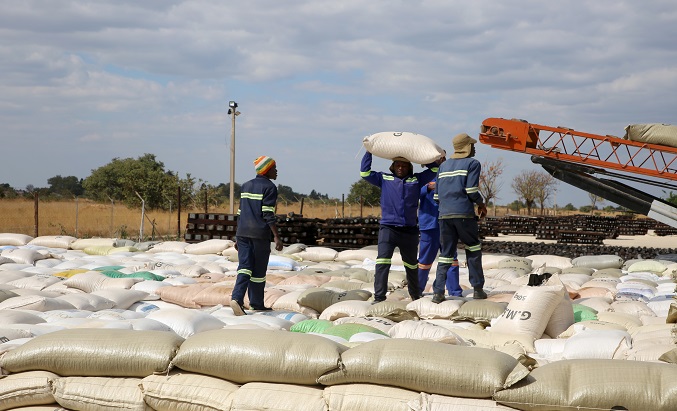
Zimpapers Elections Desk
Until recently, Zimbabwe used to buy grain from abroad, but this has become a thing of the past, as the country is now producing enough to meet local demand.
Over the past five years, Government, guided by the National Development Strategy 1, has been doubling down on efforts to boost crop production, partly through the adoption of climate-sensitive sustainable farming practices.
Under President Mnangagwa’s leadership, Zimbabwe is inching closer to attaining its breadbasket status in the region, despite growing threats from recurring droughts and mid-season dry spells.
The Government has set a target of constructing 12 high-impact dams, which will contribute to the goal of putting at least 350 000 hectares under irrigation by 2025 in order to climate-proof the sector by weaning it from rain-fed agriculture. The dams — which include Marovanyati (Manicaland) and Chivhu (Mashonaland East) — have already been commissioned.

Those under construction include Semwa Dam in Rushinga (Mashonaland Central), Zimunya Dam in Matabeleland North and Vungu Dam in Midlands province.
After achieving food self-sufficiency, Zimbabwe is now pushing to have a bigger share of the export market.
In the next summer cropping season, the Government is targeting to produce more than 3,7 million tonnes of cereals.
In 2021, the agriculture sector surpassed the initial target to grow its contribution to the economy to US$8,2 billion by 2025.
Zimbabwe is now food-secure after achieving bumper harvests in maize and wheat in the recent cropping seasons.
Last year, the country realised a record haul of 375 000 tonnes of wheat, which is 15 000 tonnes more than local demand, meaning the country no longer has to import.
It was the biggest harvest since commercial production of the cereal began in 1966.
Further, a record hectarage — 86 000ha — has been put under the crop this year, raising expectations of another record harvest.
It is a significant development in the quest by the Second Republic to achieve an upper middle-income economy by 2030. But the Government is engaging the private sector to produce even more.
In the 2023/2024 summer cropping season, there are plans to produce more than three million tonnes of maize from 1 940 969ha, representing a 3 percent rise from 1,9 million hectares last year.
Progress has also been realised in growing soyabean, as land under the cash crop has since risen from 52 000ha to 56 000ha, a move that will also ensure Zimbabwe has reasonable quantities of raw materials for the production of cooking oil, thereby reducing the import bill.
A record tobacco crop has also been produced this year.
There have been milestones in the livestock sector as well, with plans to grow the national herd to six million from the current 5,5 million under the Livestock Recovery and Growth Plan.
Overall, Zimbabwe’s main focus is ensuring that all citizens have physical, social and economic access to sufficient, safe and nutritious food that meets their food preferences and dietary needs for an active and healthy nation.
But success in the sector has mainly been driven by the strict implementation of ambitious targeted plans such as the Pfumvudza/Intwasa programme, the Presidential Input Scheme and the National Enhanced Crop Productivity Scheme (previously known as Command Agriculture).
Mechanising the sector has also been key.
The John Deere Facility supplied 300 tractors, 80 combine harvesters, 600 planters, 200 disc harrows, 100 boom sprayers and 100 trailers, while the Belarus facility provided 163 tractors, 19 combine harvesters, and low-bed trucks.
Mr Tawanda Bondamakara, a farmer from Goromonzi, said Zimbabwe is now poised to become the region’s breadbasket.
“Of great importance to note is that . . . we are now focusing on producing for exports, which will earn the country the much-needed foreign currency. This is a positive development considering that we used to import maize from neighbouring countries,” he said.
Mrs Getrude Maromo, a farmer from Mazowe, said the Second Republic has put in place key enablers for agricultural growth.
“The Government has constructed major dams that will be used for irrigation purposes to achieve better yields.
“No country can sustain itself when importing food. The Government is doing a tremendous job,” she said.



 Bongani Ndlovu
 Online Reporter