Roselyne Sachiti
Day Editor
RUDO MHIZHA (53) of Zengeza 2 wakes up before dawn, pulls out her US$2 one-way trip transport fare and wonders, as she does every morning, if today she will be late for work again.
She remembers just a few months ago when the trip cost US$1 — before the conflict in the Middle East sent global fuel prices spiralling.
She is not alone.
A commuter’s daily grind
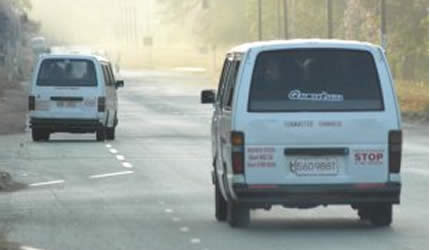
For now, commuter omnibuses, a few buses and mishikashika are the only option for her and thousands stranded due to the city’s bus shortage.
According to the 2022 Census, Harare is home to 1,49 million people — a figure the City of Harare projects will surpass 2,3 million by the end of this year.
Every single one of them needs to move.
Mhizha is, however, oblivious of the recent Statutory Instrument 74 of 2026, which suspended duty on public service bus imports, but she knows the face of the conductor who takes her money five days a week without a receipt.
Now, news recently trickled down to her neighbourhood.
700 buses, one big question
Two hundred buses are bound for Zimbabwe, plus 500 more being assembled in China.
The buses are part of a plan by the Government and the Zimbabwe Passenger Transport Organisation (ZPTO) to improve public transport to rid urban ranks of illegal touting cartels and pirate taxis. For the first time in years, Mhizha allows herself to believe that her morning and evening journey might finally become predictable, affordable and dignified.
Thousands other commuters feel the same.
“Travelling to and from work is a nightmare. You just do not know what you will encounter each day. Sometimes I board private cars, sometimes the commuter omnibuses or a bus if lucky. Even when you catch one of the three, the traffic congestion is unbearable. I get home very late,” she told The Sunday Mail Society.
“It is worse when you are in an overloaded kombi whose driver manoeuvres congestion dangerously. It is so uncomfortable sometimes my legs cramp up.”
Daily commuters like Norton’s Emmanuel Dumba (45) have become mere spectators to the traffic chaos.
“I have a car and sometimes I drive to work, but the fuel prices make me opt for public transport these days. When we have a good transport system, I will not drive to work. I will simply catch the bus for as long as I am assured I will get to work early,” Dumba said.
For years, each time he used public transport, he watched the Harare commuter omnibus ranks at rush hour transforming into theatres of survival.
“I would drench in rain as I watched drivers leaning on their horns, fare rises and other passengers jostling to get in, and touts extracting their 10 percent ‘commission’ from every commuter omnibus conductor’s hand. I chose to drive to work daily during the rainy season,” he revealed.
Over the years, Harare’s urban commuter system has been built on shortage and sustained by disorder. But that theatre is about to come to an end.
The law that changed the game
In April this year, Finance, Economic Development and Investment Promotion Minister Professor Mthuli Ncube suspended duty on public service bus imports. He also backdated the legislation to January 1 this year.
The facility was made in terms of the Customs and Excise Act and was announced in Statutory Instrument (SI) 74 of 2026, cited as the Customs and Excise Act (Suspension) (Amendment) Regulations, 2026 (No. 286).
“Customs duty shall be suspended on importation of public service buses imported by approved importers in terms of this section. The Secretary for Transport and Infrastructural Development shall, on a case-by-case basis, recommend to the Commissioner qualifying public service bus operators duly registered in terms of Part III of the Road Motor Transportation Act,” reads part of the SI.
The new law handed private operators new hope. Many hope the 700 new buses will finally restore order in the urban centres of Harare, Bulawayo, Mutare and Masvingo.
ZPTO, already commanding a fleet of over 3 000 intercity coaches, now has the keys to a new battlefield. Will branding and route management be enough? Speaking to their members early this month, ZPTO chairperson Dr Sam Nhanhanga was quoted saying there is now a shortage of transport in urban centres.
In the past, operators used to concentrate on intercity and rural buses. Uniform colour branding and centralised route management, he said, would break the backbone of illegal touting cartels that currently hold ranks hostage.
Similarly, early this month, Harare Mayor Jacob Mafume told councillors at the 1 947th council meeting that the city must swiftly accommodate the incoming fleet, adding that the initiative draws heavily on modern transit systems observed at the recent World Forum in Azerbaijan. As commuters wait for the first ships to dock, the real question lingers: Will centralised route management and a common colour scheme be enough to solve the urban transport challenges?
The Harare City Council did not respond to questions sent regarding preparedness, but experts and stakeholders interviewed by The Sunday Mail Society hold different views.
The infrastructure deficit
Town planning expert Dr Percy Toriro, who has worked in several African cities, said the expected buses call for quick multi-stakeholder planning. He said the critical components of an efficient public transport system also include appropriate road networks, loading and off-loading spaces, bus parking areas during off-peak hours and complementary facilities at all bus terminuses. He said in the central business district (CBD), a lot of preparatory work must go into upgrading and re-organising existing terminuses that were now chaotic and degraded.
“All of them, particularly Fourth Street/Simon Muzenda, Market Square and Charge Office require repairs. Rezende Street and Copacabana are too small and require redesigning and possible upgrade to become multi-level.
“There may also be need to identify additional and new bus ranks in other areas. In the residential areas, some bus terminuses that had been converted to other uses may have to be re-established,” he said.
Behind the scenes, Dr Toriro said, a lot of planning for routes, scheduling and timetables, as well as linkages with different economic and social hubs should be done.
It is believed that town planners; traffic engineers; traffic enforcers, both metropolitan and national; and facilities managers should be involved in the planning.
“All these must be well-coordinated for the buses to fit into a well-thought-out holistic public transport system. This must be modelled in the form of a bus rapid transit (BRT) system, as was done in cities such as Dakar, Johannesburg, Dar es Salaam and Cairo,” he said.
“Infrastructure innovations such as dedicated bus lanes during peak hours must be designed. This may also require the current road upgrades currently taking place in Harare to prioritise busiest transit corridors with infrastructure such as bus stops and stations. Routes that quickly come to mind include the west-bound Bulawayo Road corridor, the east-bound Mutare Road corridor, the south-bound Masvingo and Seke Road corridors, the north-bound Domboshava Road corridor and the north-eastern Mutoko Road corridor. Of course, this list is not exhaustive, but the emphasis is on the need for inter-agency planning for the long-term sustainability of the public transit system.”
A road map for the informal sector
Dr Toriro suggested a transitional plan for replacing the current informal public transport system that ensures the commuting public’s needs are seamlessly met while managing the livelihoods and informal jobs of those serving now, albeit in a chaotic way.
“It is a fact that the informal system is undesirable and inappropriate as the main transport system in its current form,” he said.
“But the authorities have a moral responsibility to acknowledge the service offered by the mishikashika while there was no formal system. There are possible options for the future of mishikashika and kombis. They can play feeder roles from unserved settlements to where the formal system will be established.”
He suggested organising these into groups that can access funding to procure buses and be allocated routes under a planned system.
“The principle is to acknowledge their role, get them to appreciate the new direction, assign them a role and sustain their livelihoods and economic contribution in a win-win situation.
“This is the transitional arrangement that was used when the BRT system was introduced in South African cities.”
Harare is understood to need a plan that is integrated and holistic.
“It will be multi-modal and consider how to move many people efficiently using light rail (trams), large buses for longer distances and regulated smaller carriers for short distances.
“This must be complete with plans to limit the number of carriers accessing the core of the CBD while providing a limited regulated service,” added Dr Toriro.
“To provide a local commuting service in the CBD, a continuous internal system that will balance managing congestion with convenience should be planned. A related complement should be the development of non-motorised movement in Harare as an option. At the moment, such options, which are safe, do not exist as priority has always been given to vehicles even for short distances.”
Planning for a mass transit system, he added, should incorporate local economic development by including planned trading spaces for small traders at the different transport hubs.
“Informal street vending follows both human and vehicular traffic flows. Planners should leverage the new transit hubs as business centres where spaces should be provided for both large and small businesses. The tendency is to ignore planning for the small-scale and this manifests in illegal trading as there will be no entry-level spaces for low-level entrepreneurship.”
Cities such as Cape Town, Nairobi, Dar es Salaam and Durban have managed to create inclusive economic hubs around transport corridors and nodes.
“This should be the approach for Harare. It will solve the negativity around informal street trading by locating the traders in acceptable economically viable spaces. Planners should leverage the anticipated transport revolution to solve other urban challenges in a win-win situation.”
Are buses the cure?
Harare Residents Trust chairperson Precious Shumba said the buses themselves are not the cure. He believes the root cause of Harare’s transport chaos is the absence of a functional system and the infrastructure to support it.
“Instead, they will add to the congestion in the central business district, where, unfortunately, there are narrow roads, no bus stops, inadequate ranks and a very corrupt traffic enforcement system,” he said.
Shumba further said the City of Harare does not have a proper visible public transportation management system to enhance the movement of commuters. However, he also believes more buses mean better competition. The competition, he added, will slowly force commuter omnibuses to reduce their fares and improve their handling of commuters.
“Presently, residents have endured abuse and harassment by touts and some commuter omnibus crews. If the buses are given road sections to pick up and drop off passengers in an orderly manner across the central business district, this will increase the convenience for commuters,” he said.
He said this also requires improved roads, ranks, bus stops and dedicated bus lanes on all major routes to the city centre.
Lessons from the past
Shumba remains optimistic of a better future.
He recalls the successful partnership between the Harare City Council and HUOC (ZUPCO’s predecessor) from 1936 until the 1990s.
He said in the 1990s, the removal of the monopoly and subsidy — which had ensured financial viability for running enough peak-period buses — disrupted the system, leaving many buses idle during off-peak hours.
He believes only a similar franchise, with subsidy, can revive and resuscitate the same level of service as under HUOC.
“Attempts during the Covid-19 pandemic to involve private bus operators in the local public transport service under ZUPCO collapsed due to failure to pay for the private buses due to the sub-economic fares charged by ZUPCO, underlining the importance of the subsidy,” he said.
“There is a need for a holistic comprehensive master plan for the public passenger transportation system in the City of Harare, covering the appropriate size and composition of the bus fleet, adequate ranking facilities and rehabilitated bus routes, electronic ticketing and seasonal fares and regular timetables.”
According to Shumba, the challenge with bus owners is linked to the industry and business setup.
“In other countries, there are businesses and industries along bus routes such that there are pick-and-drops either way,” he added.
In most urban areas, he said, passenger volume is more on routes going to the city from residential areas in the morning and vice versa in the evening.
“The opposite is true in the evenings. This makes buses get full one-way and almost empty the other way. This affects profits and may result in bus operators charging higher fares to recover losses from empty routes,” he warned.
He called for proper planning for pick-up timetables instead of releasing too many vehicles at one go.
“Bus timetables help passengers plan their journey. For example, a bus available every 15 minutes or 20 minutes either way,” he opined.
He added that fares should be negotiated and increases well planned.
Industry voices
Zimbabwe Union of Drivers and Conductors Commuter Services Association president Mr Fradreck Maguramhinga holds a different view.
He said the 700 buses will affect existing operators.
“It is squeezing others from business. Those driving kombis cannot get employment overnight as they do not have Class 1 driver’s licences. Kombis have been employing thousands of youths. It is dangerous for the private operators who are already dominating highways to take over the city’s transport system. We would have loved to see ZUPCO being capitalised and cover this gap,” he said. “We are already upgrading our fleets and if they would allow only 100 new buses from the private sector so that existing operators can also grow.”
Maguramhinga also believes a single fare, set by the Government and local authorities, is needed to stop passengers being overcharged when it rains. He urged commuter omnibus operators to modernise fleets with more spacious, safer vehicles, adopt electric buses to lower fares and prevent passenger harassment.
“We must not run away from competition. When there is unholy competition, we should not run away but engage the Government. We are happy to have already benefitted from Government scrapping of import duty on 20-seaters and electric vehicles,” he said.
The case for trains and trams
While the 700-bus fleet is a positive step, buses face fuel costs and road congestion.
However, trains do not face such challenges.
The National Railways of Zimbabwe (NRZ) launched Freedom Trains in 2001 to curb fare hikes, but Covid-19 derailed the programme.
A 2021 ZUPCO deal revived intercity routes (Harare-Mutare, Bulawayo-Victoria Falls), yet urban commuter rail services never returned, despite tracks still running through Mabvuku, Norton, Chitungwiza and Ruwa.
Following the green light by the Zimbabwe Investment and Development Agency (ZIDA) in 2019, Harare signed a memorandum of understanding with project developer Sesani for a light rail/tramway covering Dzivaresekwa, Budiriro, Glen View, Mbare, Highfield, the city centre and branching to Chitungwiza, Ruwa, Epworth and Mabvuku. The vision is an integrated “one-ticket” system, with buses feeding trains, in favour of phasing out informal transport, as per the Harare Master Plan (2025-2045).
What the rest of Africa is doing
Africa is in the midst of a public transport transformation. Across Africa, cities are shifting from informal minibuses and motorbike taxis to investing in structured, high-capacity transit networks. Cities are shifting from minibuses to structured networks — BRT in Lagos/Dakar, commuter rail in Cairo/Addis Ababa and electric fleets in Kigali — driven by the same need for affordable, reliable options for growing urban populations.
As urban commuters await the rollout of the coaches, the 700 buses are the ammunition, but the real weapon is the system — rails, ranks, routes and regulation. Without that, heavily congested cities like Harare will simply swap one gridlock for another.