Online Reporter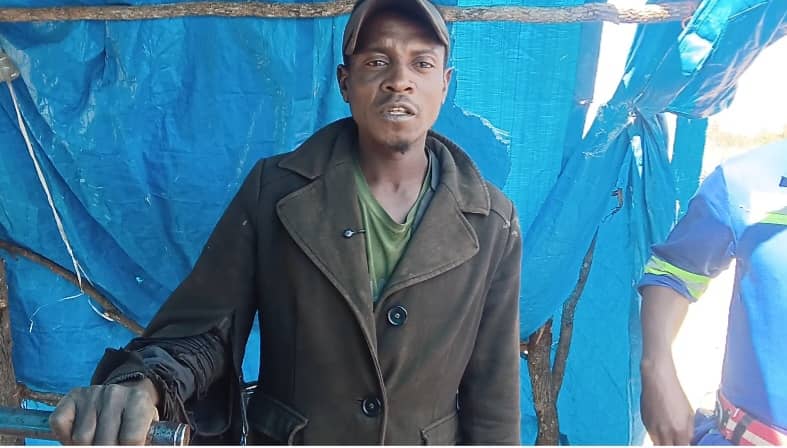
Gibson Mhaka, Senior Features Writer
FOR two agonising days, 36-year-old artisanal gold miner Mr Likhwa Ncube lay trapped beneath tonnes of earth after a disused mine shaft collapsed on him in Bubi District, Matabeleland North Province.
Buried alive and uncertain whether he would ever see daylight, Mr Ncube could hear fellow miners desperately digging through the rubble in a race against time to save his life.
When he was finally rescued, weak and traumatised, he vowed never to return to illegal gold panning — a dangerous world marked by unsafe mining practices, violent clashes over gold ore, lack of protective equipment and constant exposure to hazardous substances such as mercury and explosives.
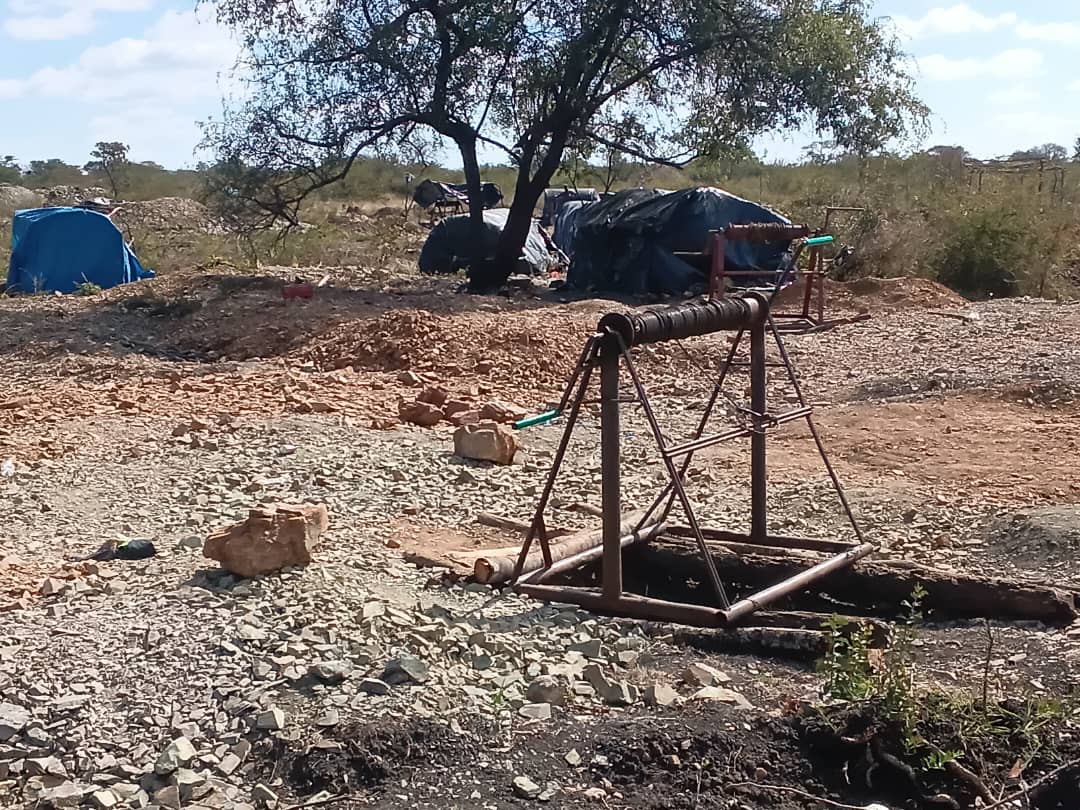
For nearly two years, Mr Ncube stayed away from mining altogether, haunted by memories of the near-fatal accident that almost claimed his life.
But today, he is back underground, this time under safer and more organised conditions at a mine in Bubi, where artisanal miners are working in partnership with the mining company under a supervised community empowerment initiative.
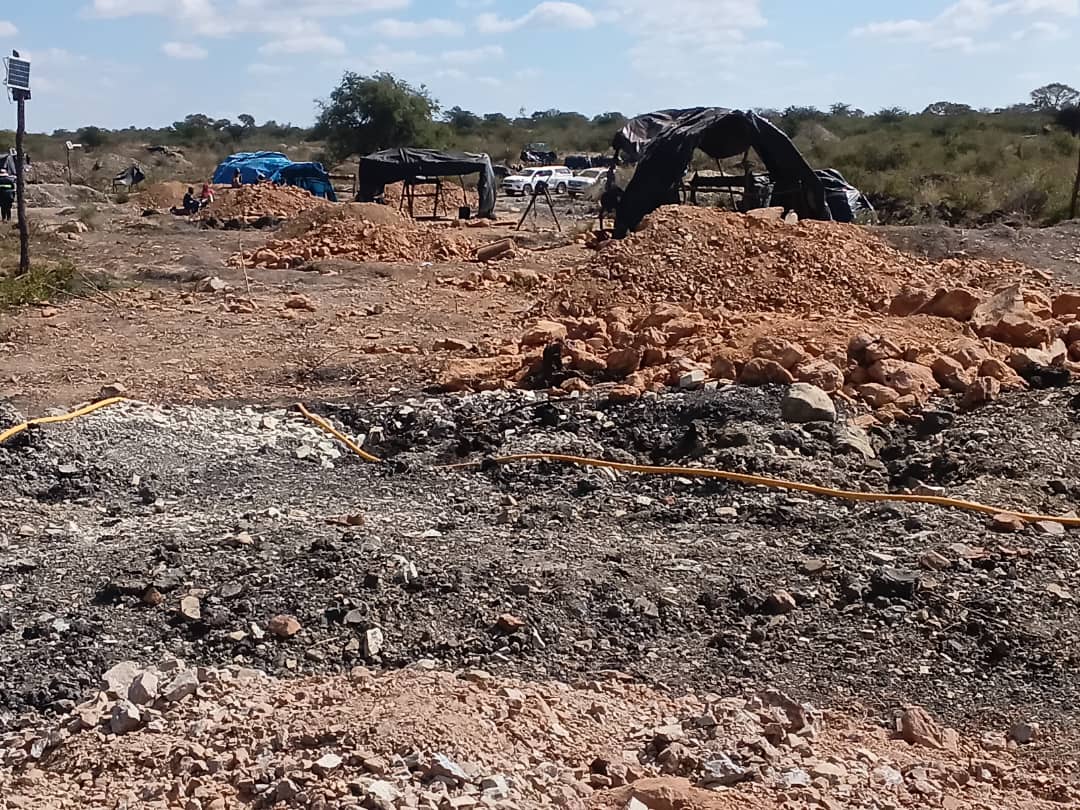
Unlike the dangerous informal mining operations he once knew, miners at Waterwitch are allocated shafts to work on, provided with compressors, jackhammers, drilling equipment, personal protective equipment (PPE) and even food, while all mining activities are closely monitored to eliminate unsafe practices. The arrangement, which forms part of the mine’s corporate social responsibility (CSR) programme, has not only restored hope among local artisanal miners, but also significantly reduced accidents and injuries often associated with illegal mining operations.
“I spent two days trapped underground after the shaft collapsed and I honestly thought I was going to die,” said Mr Ncube.
“That experience changed my life; illegal mining is very dangerous. We used to work without proper equipment or supervision and sometimes miners would fight over gold ore while also being exposed to mercury and explosives.
“After I was rescued, I promised myself that I would never go back to that kind of mining. I only returned after hearing about the partnership at Waterwitch Mine where we are given proper shafts, protective equipment and our activities are monitored for safety.
“Here, we feel protected and valued because the company makes sure we work under safe conditions.”
Mr Ncube shared his ordeal during a recent technical visit to Waterwitch Mine by officials from the Ministry of Mines and Mining Development, the Environmental Management Agency (EMA) and planetGOLD Zimbabwe.
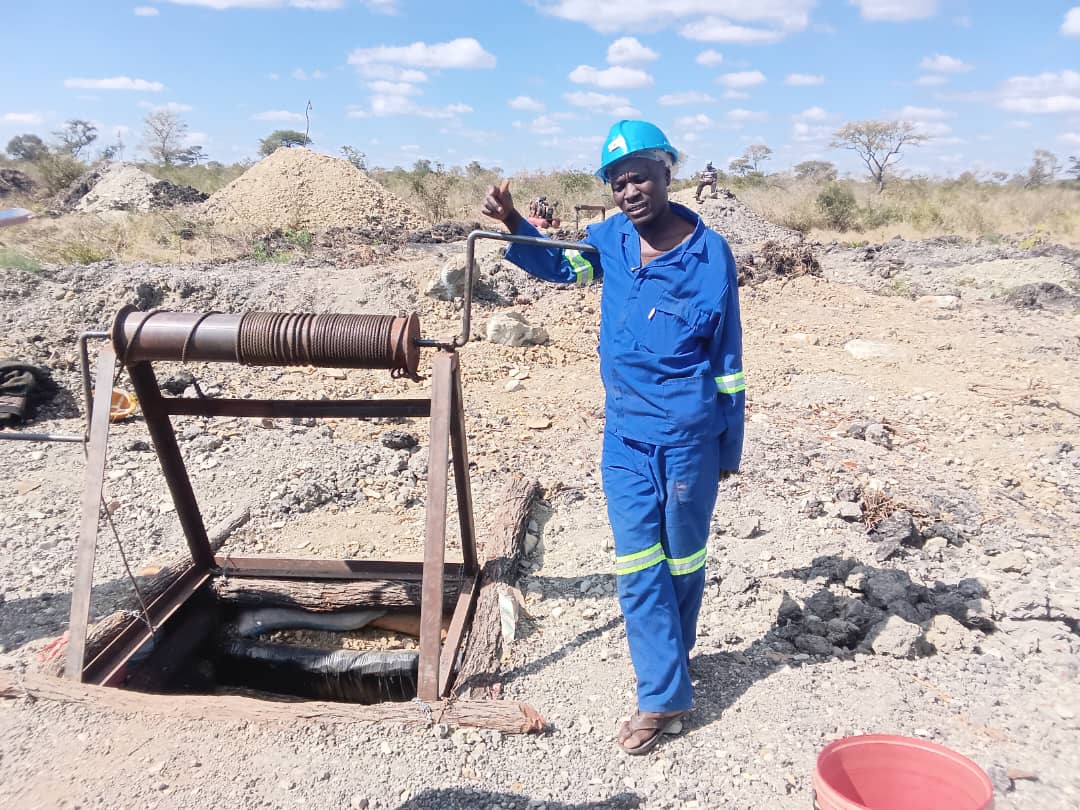
The visit sought to understand how miners are processing gold, identify challenges and areas for improvement, and advance efforts to formalise artisanal and small-scale gold mining through improved technologies and safer mining practices.
His experience reflects the harsh realities faced by thousands of artisanal and small-scale gold miners across Zimbabwe, where illegal mining operations are frequently characterised by unsafe shafts, lack of protective equipment, exposure to toxic chemicals such as mercury and violent disputes over gold ore.
In many instances, artisanal miners have also clashed with large-scale mining companies unwilling to accommodate them within their concessions, forcing desperate miners into abandoned or restricted mining areas.
However, the partnership model at the mine is increasingly being hailed as a progressive and inclusive solution capable of reducing conflicts while improving workplace safety and productivity.
Under the arrangement, artisanal miners — now referred to as “contract miners” — are formally integrated into mining operations and work under monitored conditions with access to proper equipment and safety systems.
Stakeholders believe the model could become a blueprint for the country’s mining sector.
Recently, stakeholders in Zimbabwe’s mining sector convened in Bulawayo for a multi-stakeholder workshop aimed at formalising artisanal and small-scale gold mining and strengthening collaboration between artisanal miners and large-scale mining companies.
The workshop brought together mining companies, artisanal miners, Government ministries and development partners to co-design a pilot collaboration framework.
The initiative seeks to bridge the longstanding divide between formal mining operations and an estimated 1,5 million Zimbabweans who depend on artisanal and small-scale mining for their livelihoods.
A beneficiary of the partnership programme, Mr Hebert Sibanda (58), expressed satisfaction with the arrangement at the mine.
“We are happy with the partnership here, because, although we are contractors, the company takes care of us and listens to our concerns, especially regarding the resources and equipment we need for our mining activities,” he said.
“Since this partnership started, we have never recorded any incidents of death or injuries because the company constantly monitors our activities and ensures that safety measures are followed.”
Mr Sibanda said the arrangement provided major improvements from the dangerous conditions miners previously endured in abandoned shafts.
“It is very different from what we used to do in disused mine shafts, which were dangerous and sometimes collapsed, leading to deaths,” he said.
“In those abandoned shafts, safety regulations were often ignored, especially when we encroached into large-scale mining concessions.
“But here, we are mining safely and we are happy with the support we are getting through this partnership.”
Another beneficiary, Mr Thabisani Sibanda (43), also praised the initiative.
“We also want to thank the company for this partnership because they take care of us even when we are not feeling well,” he said.
“Whenever someone falls sick, the company assists by taking us to Inyathi District Hospital for treatment. This partnership has really changed our lives because we are now working in safer conditions and we feel supported.”
More than 1 000 artisanal and small-scale miners from surrounding communities are reportedly benefiting from the programme.
Waterwitch Mine geology technician Mr Sipho Gumpo said the initiative forms part of the company’s CSR programme while also improving gold recovery.
“This partnership is part of our corporate social responsibility programme as a company,” he said.
“The contractors are very important to our operations because they mine upper levels that contain oxide ores, which are easier to process and recover.
“With sulphide ores, we can only recover around 30 percent of the gold, but with oxide ores brought by contractors, we can recover up to 70 percent.”
Mr Gumpo said the company has invested heavily in improving miners’ working conditions. “We provide them with compressors, jackhammers, drilling equipment, personal protective equipment and food,” he said.
“We also ensure that most of the challenges they face are addressed quickly. Their activities are closely monitored while they work in the shafts and we discourage unsafe mining practices.
“As a result, we have never recorded any incidents of death or injuries under this partnership arrangement.”
planetGOLD Zimbabwe project manager Ms Nyaradzo Mutonhori said the programme seeks to formalise artisanal mining operations while promoting safer and environmentally sustainable gold extraction methods.
“The planetGOLD Zimbabwe project is going to assist artisanal and small-scale gold miners to formalise and integrate into the formal economy,” she said.
“We will do this by modelling successful pilot projects where the large-scale mining sector will work with artisanal and small-scale gold miners to support formalisation.”
Ms Mutonhori said the programme also seeks to improve access to finance so that miners can acquire mercury-free gold processing technologies.
“We are going to work with banks, microfinance institutions and other financial service providers to enable this access to finance for artisanal and small-scale gold miners,” she said.
She added that the project will establish mercury-free gold processing centres and demonstration sites across mining districts to reduce environmental pollution.
Mercury, which is widely used to extract gold from ore, is a highly toxic chemical that damages the lungs, skin and eyes. It can also pollute air, water and soil while contaminating the food chain.
Environmental Management Agency (EMA) hazardous substances and waste management official Mr Irvine Nyaguwa said Zimbabwe’s high demand for mercury remained a major environmental and public health concern despite the country being a signatory to the Minamata Convention on Mercury.
“Our appetite for mercury is alarmingly high and continues to increase,” said Mr Nyaguwa.
He said stronger collaboration between large-scale mining companies and artisanal miners could significantly reduce environmental damage through technology transfer, improved monitoring systems and safer mining methods.
“Large-scale miners often go beyond compliance. They have air quality monitoring equipment, laboratories and environmental management systems that small-scale miners currently lack,” he said.
Zimbabwe became a signatory to the Minamata Convention on Mercury in 2013 before formally acceding to the convention in 2021. However, about 96 percent of artisanal gold production in Zimbabwe is still linked to mercury use.
It is clear that the partnership model being implemented at the mine represents a major step towards transforming Zimbabwe’s artisanal and small-scale gold mining sector into a safer, more organised and environmentally sustainable industry.
By integrating artisanal miners into formal and regulated mining operations, the arrangement is helping reduce dangerous illegal mining activities, improve workplace safety and promote responsible gold extraction practices.
The programme also offers a practical solution to many of the challenges affecting the sector, including violent conflicts, unsafe mining methods and excessive mercury use.
With miners now operating under monitored conditions and accessing proper equipment, training and environmental management systems, there is little doubt that Zimbabwe can achieve cleaner, safer and more environmentally friendly mining while improving livelihoods for thousands of families dependent on artisanal gold mining.