Online Reporter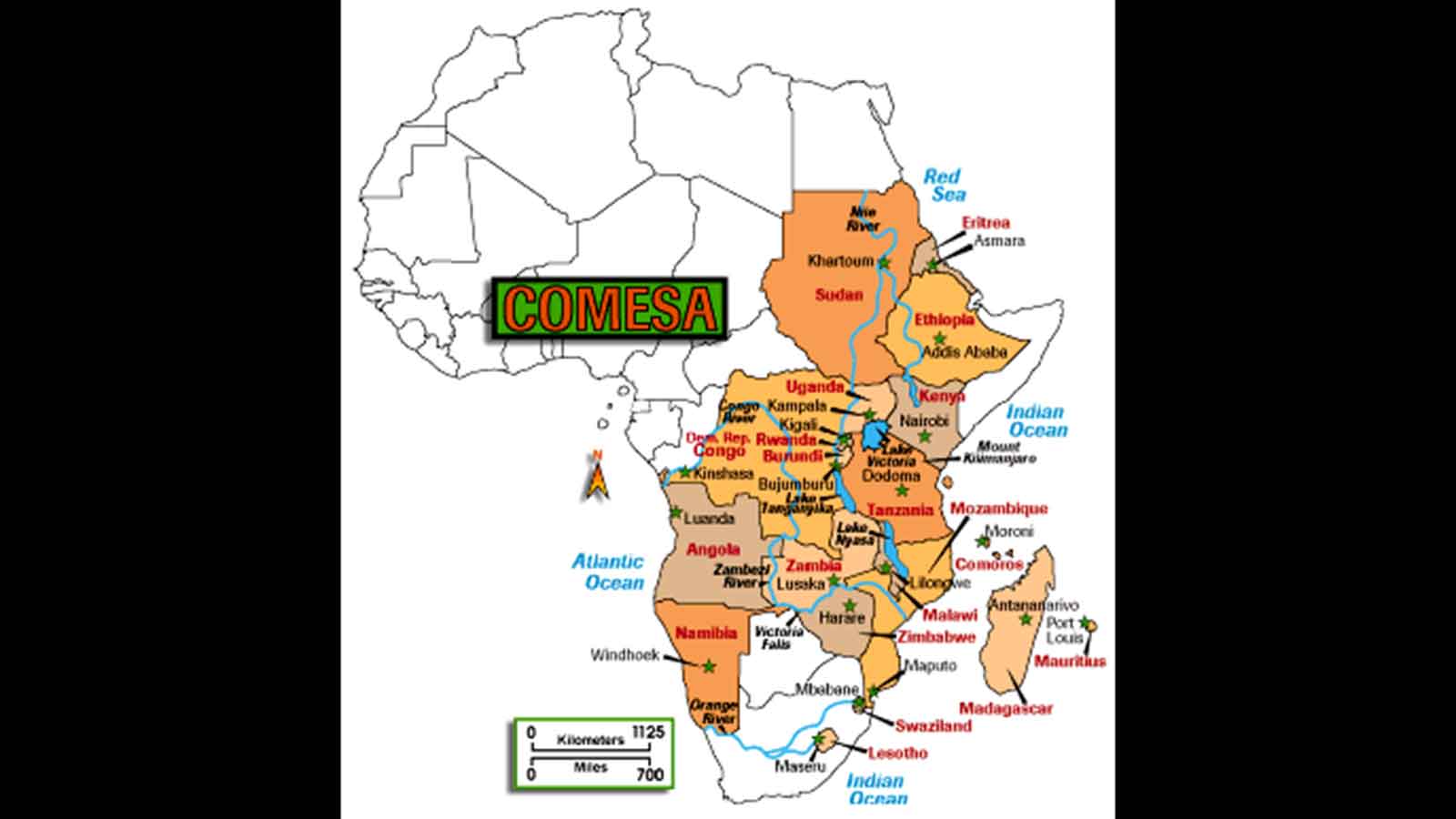
Zimpapers Politics Hub-Gibson Nyikadzino
Article 3(d) of the Common Market for Eastern and Southern Africa (COMESA) Treaty recognises that regional economic integration requires a solid foundation of political stability.
This provision outlines the objective of the bloc, which is “to cooperate in the promotion of peace, security and stability among the member states in order to enhance economic development in the region”.
The logical reason COMESA emphasises that member states should promote peace, security and stability is its understanding that stability, protected supply chains and sovereign trust form the foundation of successful cross-border trade and cooperation.
This does not only speak to security in the traditional sense, but also to security in human terms, so that it is not threatened in the era of deepening global financial integration.
Therefore, within the international political economy, conversations on human and economic security should not be marginal issues.
Insecurity within any COMESA member state is a major concern as it disrupts plans required to strengthen financial stability, social welfare, production structures and institutional reliability.
There are COMESA member states grappling with wars, conflict and armed insurgence, which means the scope of regional integration within the organisation must also be seen through the political lens.
Among the 21 COMESA member states, additional concern is now notable, with the wave of new intra-state conflicts in Ethiopia and Somalia adding to the challenges the bloc is dealing with in Libya, Sudan and the Democratic Republic of Congo (DRC).
These five COMESA member states currently facing conflicts have an estimated combined population of 333 million people, representing at least 52 percent of the bloc’s 640 million people.
Statistics show that in 2025, conflicts, particularly in the DRC and Sudan, driven by other extreme military clashes, poor infrastructure and regional insecurity, led to a 3,6 percent drop in intra-COMESA trade to US$13,7 billion.
Besides intra-bloc conflicts, other externally induced factors experienced last year impacted trade performance in COMESA.
The United States last year imposed trade tariffs on COMESA member states, including those at war.
For example, the DRC and Libya were slapped with 11 percent and 31 percent tariffs, respectively. The other affected countries included Madagascar 47 percent, Malawi 17 percent, Mauritius 40 percent, Tunisia 28 percent, Zambia 17 percent and Zimbabwe 18 percent. The tariffs also meant high production costs on the economies of member states, likely leading to a contraction of their economies and low industrial and trade contributions.
Solving wars of grievance, greed
Within Africa, and the COMESA bloc, there is a great understanding that the intra-state conflicts, civil wars and insurgencies taking place are a result of two issues: greed and grievance between belligerents.
In the aforementioned COMESA countries experiencing internal strife, greed has emerged as the major factor motivating rebellion through the self-serving capture of economic wealth and primary commodity predation.
On the other hand, in the DRC, the war has primarily been motivated by grievance following political exclusion, inequalities and ethnic or religious marginalisation.
These two elements are visible in any of the ongoing wars and conflicts in the DRC, Ethiopia, Libya, Somalia and Sudan. In other instances, there is an interplay of greed and grievance, explaining a symbiotic relationship in which the same problem can mutate.
In such circumstances, what role does COMESA play?
As informed by the COMESA Treaty, the bloc has no power to adjudicate or enforce settlements of disputes of a political or geopolitical nature.
Under the obligations of the treaty, it is confined to interpreting violations of an economic or commercial format, as underscored in Chapter 5 and Article 24 of the treaty.
That does not make the bloc idle.
Its Governance, Peace and Security Programme, established by the Fourth Summit in Nairobi in May 1999, runs the COMESA Conflict Early Warning System (COMWARN), which uses a Peace and Prosperity Index built on 144 variables to flag structural vulnerabilities to member states.
The COMESA Committee of Elders, established in 2006, deploys mediators for preventive diplomacy, and its first members were appointed in Victoria Falls in 2009.
Through the Trading for Peace Project, initiated in 2007, COMESA has set up 16 trade information desks at border posts between the DRC and its eastern neighbours, which the bloc says has increased cross-border trade. It has also observed over 30 elections since 2006.
A holistic approach that has been employed by COMESA is to defer the political matters or align with positions that are prescribed by specialised bodies under the African Peace and Security Architecture (APSA), which is the primary African Union (AU) framework designed to prevent, manage and resolve conflicts and crises across the continent.
To enhance its “political” role in settling disputes, the bloc gives responsibility to mechanisms that are initiated by organisations such as the Inter-Governmental Authority on Development (IGAD), the East African Community (EAC) and the Southern African Development Community (SADC).
Can Zimbabwe show the way?
Zimbabwe has always been an advocate of non-interference in the domestic affairs of any state, sovereign equality among states and diplomacy as a tool for conflict resolution between warring factions.
Wars and conflicts within COMESA member states are political occurrences that have a bearing on the economic goal of integrating the markets of member states.
If the bloc can defer political and geopolitical matters to mechanisms led by the AU and other regional bodies, it shows that collective security mechanisms play a part in advancing smooth trade.
However, this also means that COMESA cannot remain dependent on other mechanisms to enforce security and stabilise markets, and trade if the goal of “One Market, One Future: Advancing Inclusive Industrialisation, Investment and Regional Integration in COMESA” is to be achieved.
Without interfering in any nation’s internal affairs, it is also possible for Zimbabwe, as it assumes the organisation’s chairmanship, to influence regional economic communities within COMESA to rethink conflict resolution for the sake of the continent.
For instance, at a time Ethiopia is accusing other COMESA member states (Egypt, Eritrea and Sudan) of sponsoring the Tigray-led rebellion, there are risks this could become a regional war that will disrupt several value chains. There is need for major political will to prioritise regional interests, but only when greed and grievances are resolved.
Clearly, some diplomatic efforts, which are of a political nature, are needed to solve the economic challenges currently faced in the bloc.
The mechanisms Zimbabwe coordinated to bring the DRC government and M23 rebels to the negotiating table can be coordinated within COMESA.
It may also be prudent for leaders to address issues of peace and security by reviewing the institution’s mandate.
Building on the Committee of Elders and COMWARN, and looking at new threats affecting member states, recommendations may be made to expand COMESA’s obligations to include conflict resolution within a coordinated effort supported by sub-regional organisations to avoid duplication of efforts.