Online Reporter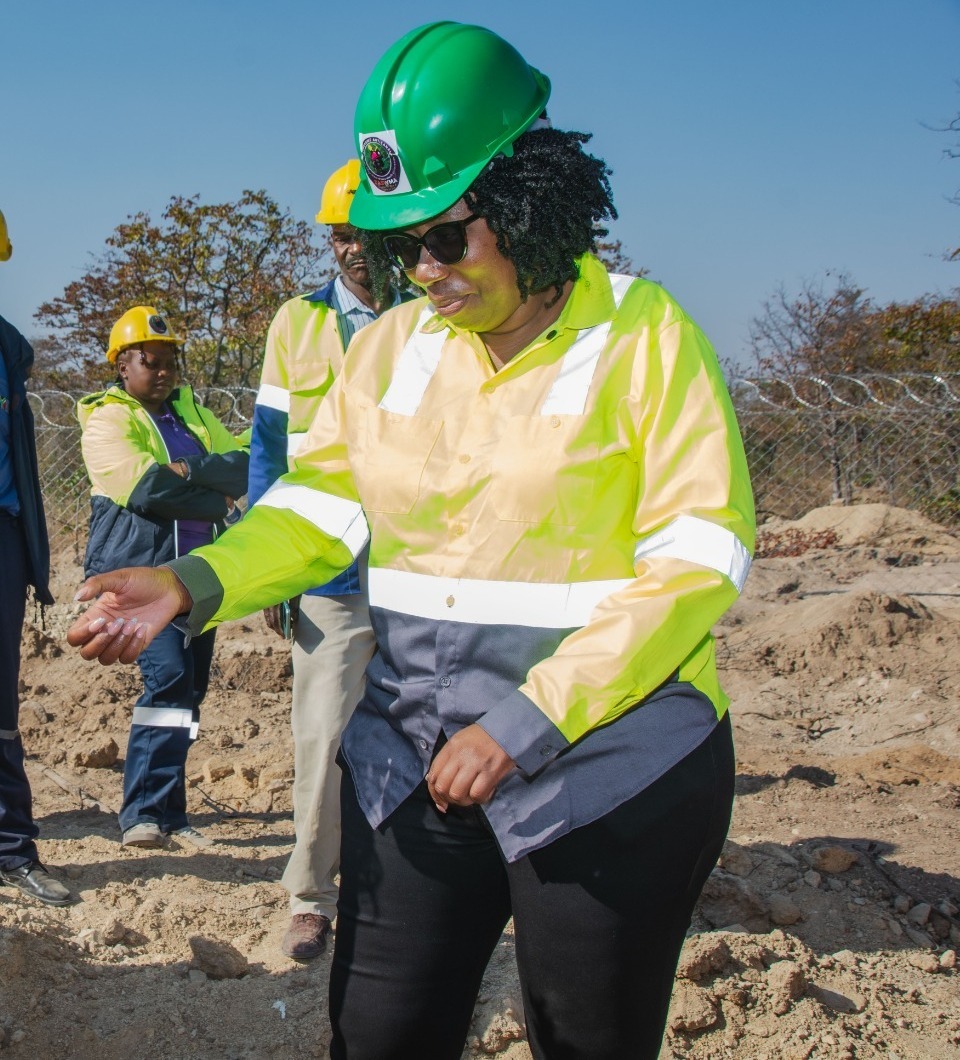
Judith Phiri [email protected]
THE Zimbabwe Artisanal and Small-Scale Women Miners Association (ZASWMA) has called for positioning women, artisanal and small-scale miners at the centre of the Southern African Development Community (SADC) critical mineral value chains.
This comes at a time the global energy transition is creating unprecedented demand for critical minerals such as lithium, cobalt, copper, nickel, manganese, rare earth elements and platinum group metals.
In an interview, ZASWMA Chairperson, Mrs Kundai Chikonzo Midzi who will be a speaker at the SADC Critical Minerals Awareness and Participation Meeting, said SADC was exceptionally positioned to benefit from the demand for critical minerals.
“Several SADC member states possess significant deposits of minerals essential to renewable energy, electric vehicles, batteries and modern technologies.
“However, the critical question for SADC is not simply how much critical minerals we possess, but how much value we can create and retain from those minerals,” he said.
“For too long, Africa has largely followed a model where minerals are extracted and exported in raw or semi-processed form, while processing, manufacturing and much of the value creation take place elsewhere.
She said the emerging critical-minerals economy presents SADC with an opportunity to change this trajectory by moving from extraction to beneficiation, manufacturing, regional trade and industrialisation.
Mrs Chikonzo Midzi said Zimbabwe was an important part of this opportunity with significant resources of lithium, platinum group metals, chrome, nickel, copper, cobalt, rare earth minerals and other strategic resources.
“Zimbabwe can play a major role in building regional critical-mineral value chains. However, mineral wealth must translate into opportunities for local businesses, communities, women and young people.
“This is where the role of women and artisanal and small-scale mining becomes critical. Women should not be viewed merely as beneficiaries of mining development,” she added.
“They are miners, entrepreneurs, employers, investors, processors, suppliers and community leaders. They must have opportunities to participate across the entire mineral value chain—from extraction and processing to technology, environmental services, manufacturing and investment.”
She said artisanal and small-scale miners must also be brought into the critical-minerals conversation where responsible and appropriate participation is possible.
Mrs Chikonzo Midzi said this requires formalisation, geological information, appropriate technology, access to finance, environmental support, health and safety training and access to formal markets.
“Formalisation should be designed in a gender-responsive manner so that women are not excluded by financial, regulatory, technological or institutional barriers.”
She said finance remains one of the greatest constraints facing women in mining, while access to a mineral claim does not automatically provide the capital required to purchase equipment, improve processing, meet environmental standards or expand production.
Mrs Chikonzo Midzi said SADC should therefore consider innovative financing mechanisms, including a SADC Women in Critical Minerals Financing Facility, to support women-owned mining, processing and mining-service enterprises.
She added: “Technology is equally important. Artificial intelligence, digital geological mapping, modern processing, mineral traceability and clean-energy technologies are transforming mining. These technologies must not remain accessible only to large mining companies.”
The SADC Critical Minerals Awareness and Participation Meeting to be held on 26 August in Gaborone, Botswana hosted by Institute of Energy and Technology Development (IETD) in collaboration with The Small Scale Miners Association of Botswana (SSMAB), will explore opportunities in lithium, regional value chains, licensing, skills development, enterprise and citizen participation.