Online Reporter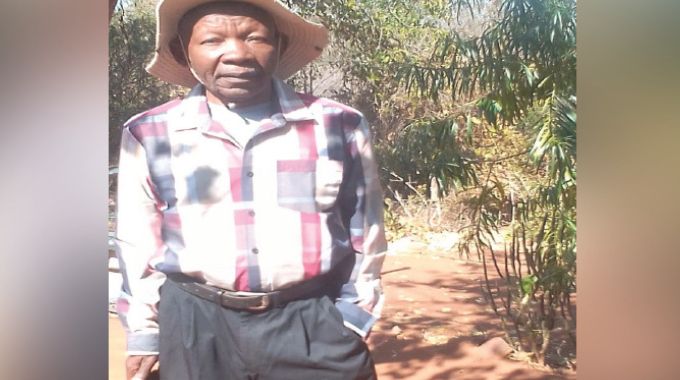
Victor Madzinga, [email protected]
AT 76, Mr Jack Fitshani has achieved what many thought impossible — turning a neglected, rubbish-filled corner of Gwanda into a flourishing garden that is now changing the face of the town.
About 16 years ago, the patch of land across Soudan Street, near the junction with 1st Avenue, was an eyesore that many preferred to ignore. Soudan Street, a busy stretch of the Bulawayo–Beitbridge highway cutting through Gwanda town, carried thousands of trucks and commuter buses every day.
Yet the small piece of land between the road and the SWIFT depot told a very different story. It was overgrown with grass and thorny bushes, littered with waste and avoided by most people.
After dark, it became a hiding place for commercial sex workers. During the day, it served as an open toilet for rank marshals from the nearby Bulawayo-bound pirate taxi rank.
Residents passed by quickly, often holding their noses. Council workers stayed away. Everyone agreed it was a problem, but no one stepped forward to change it.
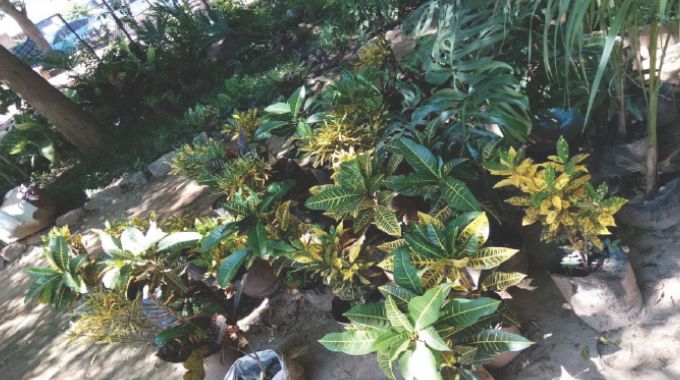
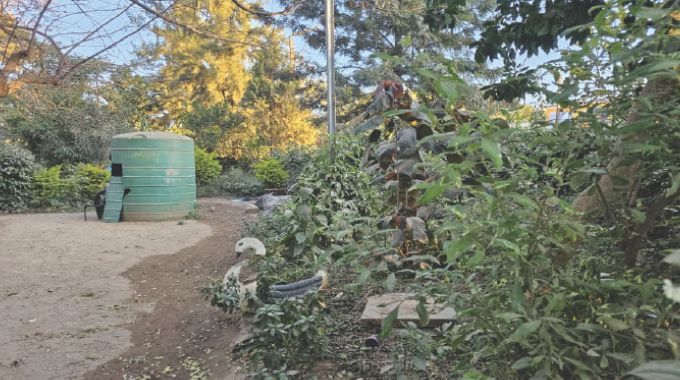
Today, that same patch of land has been completely transformed. It is alive with colour and fresh air. Banana leaves sway gently beside peach trees. Moringa and rosemary release their scent when the wind blows. A large syringa tree provides shade over rows of carefully tended vegetable seedlings, while dahlias add a quiet beauty to the space.
What was once neglected is now, in every sense, a small Eden in the heart of Gwanda.
The man behind this transformation, Mr Jack Fitshani, is a self-taught landscaper, nurseryman and proud “born environmentalist”. He is driven by a simple belief — that his town deserves beauty, even if he has to build it from what others have thrown away.
Mr Fitshani was born on 26 November 1948 in Shurugwi, in the Midlands Province. He received much of his education in Bulawayo, including at Cyrene Mission, where he learned discipline and the value of hard work.
Like many young men of his time, he went on to join the civil service after school. He worked for 33 years as a human resources officer in several ministries, including Health and Child Care, Agriculture and Primary and Secondary Education.
His work took him across Matabeleland North, Matabeleland South and Mashonaland East. It exposed him to different communities and gave him insight into how people and systems operate.
When he retired in 2008, however, things took a difficult turn. Zimbabwe was going through hyperinflation, and the money he had saved over decades quickly lost its value. Many in his position lost hope.
Mr Fitshani, however, chose a different path.
“I worked as a garden boy for one of the lady teachers,” he remembers with a smile. “Today you call it ‘landscaping’. Back then it was just helping in the garden. But I loved it. The smell of soil, watching things grow.”
With little left to rely on, that early love for gardening came back to him.
“In the wild,” he says, “the chick of the guinea fowl lives off its instincts from day one, pecking at the dirt.”
He began small, at his home in Jacaranda suburb in Gwanda. With limited resources, he collected plastic containers from the local dumpsite to use as pots.
Whenever he visited Bulawayo, he gathered seeds from pods that had fallen under jacaranda and flamboyant trees. He would return home with pockets full of seeds — each one carrying the promise of growth.
At first, his efforts puzzled those around him.
“One day she said she would not walk with me again if I kept picking up rubbish and seeds,” Mr Fitshani recalls, laughing. “She thought I had lost my marbles.”
But over time, things began to change. His plants started to sell, and people began to take notice.
Mining businessman Mr Stewart bought mopani, munyii and marula trees from him to help restore land damaged by mining. Funeral parlour Top-Pick bought flowers for bereaved families. Schools ordered garlands for prize-giving ceremonies.
Even the baobab tree standing in front of Gwanda’s Oasis building came from his nursery.
Organisations such as World Vision also became regular customers, buying tree seedlings for rural schools. Soon, his backyard was no longer enough. He needed more space.
One day, while walking into town, he saw the same neglected patch of land along Soudan Street. Where others saw a dumping ground, he saw possibility.
He decided to turn it into something better.
He cleared the land himself — removing used condoms, human waste and broken bottles. With the help of two young assistants who share his passion, he began to dig, plant and water.
In the process, he even discovered a borehole hidden beneath the grass. Today, it provides water that keeps the garden alive, even during dry periods.
He named the space Green Comfort.
Today, the garden is home to a wide range of plants and trees, including syringa, fig, mulberry, banana, peach, mango, avocado and plum. There are herbs such as moringa, rosemary and Russian camphor, as well as fodder grasses like lucerne, leucaena and Bana grass. Hedges and flowers add both structure and beauty.
“If you name it, I will find it or grow it,” he says.
Customers now travel long distances to buy from him. On the day of my visit, Mr Tapiwa Mamudze from Rusape was loading a cycad into his car after failing to find one elsewhere in Gwanda. He was taking it back home — a journey of about 400 kilometres.
Beyond growing plants, Mr Fitshani has also taught himself landscaping. His work can be seen around Gwanda.The neat lawns and flowerbeds at the Engen service station are maintained by him. He has also landscaped private homes, including that of businessman Mr Naik of Bhaghatji.
Recently, he entered into a public-private partnership with Gwanda Municipality. His role is to help beautify the town while also earning a living. He is currently working on transforming the traffic island near Chicken Inn at the Bulawayo entrance, aiming to give visitors a warm welcome to the town.
Still full of energy, Mr Fitshani has bigger dreams. He hopes to one day landscape the new Zimbabwe Open University campus at the Bulawayo road entrance.
“In God’s original plan man’s habitat was never brick and mortar,” he says. “The Garden of Eden was man’s original home. Even churches should beautify their grounds. Flowers lift the spirit.”
At 76, he is not slowing down. His next vision is to create a proper leisure park in Gwanda — a place with lawns, trees and benches where people can relax, hold weddings and host community events. He even imagines it being located near the railway line so that tourists on the Rovos Rail can stop and support local artists.
“I want people to come and sit, breathe clean air, and remember that Gwanda is beautiful,” he says.
His message is simple: do not wait for perfect conditions. Start with what you have. Pick up the seed, clean the land and nurture it every day.
As I was leaving, Mr Fitshani handed me a potted rue plant as a gift. He then sat down in an old, creaking garden chair for his midday rest.
Closing his eyes, he seemed to take in the scent of the flowers around him.
From where I stood, the retired civil servant who once lost everything looked like a man who had found something far more meaningful.
He followed his instincts — and they led him to something no bank could ever offer: purpose, peace, and a garden that has made Gwanda a more beautiful place.


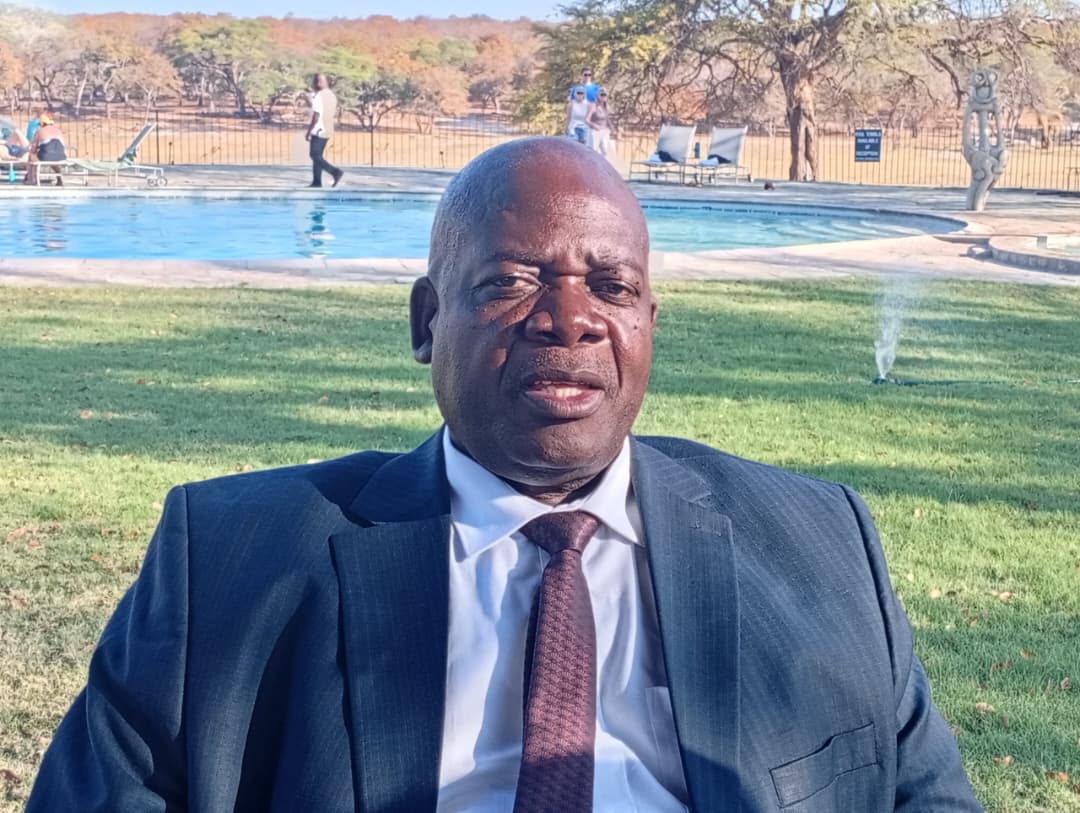
 Blessing Chizhande